
Brazilian cheese bread is one of those snacks people fall in love with fast, then get frustrated when a homemade batch turns out dense, oily, or weirdly hollow.
If you want that classic Pão de Queijo bite, crisp outside and stretchy inside, the good news is you don’t need fancy equipment, you just need to understand what drives the texture: tapioca starch, cheese choice, and how you handle heat and moisture.
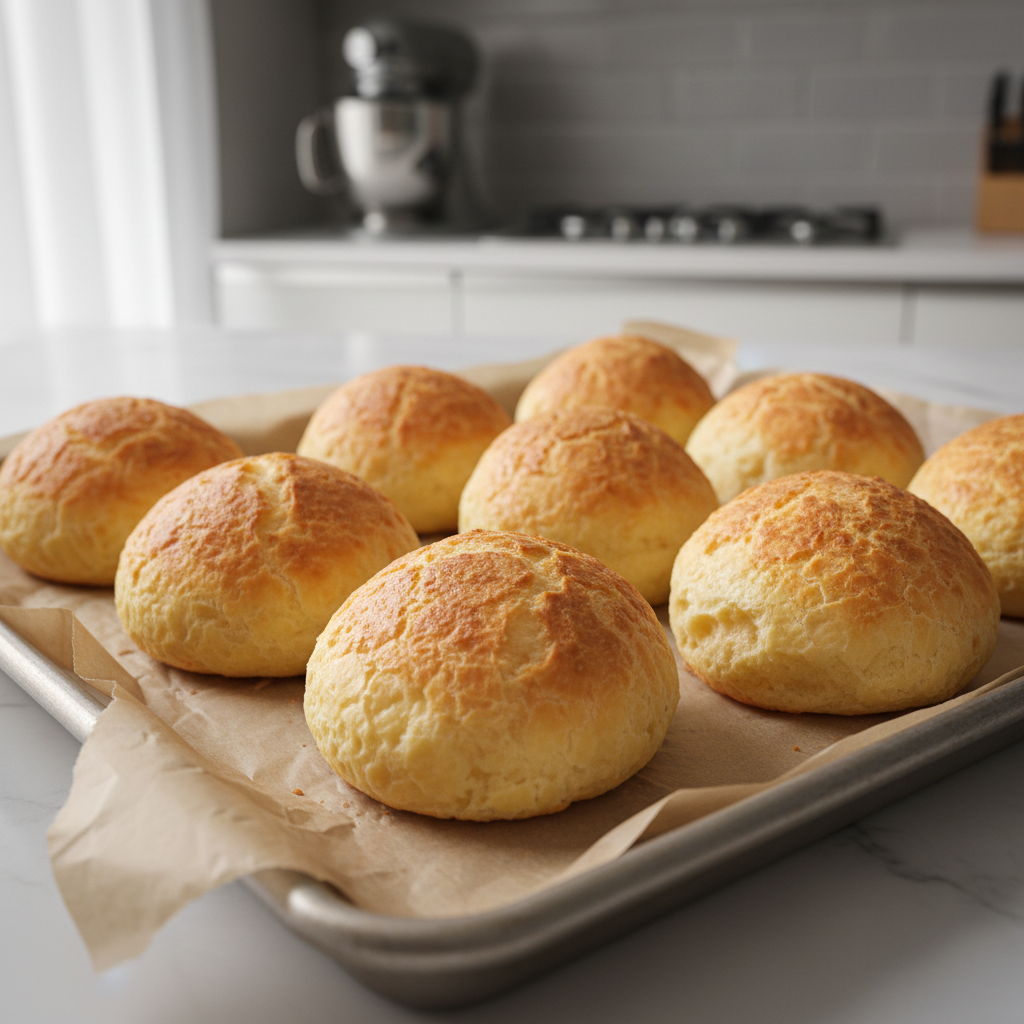
This guide breaks down what it is, why recipes vary, how to troubleshoot the usual failures, and a few practical tweaks for U.S. kitchens where cheese brands and ovens can behave differently than you expect.
What Pão de Queijo is (and what it isn’t)
Pão de Queijo translates to “cheese bread,” but it’s not bread in the wheat-and-yeast sense. There’s no gluten network to trap air, so the lift and chew come mainly from tapioca starch gelatinizing when heated, plus steam from the wet dough.
That’s why the texture feels elastic and bouncy instead of airy like a dinner roll, and it’s also why small changes in temperature or liquid can swing the result from perfect to disappointing.
- Core ingredient: tapioca starch (often labeled tapioca flour in the U.S.).
- Typical cheeses: Brazilian Minas cheese is traditional, but many U.S. home bakers use parmesan, mozzarella, or a blend.
- Naturally gluten-free: usually, but always check labels if cross-contamination matters for you.
Why brazilian cheese bread behaves differently from regular baking
If you approach brazilian cheese bread like muffins or yeast rolls, you’ll often overmix, underheat, or expect the wrong cues. Pão de Queijo dough is closer to a thick paste, and it can look slightly glossy or sticky even when it’s “right.”
Two details matter more than people think: starch type and heat management. According to USDA, starch gelatinization is a heat-and-water-driven change where starch granules swell and thicken, which helps explain why a wetter dough can puff better, until it crosses into soggy collapse.
Key variables that change outcomes fast
- Starch brand/ratio: some recipes use only sweet tapioca starch, others mix sweet and sour (polvilho doce/azedo). In the U.S. you usually find sweet tapioca, which tends to produce a milder tang and slightly different chew.
- Cheese moisture: pre-shredded mozzarella can run drier and has anti-caking agents, while fresh mozzarella can leak water and fat.
- Oven reality: many home ovens run hot or cool; 25°F off can be the difference between a hollow center and a tight crumb.
Ingredients that matter most (with realistic U.S. substitutions)
Most recipes look similar on paper, but your results hinge on a few practical choices. If you’re baking in the U.S., these substitutions usually work without turning it into a completely different snack.
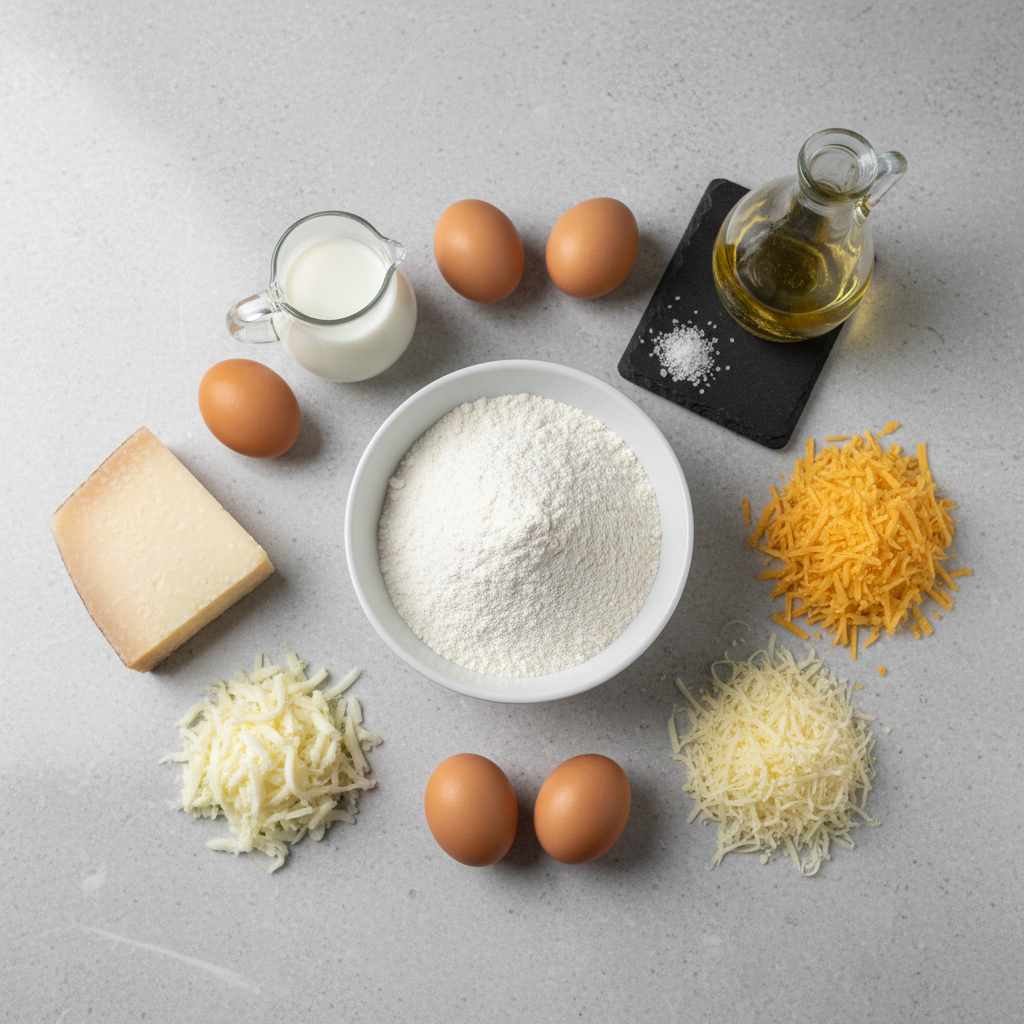
Quick ingredient table
| Ingredient | What it does | Common U.S. swap |
|---|---|---|
| Tapioca starch | Chew + structure via gelatinization | Tapioca flour (same in many U.S. stores) |
| Cheese | Flavor + melt + fat | Parmesan + low-moisture mozzarella blend |
| Milk/water | Steam for puff + dough hydration | Whole milk, or milk + a little water |
| Oil/butter | Tenderness + browning support | Neutral oil, or butter for richer flavor |
| Eggs | Binding + lift + richer interior | Large eggs, room temp if possible |
Cheese tip that saves batches: if you keep getting oily bottoms, try reducing the mozzarella portion and leaning harder on parmesan or another aged cheese. Aged cheeses bring flavor with less free moisture.
A reliable method you can repeat (without overthinking it)
There are two popular approaches: blending a batter or making a hot-scalded dough (where you pour hot milk/oil over the starch). Both can work, but the scalded method tends to be more forgiving when you want that chewy pull.
Step-by-step (scalded dough style)
- Heat: warm milk (or milk/water) with oil and salt until steaming, not a rolling boil.
- Scald the starch: pour hot liquid over tapioca starch and stir until clumpy, this is normal.
- Cool briefly: wait until it’s warm, not hot, so the eggs don’t scramble.
- Add eggs: mix until a thick, sticky dough forms.
- Fold in cheese: add grated/shredded cheese, mixing just until evenly distributed.
- Scoop: portion with a cookie scoop onto a lined sheet.
- Bake hot: use a fully preheated oven; they should puff, then set and brown.
Key point: if the dough feels like soft mashed potatoes that cling to the spoon, you’re in the right neighborhood. If it pours like pancake batter, it’s usually too wet for classic rounds.
Troubleshooting: why yours is flat, dense, or hollow
This is where most people actually need help. The same recipe can behave differently with a different starch brand, a wetter cheese, or an oven that cycles unevenly.
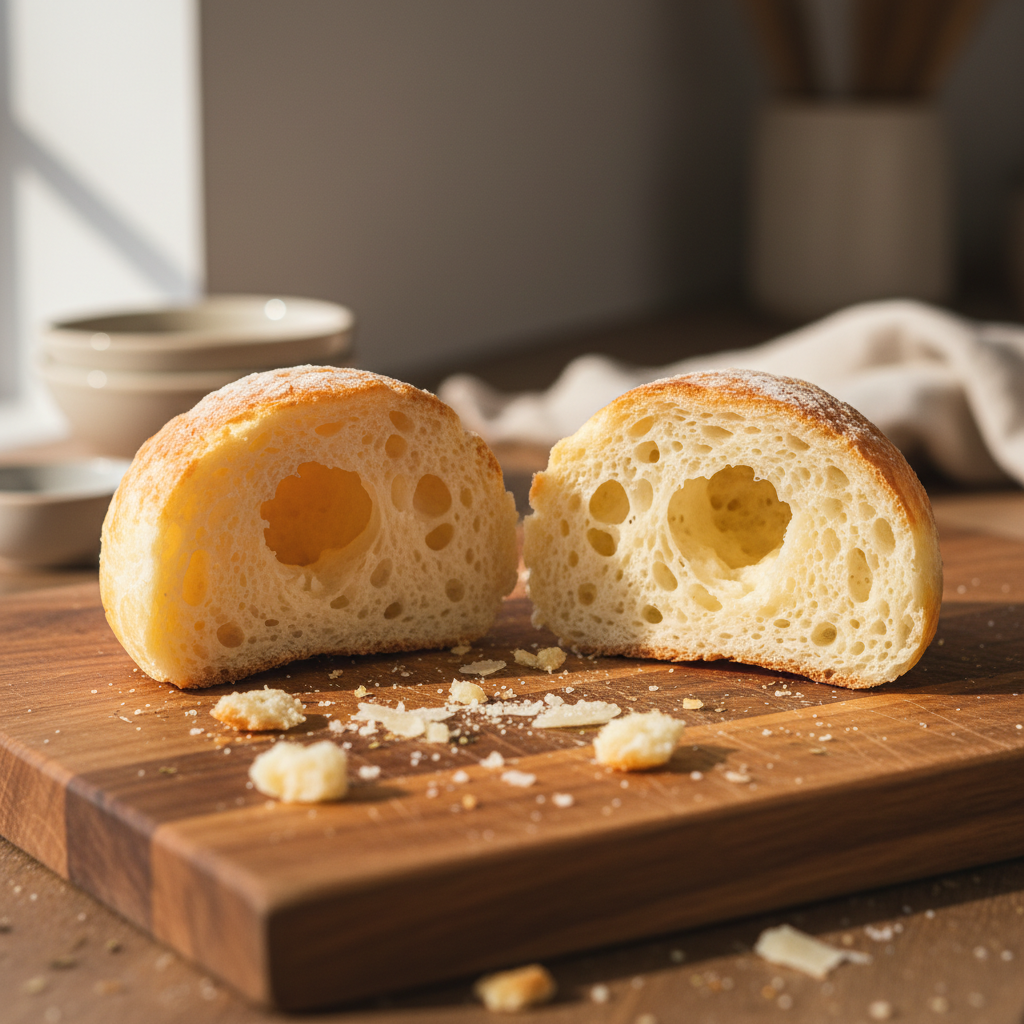
Fast self-check list
- Flat and spread-out: dough too warm when eggs went in, too wet, or oven not fully preheated.
- Dense, gummy center: underbaked, too large portions, or oven temp too low.
- Very hollow with thick shell: oven too hot, dough too dry, or too much starch relative to liquid.
- Oily puddles: cheese too fatty or too much added oil, sometimes low-moisture mozzarella can still release fat if baked cool.
- Not cheesy enough: cheese too mild, or you used only mozzarella without an aged component.
Targeted fixes that usually work
- If it’s flat: chill the dough 15–30 minutes, scoop smaller, verify oven temp with an inexpensive thermometer.
- If the inside is gummy: bake a few minutes longer, and avoid overcrowding the pan so heat circulates.
- If it’s too hollow: drop the temperature slightly and add a splash more milk next batch.
- If it’s oily: reduce oil/butter a touch and swap part of the cheese to parmesan or another aged cheese.
Make-ahead, freezing, and serving ideas (real-life friendly)
One reason brazilian cheese bread shows up at parties and brunches is that it handles freezing well. You can prep once, then bake on demand, which is honestly how many people keep it in their regular rotation.
What tends to work best
- Freeze unbaked portions: scoop onto a tray, freeze until firm, then bag. Bake from frozen, adding a few extra minutes.
- Reheat baked pieces: a hot oven brings back the crisp shell better than a microwave.
- Serve warm: the signature chew fades as they cool, still tasty, just less dramatic.
Pairing ideas: coffee, chimichurri-style herb sauce, soups, or a simple breakfast plate with eggs. If you’re making them for guests, bake smaller pieces so people can snack without committing to a big roll.
Common mistakes and safety notes (worth a quick read)
A few missteps repeat across almost every first attempt. Fixing them usually feels boring, but it’s what gets you consistent batches.
- Adding eggs too early: if the dough is hot, eggs can partially cook, leading to odd texture.
- Measuring starch loosely: tapioca starch compacts; spoon-and-level is safer than scooping straight from the bag.
- Assuming all cheeses behave the same: moisture and fat vary by brand, especially with shredded blends.
If you have food allergies or medical dietary needs, ingredient labels matter more than the recipe blog. Dairy-free or egg-free versions exist, but results vary a lot, and if it’s for someone with significant sensitivities, it’s smart to consult a qualified professional.
Key takeaways + a simple next step
Pão de Queijo is simple, but it’s not random: texture comes from tapioca starch plus steam, and flavor comes from choosing the right cheese blend for your pantry. If your first batch misses, it’s usually a temperature or moisture issue, not a personal failure.
- Start with a scalded dough: it’s forgiving and reliably chewy.
- Blend cheeses: mozzarella for stretch, parmesan for flavor and better balance.
- Control heat: fully preheat and consider an oven thermometer.
If you want one action step, bake a half batch, take notes on spread and browning, then adjust only one variable next time, typically oven temp or liquid amount.
FAQ
Why is my brazilian cheese bread not puffing?
Most often it’s an oven heat issue or a dough hydration issue. Make sure the oven is fully preheated, and if your dough is very stiff, a small increase in milk can help the steam-driven rise.
Can I use tapioca flour instead of tapioca starch?
In many U.S. grocery stores they’re effectively the same product for home baking, but labeling varies. If the bag says “tapioca flour” and it looks like a fine white starch, it usually works; if results are off, try another brand before you rewrite the recipe.
What cheese is closest to Brazilian Minas cheese in the U.S.?
Minas can be tricky to match exactly, so people often aim for the same balance: mild melt plus salty aged flavor. A blend of low-moisture mozzarella with parmesan is a practical stand-in for many kitchens.
Why are my Pão de Queijo balls hollow inside?
Hollow centers often happen when the outside sets too fast, usually from an oven running hot or dough running dry. Lower the temperature slightly, and consider a touch more liquid next batch.
How do I keep them from getting oily?
Cut back added fat a little and choose a less greasy cheese mix. Also avoid baking too low and slow, because fat can render out before the structure sets.
Can I make them ahead for a party?
Yes, freezing unbaked scoops is the easiest approach. Bake straight from frozen so they come out freshly puffed and warm when guests arrive.
Are they gluten-free?
Typically yes, because they rely on tapioca starch instead of wheat flour, but cross-contact can vary by brand and kitchen. If gluten avoidance is medical, check labels and consider dedicated prep tools.
If you’re trying to get consistent brazilian cheese bread results without burning through ingredients, it can help to start from a tested base recipe, then tailor cheese and oven settings to your kitchen, a small tweak per batch usually beats constant recipe hopping.