
Breakfast burritos are one of the few make-ahead breakfasts that can feel like real food on a weekday, not just something you grabbed while running out the door. If you’ve tried freezing them before and ended up with rubbery eggs or a soggy tortilla, the fix usually isn’t a fancy recipe, it’s a few small technique changes.
The value here is simple: cook once, eat multiple times, and keep your mornings calmer. A good freezer burrito also helps with budget since you’re using ingredients you already buy, just in a more planned way.
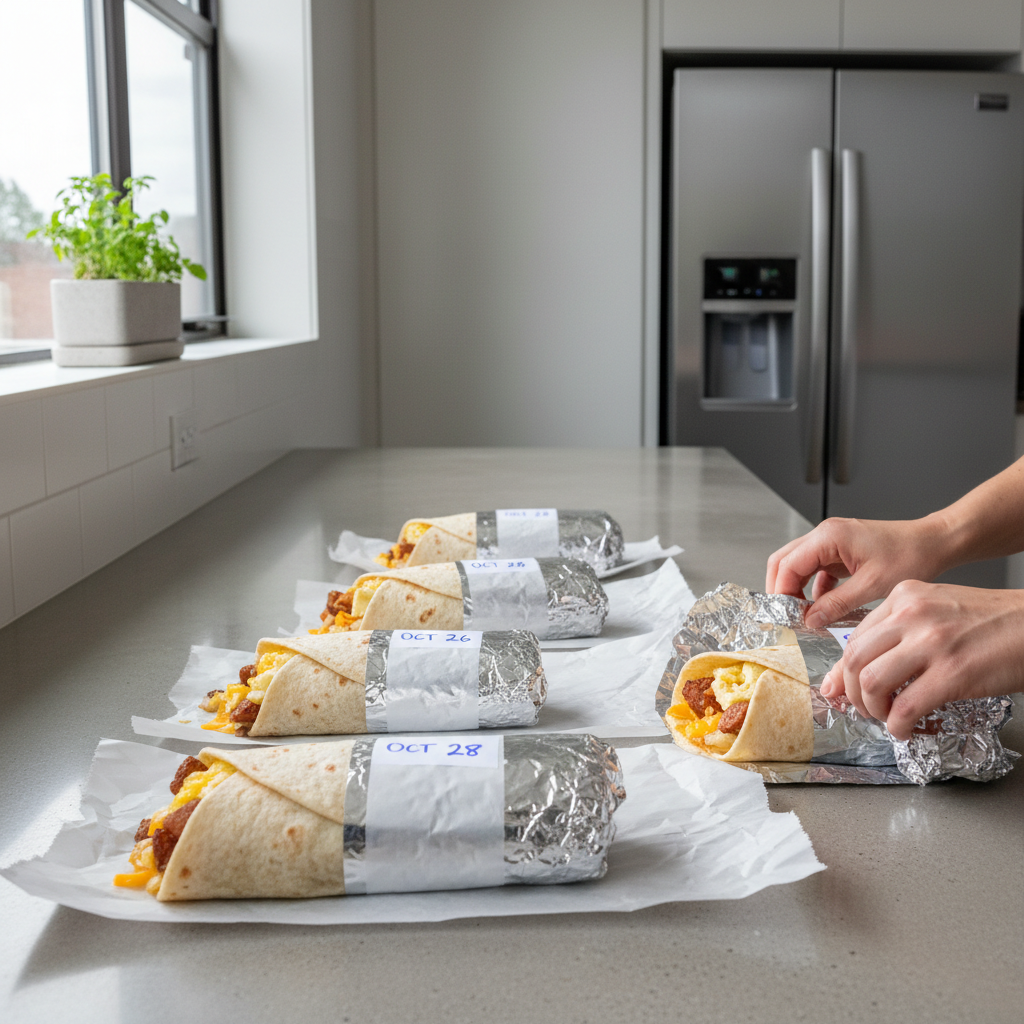
Below you’ll get a practical formula, not a strict rulebook: the best fillings for freezing, how to avoid waterlogged textures, a clear assembly workflow, and reheat options that work even when you’re half-awake.
What Makes Breakfast Burritos “Freezer-Good” (and What Ruins Them)
Freezer success comes down to moisture control and structure. Most “bad freezer burrito” stories trace back to one of these issues.
- Watery fillings (salsa dumped in, undercooked veggies, fresh tomatoes) seep into tortillas and turn them gummy.
- Overcooked eggs start dry, then reheat into rubber.
- Too much steam trapped during wrapping creates condensation, which later becomes ice crystals and sogginess.
- Wrong tortilla choice (too thin, very dry) cracks when you wrap or splits after reheating.
According to USDA Food Safety and Inspection Service, frozen foods remain safe indefinitely when kept at 0°F, but quality drops over time, which is why technique matters if you want them to taste fresh weeks later.
Ingredients You’ll Actually Want to Eat After Freezing
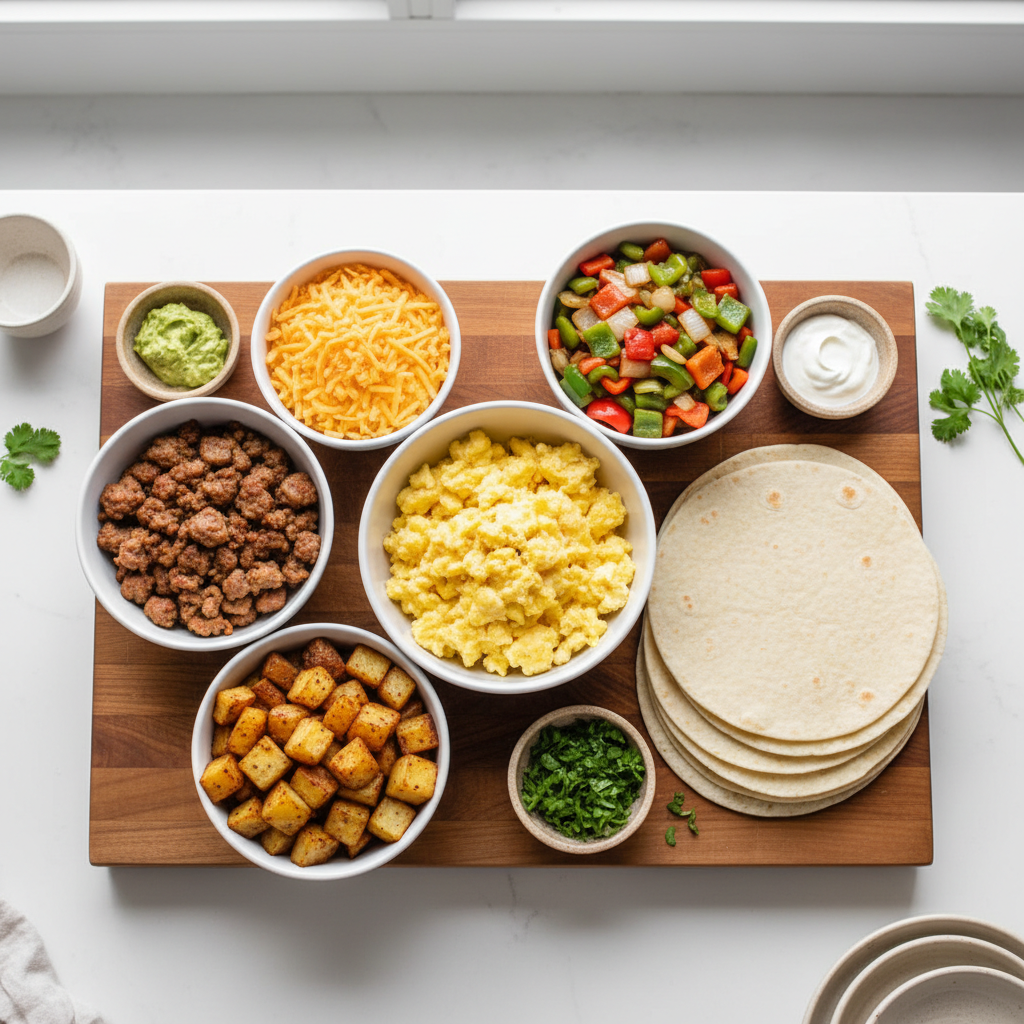
Think of your filling in layers: protein, starch, veg, cheese, then a sauce on the side if it’s wet. This keeps texture intact.
Core ingredients (8 burritos)
- 8 large flour tortillas (10-inch “burrito size”)
- 10 large eggs
- 1/4 cup milk or half-and-half (optional, helps softer eggs)
- 1 to 1 1/2 cups shredded cheese (cheddar, Monterey Jack, or a blend)
- 2 cups cooked filling (choose one: breakfast sausage, bacon, diced ham, or black beans)
- 1 1/2 cups potatoes (hash browns, roasted diced potatoes, or tater tots chopped)
- 1 cup sautéed bell peppers/onions or baby spinach (cooked dry)
- Salt, pepper, and any spices you like (cumin, smoked paprika, chili powder)
Freezer-friendly add-ins: roasted green chiles, cooked mushrooms (well-drained), scallions, small amounts of cream cheese, refried beans as a “moisture barrier.”
Usually better on the side: pico de gallo, fresh salsa, avocado, sour cream, runny hot sauces. You can pack these separately and keep the burrito itself stable.
Quick Self-Check: Which Freezer Burrito Problem Are You Having?
If your results feel inconsistent, use this short checklist before you change the whole recipe.
- Soggy tortilla? Your fillings likely went in too wet, or you wrapped while hot.
- Cracking tortilla? Tortilla too cold/dry, or you overstuffed and pulled too tight.
- Rubbery eggs? Eggs cooked too long, or you microwaved too aggressively without venting.
- Bland after reheating? You may need more seasoning in the eggs/potatoes, not more sauce inside.
- Freezer burn taste? Wrapping not airtight, or burritos sat unprotected in a frost-heavy freezer.
This matters because breakfast burritos are forgiving while fresh, but freezing amplifies small mistakes. Fix the weak link and the whole batch improves.
Step-by-Step: Easy Breakfast Burritos Recipe (Built for Freezing)
This workflow is set up to reduce moisture and speed up assembly. You’ll be done faster than you think.
1) Cook the potatoes and fillings “dry”
- Roast diced potatoes at 425°F until browned, or crisp hash browns in a skillet.
- Cook sausage/bacon, then drain well on paper towels.
- Sauté peppers/onions until most moisture evaporates, then cool.
If anything looks glossy-wet in the pan, give it another minute. That extra minute saves your tortilla later.
2) Scramble eggs gently
- Whisk eggs with salt and pepper, add a splash of milk if you like.
- Cook on medium-low, stirring slowly, and stop when they look just set and still soft.
You’re not aiming for diner-dry eggs. Slightly under is better because reheating finishes the job.
3) Cool before you wrap
Spread fillings on a sheet pan for 10–15 minutes. Warm is fine, steaming hot is not.
4) Warm tortillas, then assemble
- Microwave tortillas under a damp paper towel for 20–30 seconds, or warm in a dry skillet.
- In the lower third of each tortilla: layer potatoes, eggs, protein, veggies, then cheese.
- Keep filling to a neat line, don’t mound it into a dome.
5) Roll tight, wrap tighter
- Fold sides in, roll from bottom up, keeping tension without tearing.
- Wrap in parchment or foil, then place in a freezer bag with as much air pressed out as possible.
Key point: if you want your breakfast burritos to reheat evenly, consistency beats creativity. Make them the same size so timing stays predictable.
Freezing + Reheating Methods That Don’t Taste Like “Freezer Food”
How you freeze is half the battle, and reheating is the other half. Here’s a simple timing table you can screenshot.
| Method | From Frozen | Best For | Texture Notes |
|---|---|---|---|
| Microwave + finish in skillet | 2–3 min microwave (50–70% power), then 2–3 min skillet | Most people, best balance | Soft inside, crisp outside |
| Microwave only | 3–4 min (flip halfway) | Fastest weekday option | Can be softer, vent wrapper |
| Oven | 350°F for 30–40 min | Batch reheating | Even heat, drier exterior |
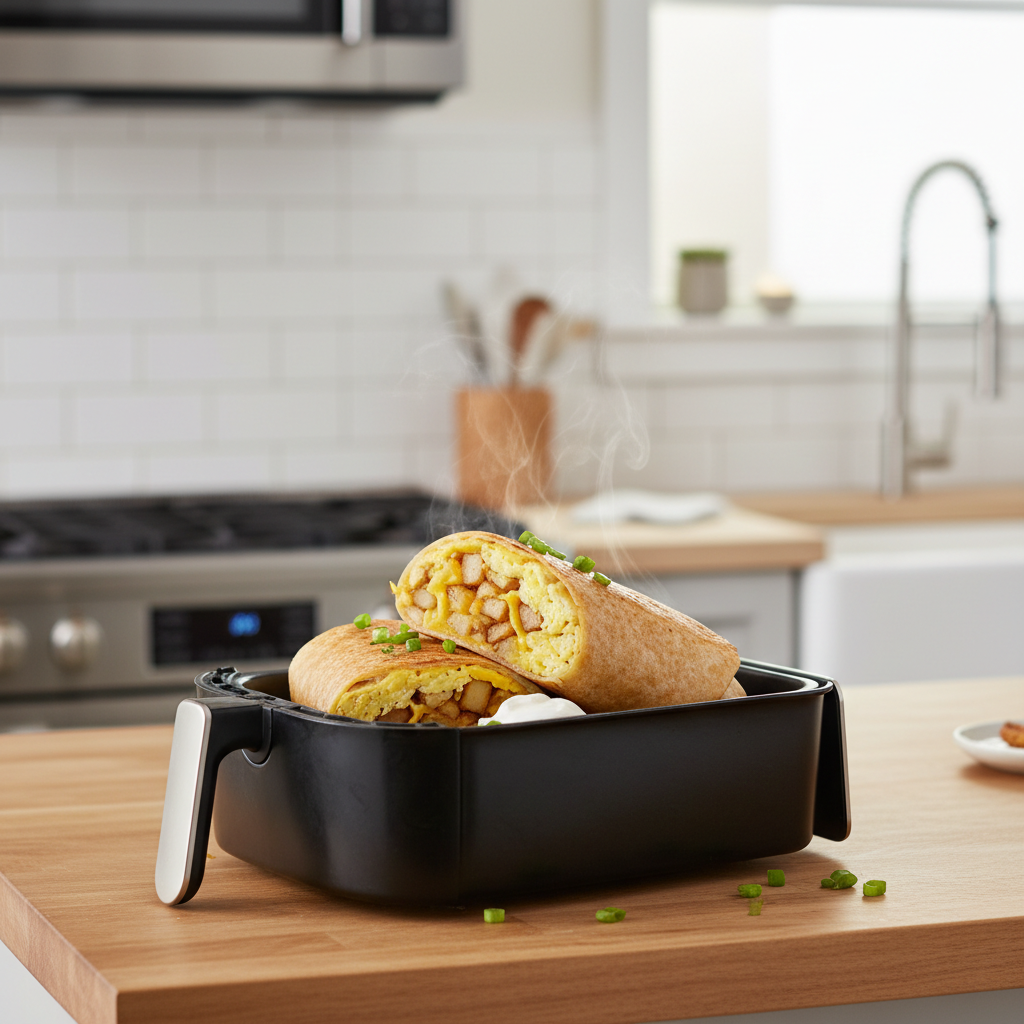
| Air fryer | 350°F for 12–16 min (flip once) | Crispy finish lovers | Great crunch, watch splitting |
Microwave tip that actually helps: unwrap foil, keep parchment if you used it, and leave one end slightly open so steam can escape. Trapped steam is what turns tortillas gummy.
Common Mistakes (and the Small Fixes That Matter)
A lot of “meal prep advice” sounds like rules, but in real kitchens it’s more like guardrails. These are the ones worth keeping.
- Stuffing too much filling: looks generous, reheats uneven, and bursts. Keep it modest and consistent.
- Adding salsa inside: if you want that flavor, use drained chunky salsa or a spoon of thicker sauce, and keep it minimal.
- Skipping cooling time: wrapping hot food is basically inviting condensation.
- Freezing loose in a bag: wrap each one, then bag them together to prevent freezer burn.
- Reheating on full power: lower power gives eggs time to warm without toughening.
If you’re trying to make healthier breakfast burritos, focus on the ratio: more vegetables and beans, slightly less cheese, and a potato portion that feels satisfying but not heavy.
Food Safety, Storage Time, and When to Ask a Pro
Most home cooks are thinking about taste, but safety matters too. According to USDA Food Safety and Inspection Service, your freezer temperature should stay at 0°F or below, and leftovers should be refrigerated within 2 hours, sooner if it’s a hot day in your kitchen.
- Best quality window: many people find 1–3 months tastes best, even though frozen items can remain safe longer when kept consistently frozen.
- Label everything: date + filling type, so you’re not guessing later.
- If you’re pregnant, immunocompromised, or cooking for small kids, it can be smart to be extra strict about cooling and reheating temperatures, and to consult a healthcare professional if you have specific concerns.
If you notice an off smell after thawing, heavy ice crystals inside the wrap, or the burrito sat at room temperature too long, tossing it is the safer call.
Conclusion: A Simple System You Can Repeat
Once you treat freezer burritos as a moisture-and-heat problem, not a “secret recipe” problem, everything gets easier. Cook fillings dry, keep eggs soft, cool before wrapping, and reheat with a little patience.
If you want a good next step, pick one filling combo you already like, make a batch of eight, and take quick notes on your reheating time. After two rounds, your breakfast burritos start to feel dialed in, not experimental.
FAQ
How do I keep breakfast burritos from getting soggy after freezing?
Cool your fillings before wrapping, and avoid watery ingredients inside the tortilla. If you love salsa, serve it on the side or use a thicker, drained version in a small amount.
Can I freeze breakfast burritos with scrambled eggs and cheese?
Yes, eggs and cheese freeze well in many cases. The trick is to cook eggs gently so they stay tender after reheating, and to wrap airtight to reduce freezer burn.
What tortillas work best for freezer breakfast burritos?
Large, soft flour tortillas labeled “burrito size” usually hold up better than thin tortillas. If yours crack, warm them briefly before rolling and don’t overfill.
Should I thaw freezer burritos overnight?
You can, and it shortens reheating time. But reheating from frozen also works; just use lower microwave power and flip halfway for more even warming.
How long do frozen breakfast burritos last?
They can remain safe longer when kept at 0°F, but many people prefer eating them within 1–3 months for best texture and flavor. Labeling helps you keep track.
What’s the best way to reheat for a crispy outside?
Microwave just until the center warms, then finish in a dry skillet or air fryer. That combo avoids a cold middle while still giving you a toasted tortilla.
Can I make vegetarian freezer breakfast burritos?
Definitely. Black beans or refried beans work well, and roasted vegetables tend to freeze better than watery fresh ones. Season a bit more than you think you need since freezing can mute flavors.
If you’re trying to streamline weekday mornings even more, set up a “burrito bar” assembly line once a week, then keep a couple sauce options in the fridge so you don’t get bored, it’s a small routine that makes meal prep feel less like a chore.