
Roasted pineapple is the fastest way to turn a fruit that tastes a little flat into a dessert with real depth, caramel edges, and that warm, honeyed aroma you usually only get from a bakery case.
If you’ve tried it once and thought “meh,” it’s usually not the idea, it’s the setup: pineapple ripeness, how you cut it, and whether you roast hot enough to brown instead of steam.
This guide keeps it practical: how to pick the right pineapple, the simple roast method that works on a weeknight, and a few finishing touches that make it feel restaurant-level without getting fussy.
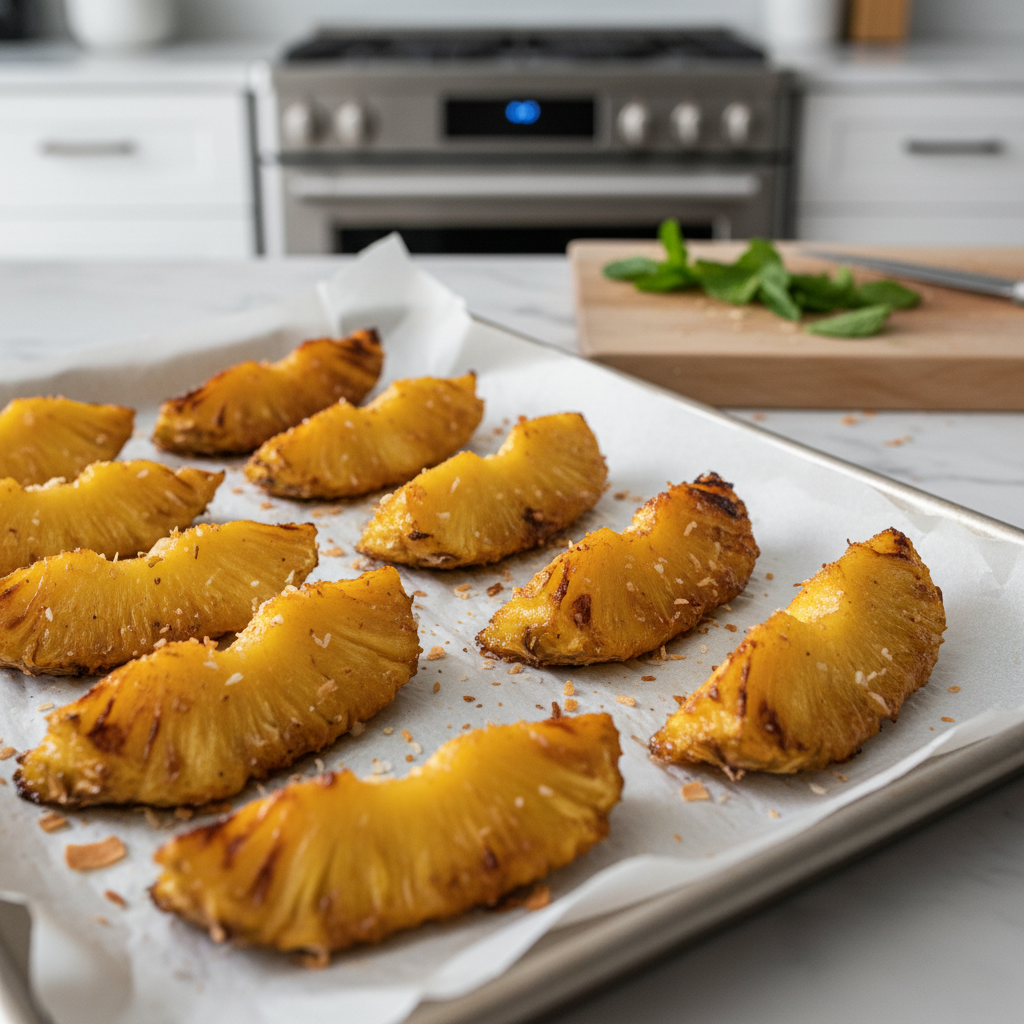
Why roasted pineapple tastes better than raw (most days)
Heat changes pineapple in a way your knife can’t. The water content concentrates, the surface sugars brown, and the fruit’s sharpness softens into something rounder and more dessert-friendly.
- Caramelization + Maillard browning: that “toasty” sweetness you’re chasing comes from browning on the surface, not just adding more sugar.
- Juice concentrates: roasting drives off moisture, so the flavor reads louder.
- Texture gets plush: the core and firmer sections relax, so each bite feels more tender.
According to USDA FoodData Central, pineapple naturally contains sugars along with acids and fiber, which is why browning it can feel like the flavor “balances out” once heat mellows the bite.
Ingredients and tools (keep it simple, but deliberate)
Core ingredients
- 1 ripe pineapple (or pre-cut spears/rings)
- 1–2 tbsp neutral oil or melted butter
- Pinch of salt (yes, even for dessert)
Flavor boosters (choose 1–2)
- Brown sugar or maple syrup for a glossy finish
- Cinnamon, ginger, or chili-lime seasoning for contrast
- Vanilla extract (a few drops, not a splash)
- Lime juice or zest to brighten at the end
Tools that actually matter
- Rimmed sheet pan or roasting dish
- Parchment paper (less sticking, easier cleanup)
- Sharp chef’s knife
If you only change one thing: use a roomy pan. Crowding makes pineapple steam, and steamed pineapple tastes like cafeteria fruit cup.
How to choose and prep pineapple so it roasts well
A lot of “why didn’t this caramelize?” problems start at the store. Roasting can’t invent sweetness, it mostly amplifies what’s already there.
- Look for: a pineapple that smells sweet at the base, feels heavy for its size, and has skin that’s more golden than green.
- Avoid: sour smell, soft spots, or leaking juice (often past peak).
- Cut size: spears and thick rings brown better than small chunks, because you get more surface contact without drying out the center.
Pat the cut pineapple dry before seasoning. That small step helps browning more than extra sugar ever will.
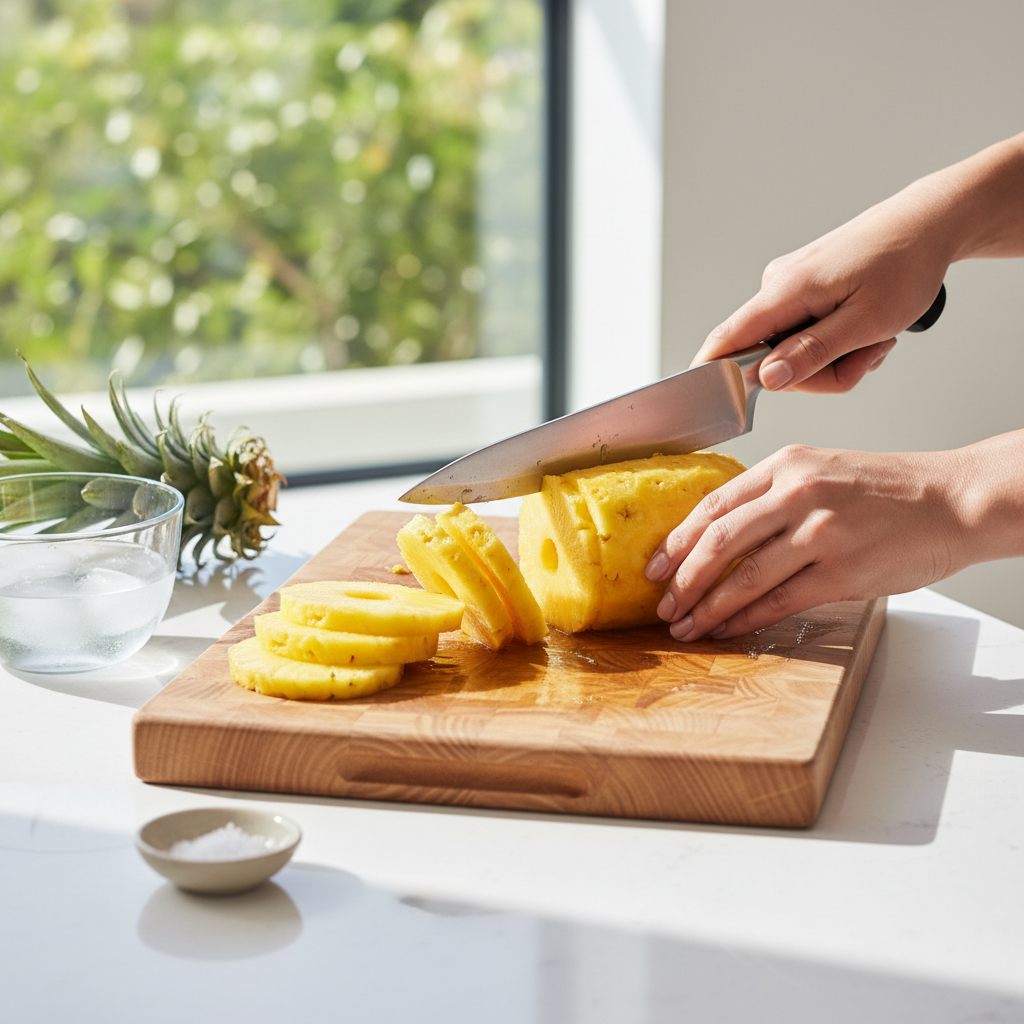
Roasted pineapple recipe (sheet pan method)
This is the dependable version: high heat, enough space, and a short roast that keeps it juicy while still giving you browned edges.
Step-by-step
- Heat the oven: 425°F. Let it fully preheat, don’t rush this part.
- Prep the pan: line with parchment.
- Season: toss pineapple with butter or oil, a pinch of salt, and your chosen booster (like 1 tbsp brown sugar + 1/2 tsp cinnamon).
- Arrange: single layer, cut-side down where possible, with breathing room between pieces.
- Roast: 18–25 minutes, flipping once halfway for even browning.
- Finish: optional squeeze of lime or a tiny drizzle of maple syrup right after it comes out.
Don’t chase “soft.” You’re looking for golden edges and syrupy pan juices while the center still holds its shape.
Flavor variations and what they pair with (a quick decision table)
Most people get stuck at “cinnamon or not.” You can do better than that with small, smart combos that match your mood and what’s already in your kitchen.
| Flavor direction | What to add | Best serving ideas |
|---|---|---|
| Classic warm dessert | Brown sugar + cinnamon + pinch of salt | Vanilla ice cream, whipped cream, pecans |
| Tropical & bright | Maple syrup + lime zest | Greek yogurt, granola, coconut flakes |
| Spicy-sweet | Chili powder + honey + lime | Tajín-style finish, chamoy drizzle (optional) |
| “Dinner party” vibe | Butter + vanilla + dark rum (small splash) | Mascarpone, shortbread, toasted almonds |
If you want it to taste more grown-up, add acidity at the end, not the beginning. Lime juice before roasting can slow browning and push the flavor toward “tangy” when you might want “caramel.”
Troubleshooting: the real reasons it turns out watery, pale, or bitter
- Pale pineapple: oven not hot enough, pan crowded, or pineapple too wet. Fix with higher heat and space, plus pat dry.
- Watery pan juices: cut pieces too small, or fruit underripe. Use thicker cuts and roast a few minutes longer.
- Burnt sugar: too much added sugar at high heat. Use less, or add syrup in the last 5 minutes.
- Bitter finish: char happens fast on thin edges. Flip earlier and remove smaller pieces sooner.
One more thing people don’t like hearing: if your pineapple tastes dull raw, roasted pineapple will taste like a warmer version of dull. Sweetness starts with the fruit.
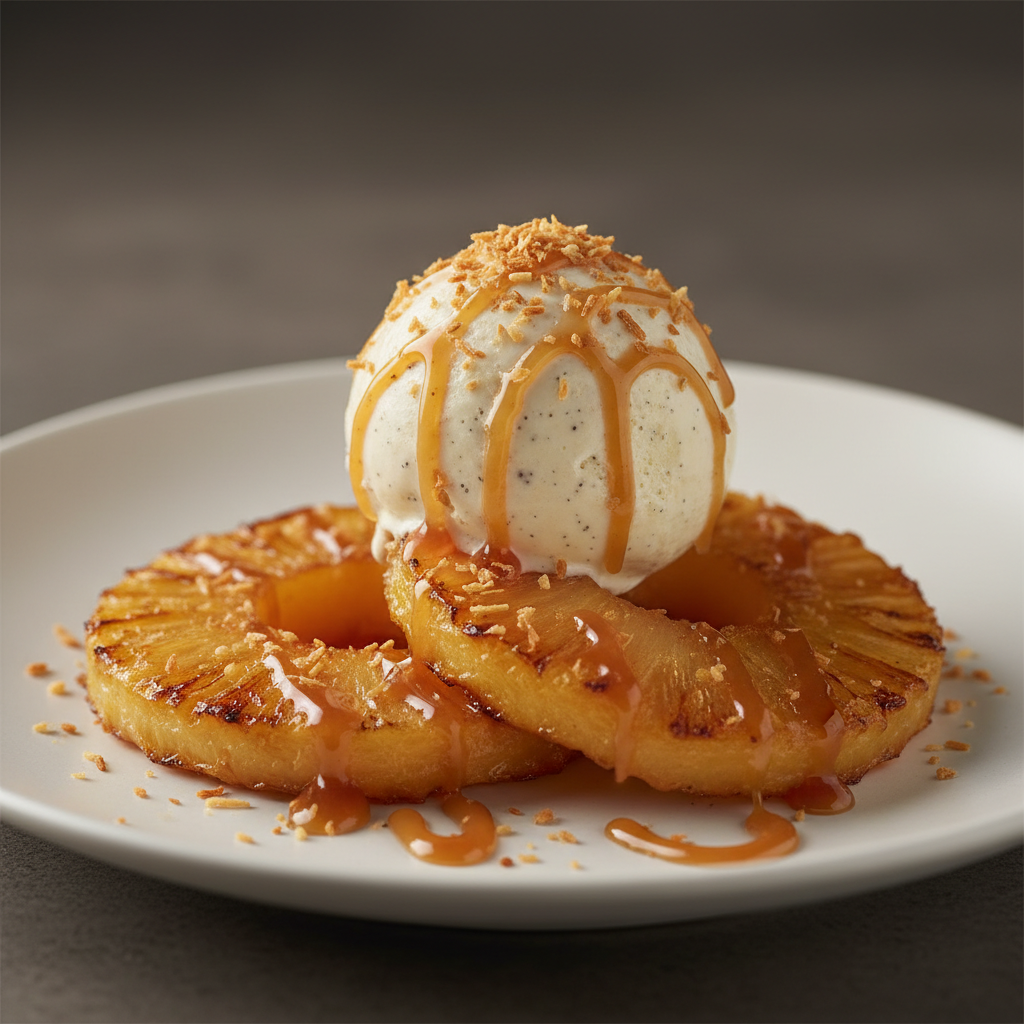
Serving ideas, storage, and safety notes
Serving ideas that feel “done”
- Weeknight dessert: roasted pineapple + yogurt + granola
- Classic comfort: warm fruit + ice cream + chopped nuts
- Brunch upgrade: spoon over pancakes or waffles, add the pan syrup
- Not just dessert: pair with grilled pork or tacos, keep seasoning on the chili-lime side
Storage
- Cool, then refrigerate in a sealed container for 3–4 days in many home kitchens.
- Reheat in a skillet for better browning, microwave works but softens texture.
Safety and dietary notes
Pineapple can irritate mouths for some people, and added sugar may not fit every diet. If you manage a medical condition, it’s usually smart to ask a qualified professional about portion size and ingredients that make sense for you.
Key takeaways (so you don’t overthink it)
- High heat + space on the pan creates browning, not extra sugar.
- Thick rings or spears roast better than tiny chunks.
- Pat fruit dry, then season lightly, salt included.
- Add acidic finish (like lime) after roasting for a cleaner, brighter dessert.
Conclusion: a small technique that makes pineapple feel like dessert
Roasted pineapple works because it delivers what raw pineapple sometimes can’t, warmth, aroma, and caramel notes without complicated steps. Pick decent fruit, roast hot, and keep your add-ins restrained, you’ll get a dessert that tastes intentional.
If you want an easy next move, try the classic version once, then do one variation with lime zest or chili-lime so you can feel how the finish changes everything.
FAQ
How do I know when roasted pineapple is done?
Look for browned edges and glossy surfaces, plus some syrup collecting on the pan. It should be tender but not collapsing into mush.
Can I make roasted pineapple with canned pineapple?
You can, but it’s trickier because canned fruit carries extra moisture and often syrup. Drain well, pat dry, and expect less browning than fresh.
Do I need to add sugar for caramelization?
Not always. A ripe pineapple browns on its own; sugar mainly adds gloss and faster color, but it can burn if you go heavy.
Should I roast pineapple rings or spears?
Rings look great for plating, spears are easier to flip and snack on. Both work, as long as they’re thick enough to hold juice.
Can I roast pineapple ahead of time for a party?
Yes. Roast earlier in the day, chill, then warm in a skillet to bring back some browning and aroma right before serving.
Why is my roasted pineapple still sour?
Usually the fruit was underripe. You can soften the perception with a little brown sugar and butter, but it won’t taste truly sweet if the pineapple wasn’t there to begin with.
What’s the best topping for roasted pineapple?
Vanilla ice cream is the crowd-pleaser, but yogurt plus toasted nuts feels lighter. If you like contrast, add lime zest or a tiny pinch of flaky salt.
If you’re making roasted pineapple for guests and want it to feel effortless, set up a small “topping bar” with one creamy option, one crunchy option, and one bright finish, it turns a simple tray of fruit into a dessert people actually talk about.