
Baked salmon recipes are one of the easiest ways to get a weeknight dinner that feels “real” without turning your kitchen into a project, but the same complaints pop up every time: dry fillets, bland flavor, and that vague fear of undercooking.
This guide keeps it simple and practical, you’ll get a lemon-forward base recipe, a few smart variations, and the small details that usually decide whether salmon turns out tender or tough.
I’ll also share a quick doneness checklist, a timing table you can actually use, and common mistakes that waste good fish, because lemon can help, but it won’t magically fix overbaking.
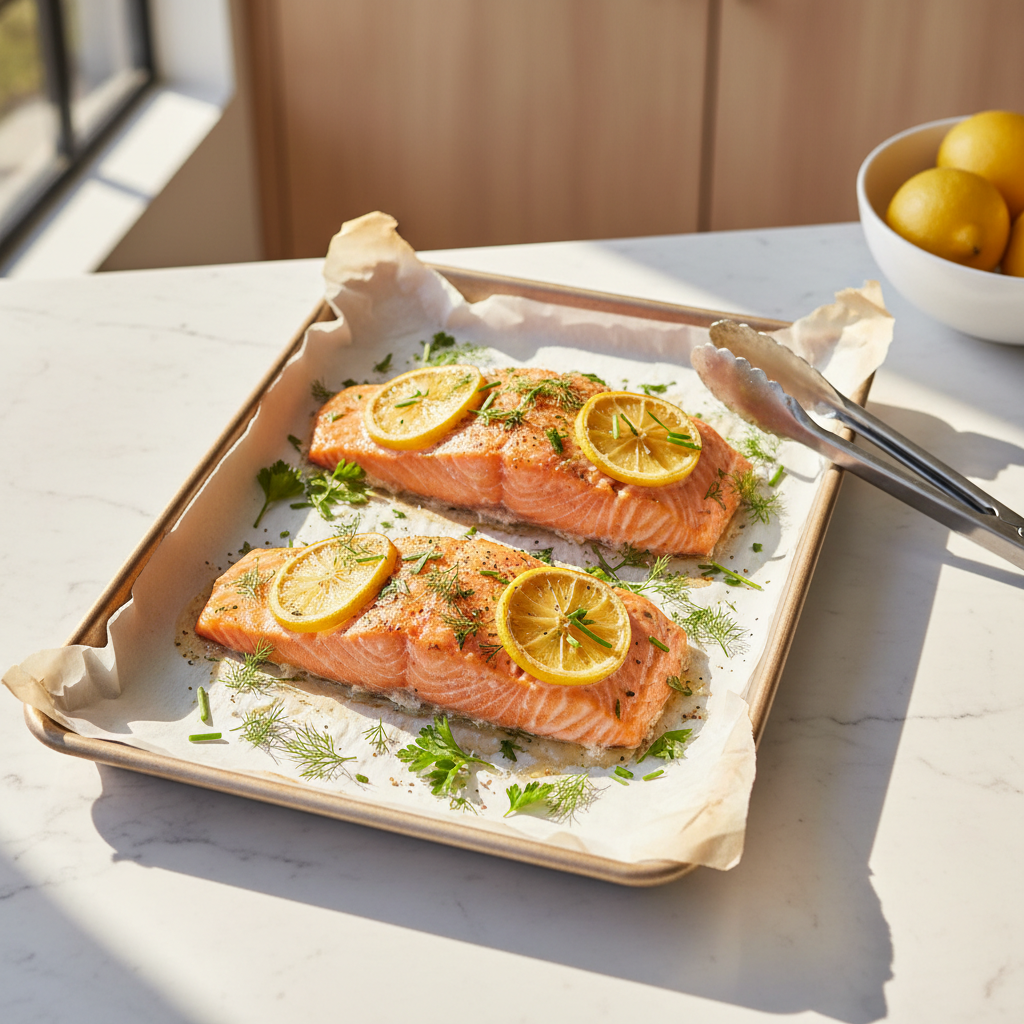
Why lemon works so well with baked salmon
Lemon shows up in so many healthy salmon dinners for a reason, it does a few jobs at once, and it plays nicely with olive oil, garlic, herbs, and even a little heat.
- Brightness without sugar: lemon juice and zest add punch without needing honey-heavy glazes.
- Balances richness: salmon has natural fat, citrus keeps each bite from feeling heavy.
- Helps seasoning “read”: salt, pepper, dill, parsley, and garlic taste clearer next to acidity.
One caveat, lemon is not a tenderizer in the oven the way people assume, it can even make the surface turn a bit firm if you marinate too long, so think of lemon as flavor first.
A healthy lemon baked salmon base recipe (the one to memorize)
This is the go-to template you can repeat without getting bored, it’s flexible, pantry-friendly, and scales from one fillet to a family tray.
Ingredients (serves 4)
- 4 salmon fillets, about 5–7 oz each (skin-on or skinless)
- 1–2 Tbsp olive oil
- 1 lemon (zest plus 2–3 Tbsp juice), plus extra slices
- 2 cloves garlic, finely chopped
- 1 tsp kosher salt (adjust for fillet thickness)
- Black pepper
- Optional: dill or parsley, red pepper flakes
Method
- Heat oven to 400°F. Line a sheet pan with parchment or foil.
- Pat salmon dry, then place on the pan. Dry surface matters more than people think, it helps the top roast instead of steaming.
- Mix olive oil, lemon zest, lemon juice, garlic, salt, pepper, and optional herbs, brush over the fish.
- Add lemon slices on top or around the fillets, not piled thickly.
- Bake until the thickest part flakes easily and turns opaque, then rest 2 minutes before serving.
If you prefer a little color on top, finish with 1–2 minutes under the broiler, but stay close, salmon goes from “perfect” to “dry” fast.
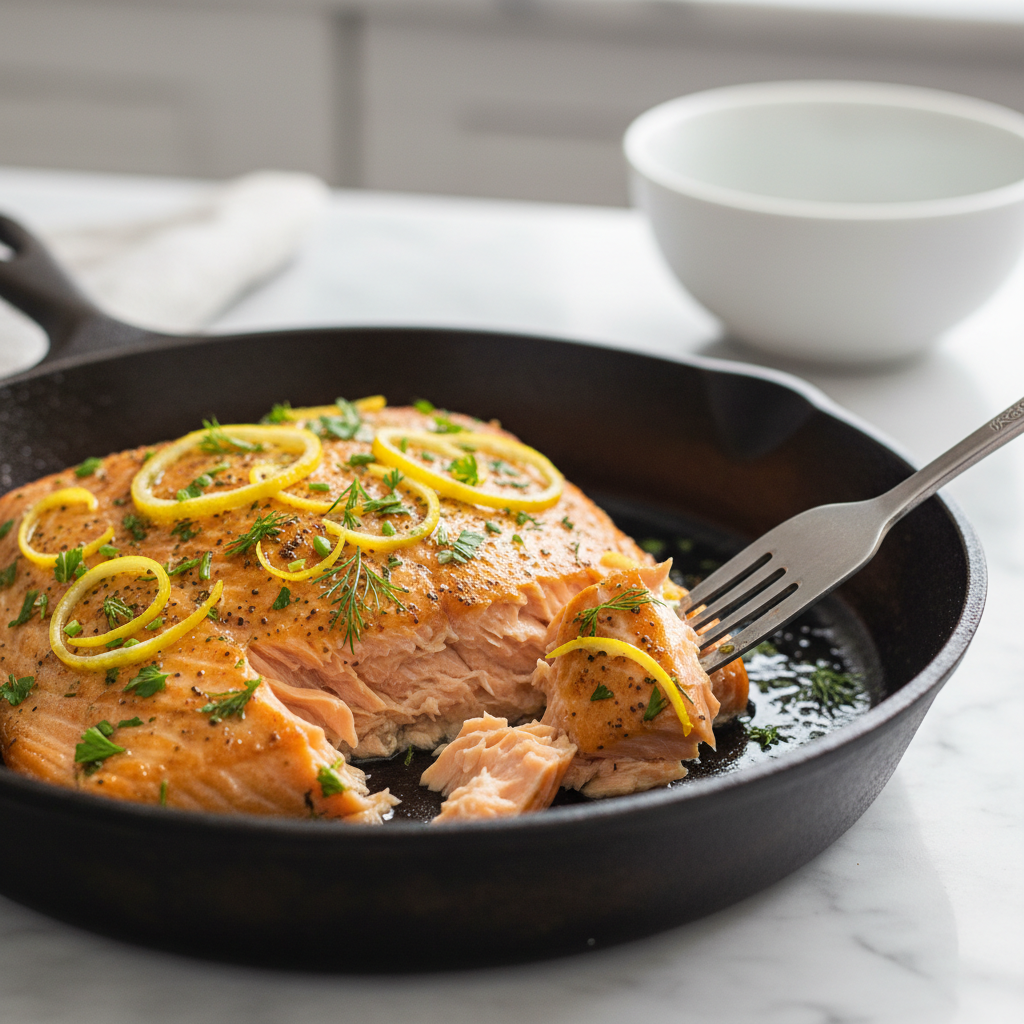
Timing and temperature: a quick table (so you stop guessing)
Most baked salmon failures come down to time, not seasoning. Thickness matters more than weight, so use the thickest part of the fillet as your reference.
According to USDA Food Safety and Inspection Service, seafood is considered safely cooked at an internal temperature of 145°F. Many home cooks pull salmon earlier for a softer texture, but if you do that, it’s worth discussing personal risk tolerance with a qualified professional, especially for pregnancy or immune concerns.
| Fillet thickness (thickest point) | Oven temp | Approx bake time | Texture cue |
|---|---|---|---|
| 3/4 inch | 400°F | 8–10 min | Opaque edges, slight translucence center |
| 1 inch | 400°F | 10–12 min | Flakes with gentle pressure |
| 1 1/2 inch | 400°F | 14–16 min | Mostly opaque, juices look milky not clear |
| 1 inch (higher heat) | 425°F | 8–10 min | More roast flavor, narrower window |
Quick self-check: which baked salmon problem are you dealing with?
If your results feel inconsistent, this short list usually reveals the culprit in under a minute.
- Dry and chalky: baked too long, or fillet was thin and cooked like a thick one.
- Watery and pale: fish went into the oven wet, pan overcrowded, or oven not fully preheated.
- Bland: not enough salt, no zest, lemon juice added too late or too little fat in the mix.
- White stuff (albumin) all over: heat too high or overcooked; it’s common and safe, but it signals you passed the sweet spot.
- Sticking to the pan: no parchment, or you tried lifting too early.
Small fix, big impact: buy a basic instant-read thermometer. For baked salmon recipes, it’s the closest thing to a cheat code that still keeps you cooking, not guessing.
3 lemon-based variations that stay “healthy” without feeling boring
Once the base recipe works for you, rotate flavors. Keep the same bake time strategy, just swap the topping.
1) Garlic-lemon Greek style
- Add oregano, a pinch of paprika, and a few sliced Kalamata olives around the fish.
- Serve with cucumber salad or roasted zucchini.
2) Dijon lemon-herb
- Whisk 1–2 tsp Dijon mustard into the olive oil and lemon mixture.
- Use dill, parsley, or tarragon, keep it light so it doesn’t taste “saucy.”
3) Spicy lemon with chili and scallions
- Add red pepper flakes or a thin swipe of chili crisp, plus sliced scallions after baking.
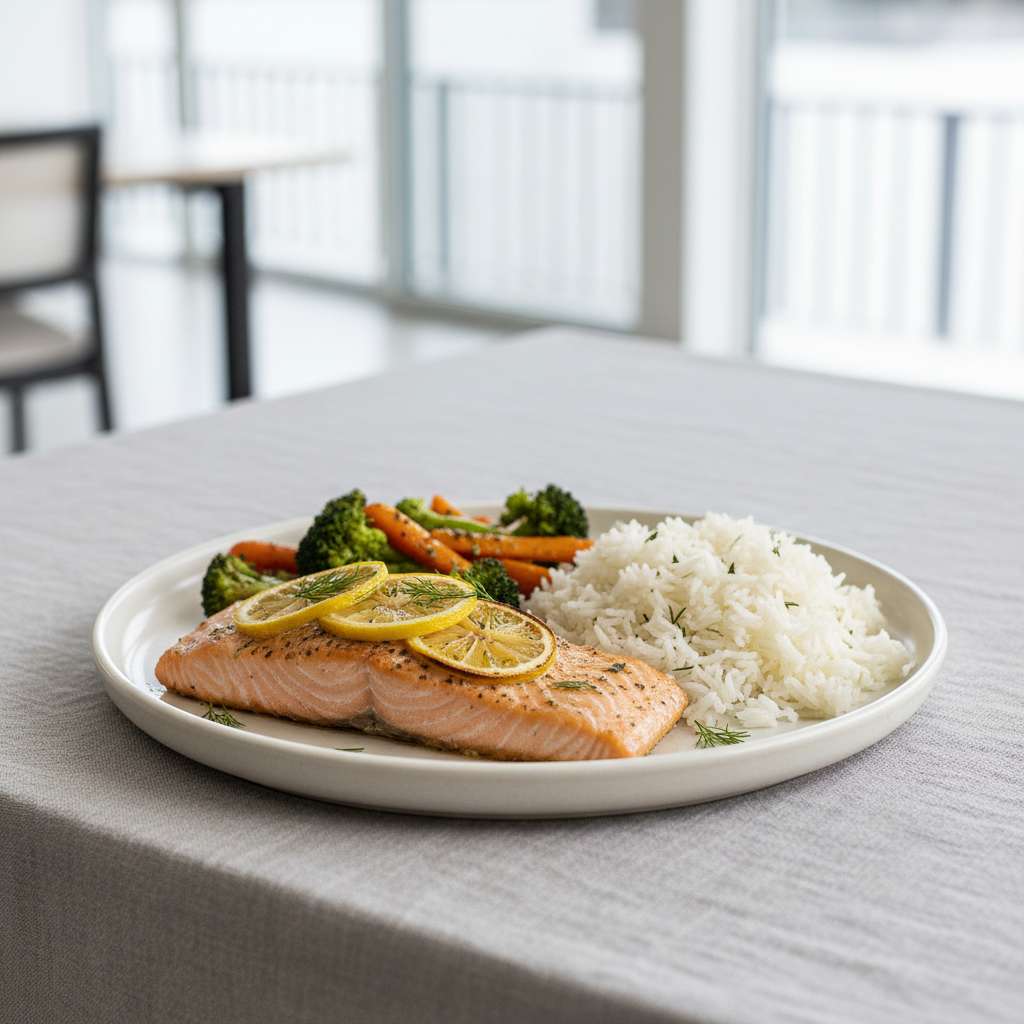
- Pair with rice and steamed broccoli if you want a simple meal prep setup.
Practical tips that make baked salmon taste better (without extra calories)
This is the “editor notes” section, the stuff recipes often assume you already know.
- Use zest, not just juice: zest carries aromatic oils, that’s where the lemon flavor lives.
- Salt earlier than you think: even 10 minutes on the counter helps seasoning penetrate a bit.
- Don’t drown the fish: too much liquid on the pan encourages steaming.
- Rest briefly: 2–3 minutes tightens texture and keeps juices from spilling out.
- Finish with something fresh: chopped herbs, more zest, or a squeeze of lemon right before eating.
Common mistakes (and what to do instead)
These are the traps that make people swear they “can’t cook salmon,” even though the fix is usually one step.
- Mistake: Baking straight from the fridge. Try: Let fillets sit 10–15 minutes, more even cooking.
- Mistake: Using a crowded pan. Try: Give each piece space so heat can circulate.
- Mistake: Long lemon-soak marinades. Try: Keep lemon exposure moderate, or add most lemon at the end.
- Mistake: “Set it and forget it” timing. Try: Start checking a couple minutes early, especially with thin supermarket cuts.
If you’re making baked salmon recipes for guests, do a test run with the same thickness of fillet, that’s the detail that changes everything.
When it’s worth getting extra help
If you’re consistently unsure about doneness, food safety, or you cook for someone pregnant, older, or immunocompromised, it’s reasonable to be more conservative and aim for USDA guidance, or ask a qualified healthcare professional about risk. And if you suspect a fish allergy or histamine sensitivity, stop experimenting and consult a clinician, that’s not a “push through it” situation.
Conclusion: keep it lemon-simple, but cook it on purpose
Lemon can make salmon taste clean and bright, but the real upgrade comes from controlling moisture and timing. Pick one reliable method, use zest, check doneness early, and you’ll have a rotation of healthy dinners that feel effortless without being bland.
If you want a straightforward next step, cook the base recipe once this week, then repeat it with the Dijon variation next time so you can compare texture and bake time with the same oven and pan.
FAQ
What temperature is best for baked salmon recipes in the oven?
Most home kitchens do well at 400°F because it roasts gently and gives you a decent timing window. If you run hot or your fillets are thin, 375°F can be more forgiving.
Should I cover salmon with foil when baking?
Usually no, covering traps steam and can make the surface softer. If your fillets are very thick and you worry about the outside drying, you can loosely tent for part of the bake, then uncover to finish.
How do I keep lemon baked salmon from turning dry?
Start checking early, especially for thin cuts, and don’t rely on a single “minutes per pound” rule. An instant-read thermometer and a 2-minute rest do more than extra oil or extra sauce.
Is it okay if I see white protein on top of the salmon?
Yes, it’s common albumin. It often shows up when heat is high or the fish is slightly over the ideal texture point, so it’s a useful signal to shorten time next round.
Can I use bottled lemon juice instead of fresh?
You can, and it’s still workable for weeknights, but it tends to taste flatter. If you go bottled, add fresh zest if possible, that’s where the “fresh lemon” impression comes from.
How long can I keep baked salmon leftovers?
Many people refrigerate cooked salmon for a couple days in an airtight container. If you have specific food safety concerns, it’s smart to follow conservative storage guidance and consult reputable sources or a professional.
What sides pair well with healthy lemon baked salmon?
Think simple and not too rich: roasted asparagus, broccoli, green beans, quinoa, rice, or a crisp salad. Lemon already adds brightness, so you don’t need heavy sauces.
If you’re making salmon often and want a more “set-and-repeat” routine, it may help to standardize the fillet thickness you buy, keep a thermometer handy, and save one master lemon seasoning mix so weeknight cooking stays genuinely easy.