
best jalebi recipe crispy sweet easy is really about getting three things to cooperate: a pourable batter that holds its shape, oil temperature that stays steady, and sugar syrup that coats without turning sticky or soft.
If you have tried jalebi once or twice and ended up with pale rings, broken spirals, or syrupy coils that go limp five minutes later, you are not alone. Jalebi looks simple, but tiny choices like batter rest time and syrup thread stage decide whether you get that shattering crisp bite or a chewy donut vibe.
This guide keeps it practical for a U.S. kitchen, using ingredients you can find at most supermarkets or Indian grocery stores, plus clear checkpoints so you can diagnose what went wrong fast. You will also get a small timing plan, a troubleshooting table, and realistic storage tips, because jalebi is at its best fresh.
What makes jalebi crispy (and what ruins it)
Crisp jalebi has a thin shell that sets quickly in hot oil, then gets a quick syrup dip that flavors the outside without soaking the center. When it turns soft, it is usually one of these issues.
- Oil too cool, jalebi absorbs oil and cooks slowly, which makes it heavy and less crisp.
- Batter too thick, spirals sit tall and do not cook through evenly, so the inside stays bready.
- Syrup too thin or too hot, it penetrates the jalebi instead of glazing it.
- Long syrup soak, even good syrup eventually softens the crust.
- Humidity and time, jalebi naturally loses crunch as it sits, especially in a warm kitchen.
According to USDA Food Safety and Inspection Service, hot sugar syrups can cause severe burns, so keep kids away from the stove and use long utensils when dipping and turning.
Ingredients you actually need (and smart substitutions)
You do not need a long pantry list, but each ingredient plays a role. This version aims for a reliable home result, not a restaurant shortcut.
Batter
- All-purpose flour: main structure.
- Cornstarch: helps lighten the shell and adds snap.
- Plain yogurt: gentle tang, helps fermentation.
- Water: adjust consistency.
- Turmeric or yellow/orange food color: optional, for classic look.
- Baking powder: small amount for lift, especially if you do a shorter rest.
Sugar syrup
- Granulated sugar + water: base syrup.
- Cardamom: classic aroma.
- Rose water or saffron: optional, adds bakery-style fragrance.
- Lemon juice: helps reduce crystallization risk.
If you cannot find rose water, skip it rather than using rose extract, which often tastes harsh. Cardamom alone can carry the flavor.
Step-by-step: batter, syrup, frying, and dipping
This section is the “do it in order” part. Read once, then cook.
1) Mix and rest the batter
- In a bowl, whisk 1 cup all-purpose flour with 2 tbsp cornstarch and 1/4 tsp baking powder.
- Whisk in 1/2 cup plain yogurt, then add water little by little until you get a thick ribbon consistency, like pancake batter that flows steadily.
- Add a pinch of turmeric or a drop or two of food color if using.
- Cover and rest 30–60 minutes at room temperature. If your kitchen runs cold, give it closer to 60 minutes.
That rest matters because it relaxes gluten and improves flow, so you can pipe cleaner spirals. Many home batches fail here and people blame the oil.
2) Make a sticky-but-not-thin syrup (one-thread stage)
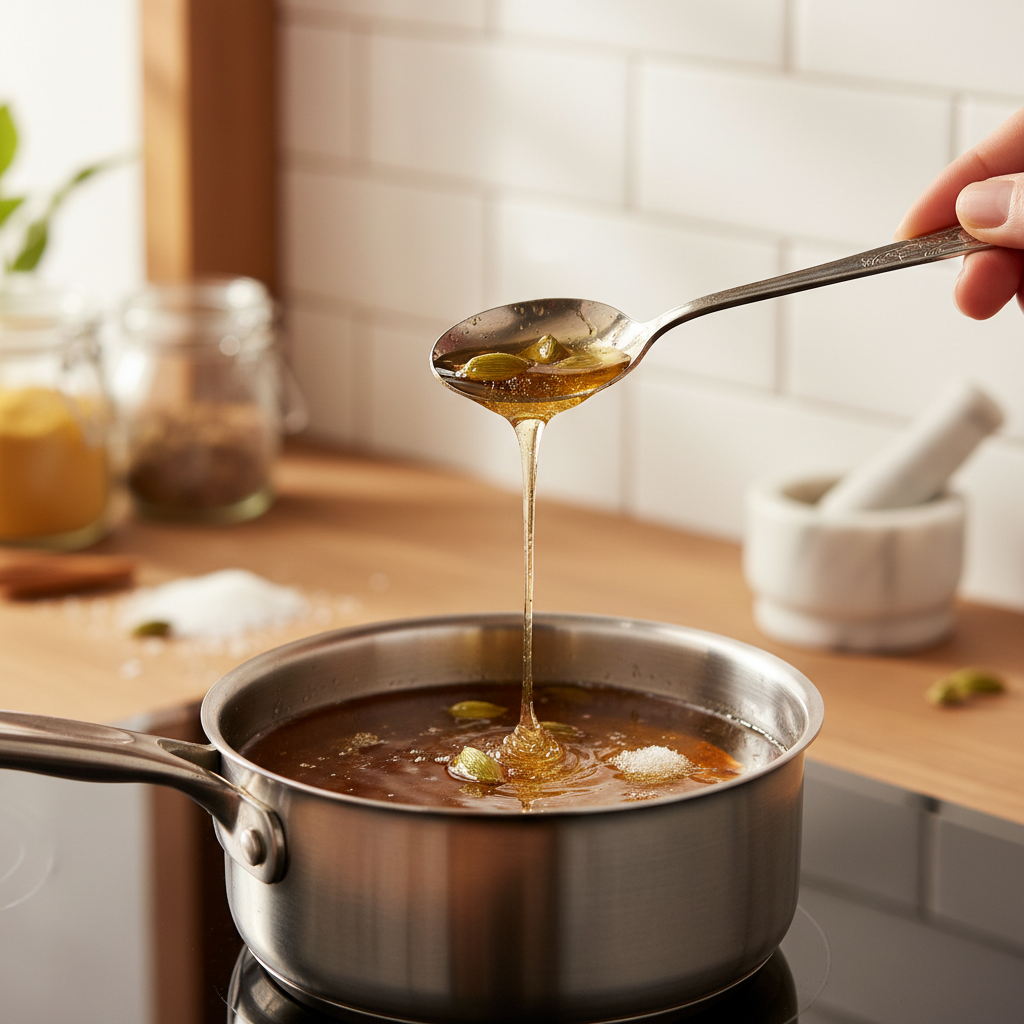
- Combine 1 1/2 cups sugar with 3/4 cup water in a saucepan, bring to a simmer.
- Add 4–6 crushed cardamom pods and 1 tsp lemon juice.
- Simmer 6–10 minutes until it feels slightly sticky between fingers when cooled a moment, or forms a light “thread” when you touch and separate fingers.
- Turn heat to the lowest setting to keep syrup warm, not boiling.
Thread stage sounds fussy, but it is the difference between glossy jalebi and soggy jalebi. If syrup looks watery, keep simmering. If it looks like it is turning thick like honey, add 1–2 tbsp water and rewarm gently.
3) Fry: steady heat, thin spirals
- Heat 1–2 inches of neutral oil (or half oil, half ghee for flavor) in a wide pan.
- Aim for roughly 350–365°F. If you do not have a thermometer, a small batter drop should rise in 2–3 seconds and start bubbling quickly.
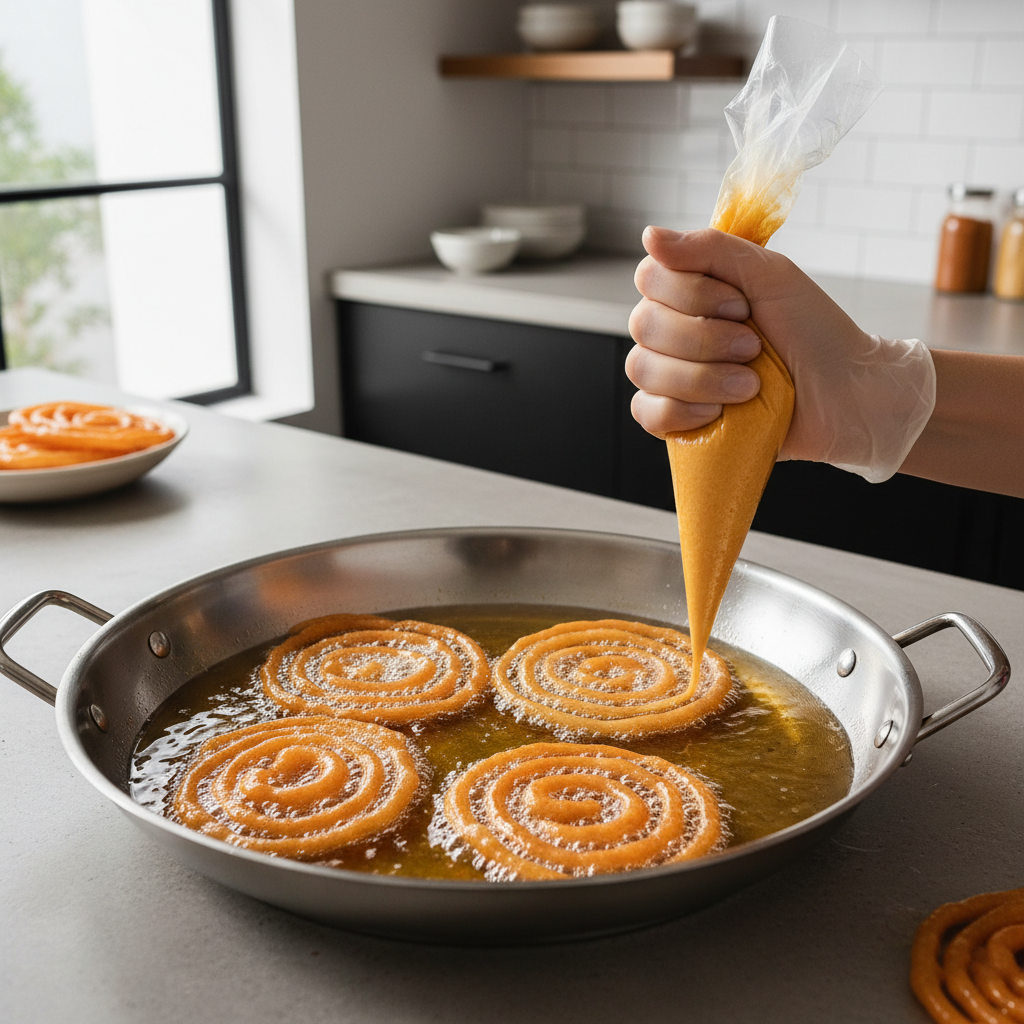
- Pour batter into a squeeze bottle or piping bag with a small hole.
- Pipe spirals, start with a small center circle and move outward, then quickly “seal” by crossing a couple lines.
- Fry until deep golden on both sides, flipping once or twice.
Try not to crowd the pan. Crowding drops the temperature, and that is when the “best jalebi recipe crispy sweet easy” promise disappears fast.
4) Dip briefly, then drain
- Move fried jalebi straight into warm syrup.
- Soak 15–30 seconds, turning once.
- Lift, let excess drip off, then place on a rack (not paper towels) so steam does not soften the bottom.
Quick self-check: are you on track?
Use this as your mid-cook checklist, especially if you are making jalebi for guests and do not want surprises.
- Batter flow: pours in a continuous line, does not “plop” in chunks.
- Spiral shape: holds loops without merging into a blob.
- Oil behavior: active bubbles around jalebi, not violent smoking.
- Color timing: reaches golden color in a couple minutes, not 6–8 minutes.
- Syrup feel: warm and slightly sticky, not watery, not thick candy.
If two or more items feel off, pause and adjust before frying the whole batch. That small reset saves ingredients and frustration.
Troubleshooting table (real problems, practical fixes)
| Problem | Likely cause | Fix next batch |
|---|---|---|
| Jalebi turns soft fast | Syrup too thin or long soaking | Cook syrup to light thread, dip 15–30 sec, drain on rack |
| Spirals break or look messy | Batter too thick or piping hole too small | Add 1–2 tbsp water, use squeeze bottle, rest batter longer |
| Pale jalebi | Oil not hot enough | Let oil recover heat between batches, fry fewer at once |
| Bitter or dark too quickly | Oil too hot or sugar burning on surface | Lower heat, wipe drips, avoid burnt bits in oil |
| Syrup crystallizes | Overcooked or no acid | Add lemon juice early, keep edges clean, add a splash of water and rewarm |
Make it “easy” in a U.S. kitchen: timing, tools, and workflow
Jalebi feels chaotic when batter, oil, and syrup all need attention at once. A small workflow helps.
Tools that make a difference
- Squeeze bottle: cleaner spirals than a spoon, less stress than a piping bag.
- Thermometer: not mandatory, but it removes guesswork.
- Wire rack: keeps jalebi crispier than paper towels.
Simple timing plan
- Minute 0: mix batter, cover.
- Minute 20: start syrup.
- Minute 35: heat oil.
- Minute 45: test-fry one spiral, adjust batter thickness if needed.
- Minute 50+: fry in small batches, dip, drain.
If you are aiming for the best jalebi recipe crispy sweet easy experience, batch size matters more than people think. Frying three or four at a time often beats frying eight, even if it takes a few more minutes.
Common mistakes to avoid (the stuff people rarely mention)
- Letting syrup boil while you fry: boiling reduces water fast and pushes syrup past the right stage.
- Skipping a test jalebi: one test spiral tells you batter thickness, oil temp, and syrup behavior.
- Using paper towels after dipping: it traps steam, jalebi softens from underneath.
- Trying to store it like cookies: jalebi is a same-day sweet in many cases.
Also, if you are tempted to reduce sugar a lot, be aware the syrup is not just sweetness, it is structure and shine. Big changes can alter texture in unpredictable ways.
Serving, storage, and reheating (realistic expectations)
Fresh jalebi usually tastes best within a few hours. If you need to make it ahead, here is what tends to work.
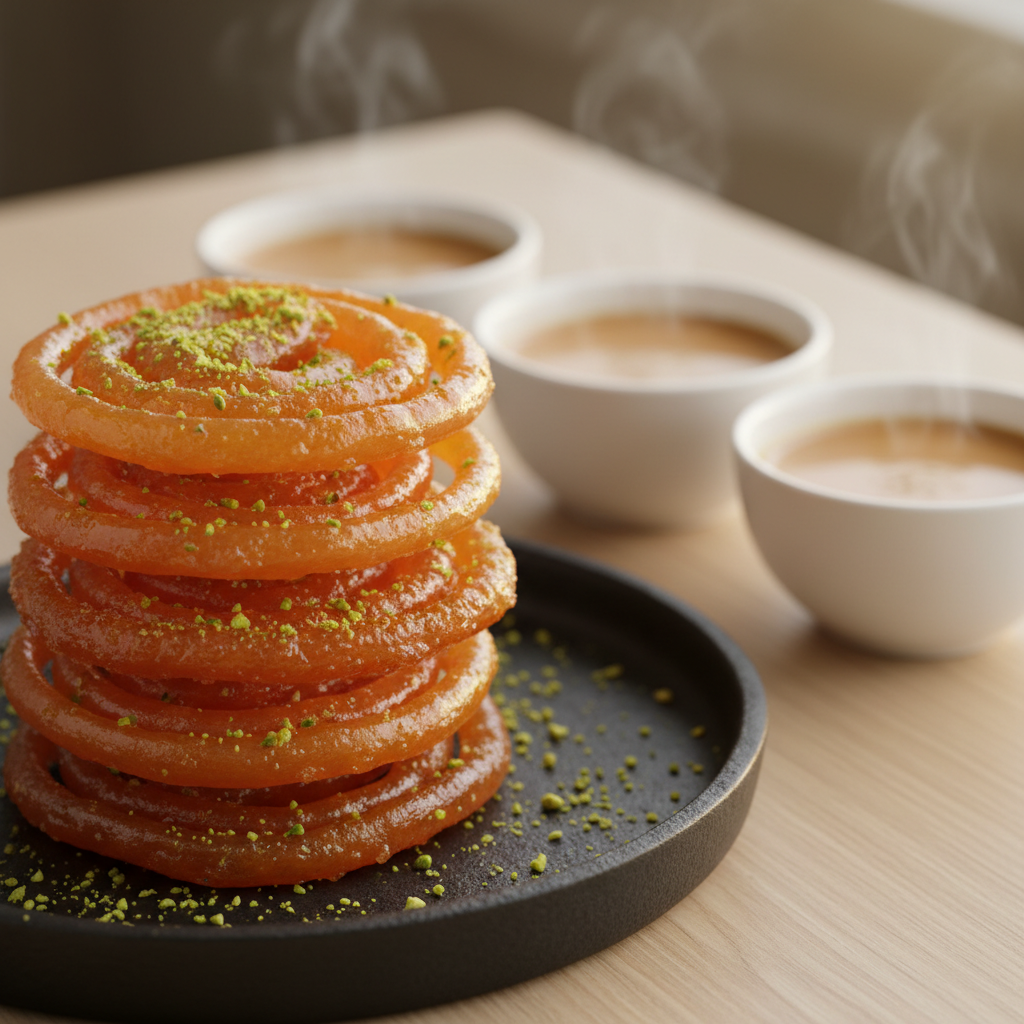
- Serve: warm or room temp, optionally topped with pistachios or a few saffron strands.
- Hold short-term: keep on a rack in a cool, dry spot, avoid covering tight while warm.
- Overnight: store in a container with the lid slightly ajar until fully cool, then close. Crunch will drop.
- Re-crisp: a brief warm-up in a low oven may help a bit, but it will not fully return to just-fried texture.
If you need a dessert that stays crisp for days, jalebi may not be the right choice, and that is okay. But if you want a showy weekend sweet, this is where jalebi shines.
Key takeaways
- Crisp comes from heat control, keep oil steady and do not overcrowd.
- Syrup matters, aim for light one-thread, keep it warm not boiling.
- Dip briefly, then drain on a rack to protect texture.
- Adjust fast, a single test spiral prevents a whole batch of frustration.
If you cook through these checkpoints, you usually land very close to what people mean when they search for the best jalebi recipe crispy sweet easy, glossy spirals, clean crunch, and a bright cardamom finish. Pick a day when you can fry calmly, make a small batch first, and lock in your own timing for your stove.
FAQ
How do I keep jalebi crispy longer after dipping?
Drain on a wire rack, keep batches small, and avoid covering while warm. Even with perfect technique, jalebi tends to soften over time, especially in humid kitchens.
Can I make jalebi without yogurt?
You can, but the flavor and fermentation change. If you skip yogurt, use a little lemon juice in the batter and let it rest, then expect a slightly different bite.
What oil is best for frying jalebi?
Neutral oils like canola or vegetable oil work well. Some cooks mix in ghee for aroma, but ghee alone can brown faster, so heat control becomes more sensitive.
Why is my jalebi chewy instead of crisp?
Chewiness often points to low oil temperature, thick batter, or syrup that is too thin and soaking too long. Adjust one variable at a time so you know what fixed it.
Do I need a thermometer for this recipe?
No, but it helps a lot in a U.S. kitchen where pan size and burners vary. If you cook jalebi often, a basic clip-on thermometer usually pays for itself in fewer failed batches.
Can I bake jalebi instead of frying?
Baking usually will not create the same blistered, crisp shell. If you need to avoid frying for health reasons, it may be worth choosing a different dessert, and if you have dietary constraints, consider asking a nutrition professional for personalized guidance.
My sugar syrup crystallized, can I save it?
Often yes. Add a small splash of water and gently rewarm, then add a little lemon juice. Keep the pot sides clean, stray sugar crystals can trigger more crystallization.
If you are making jalebi for a party and want a more predictable workflow, it can help to prep the squeeze bottle, rack, and syrup station before the oil goes on, because the “easy” part usually comes from setup, not shortcuts.