
The best bhindi fry recipe okra crispy usually comes down to two things most people skip, drying the okra properly and cooking it hot enough without crowding the pan.
If your bhindi turns soft, sticky, or dark before it gets crunchy, it’s not your fault, okra can be finicky in a typical U.S. kitchen because humidity, grocery-store washing, and pan choice all change the result.
This guide keeps it practical, you’ll get a clear prep method, a spice blend that tastes like classic bhindi fry, plus a few “plan B” options if you want to bake or air-fry.
Why okra turns slimy (and why it ruins crispiness)
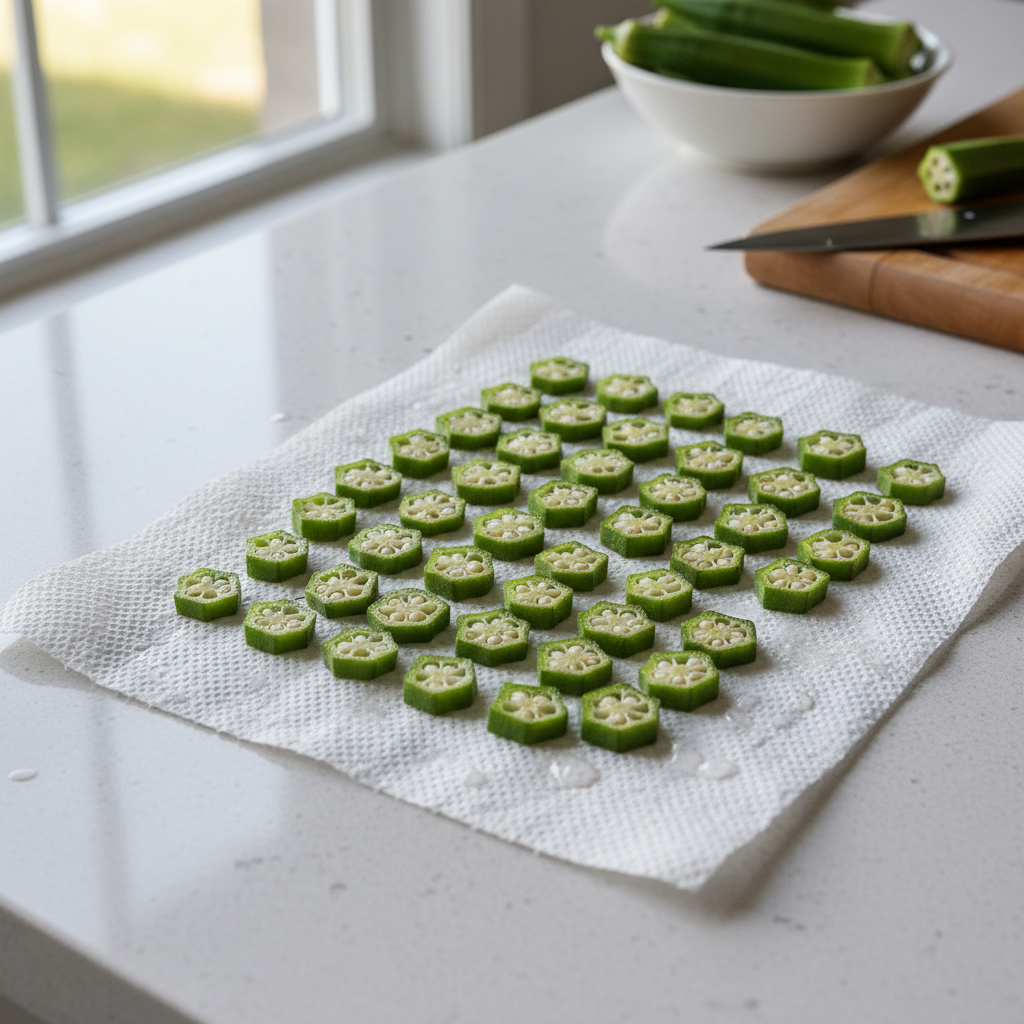
Okra has natural mucilage, a plant gel that shows up when moisture and agitation meet heat, that “slick” feeling is normal, but it fights browning.
Most home failures come from one of these real-life scenarios.
- Wet okra: rinsed and sliced right away, or stored in a steamy produce bag.
- Too much stirring early: the cut edges release more mucilage when they get tossed around while still wet.
- Pan temperature too low: okra steams before it sears, so it softens and weeps.
- Overcrowding: even with good heat, a packed pan traps moisture.
Acid can help with slime, but in bhindi fry, you usually don’t want a sour profile, so we lean on dryness, high heat, and time.
Quick self-check: are you set up for crispy bhindi?
Before you start chopping, run this short checklist. It saves a lot of frustration.
- Okra feels dry to the touch, not damp or tacky.
- You have a wide skillet (10–12 inches), cast iron or stainless works well.
- You can cook in two batches if needed.
- Your spice powders smell fresh, especially coriander and cumin.
- You’re okay leaving the okra alone for a few minutes between tosses.
If you said “no” to the pan size or batching, that’s the one to fix first, it affects crispiness more than the exact spice ratio.
Ingredients for a classic bhindi fry (U.S. pantry friendly)
This version stays close to North Indian-style bhindi fry, warm spices, savory, a little heat, and a dry finish. Adjust heat based on your household.
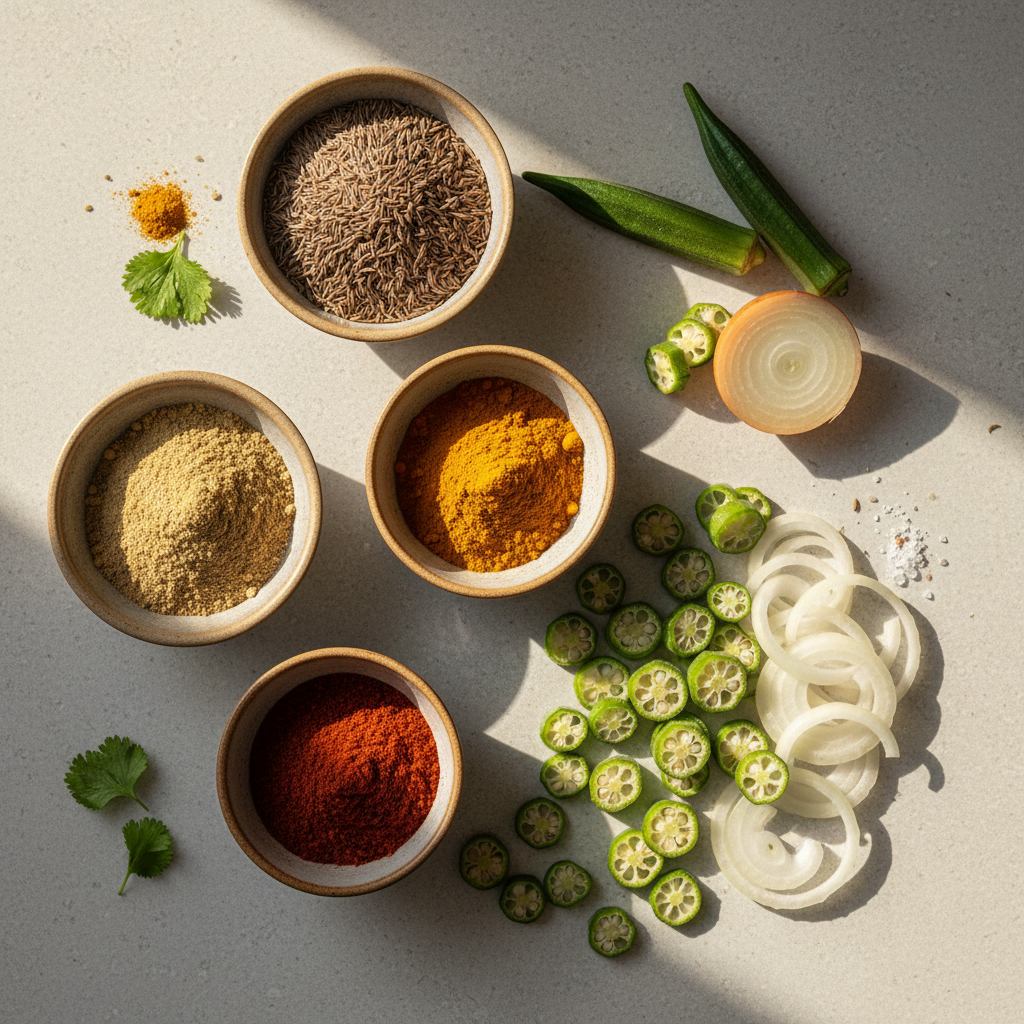
- 1 lb fresh okra, small to medium pods
- 2–3 tbsp neutral oil (avocado, canola, grapeseed)
- 1 small onion, thinly sliced (optional but great for texture)
- 1–1.5 tsp kosher salt, add gradually
- 1 tsp ground coriander
- 1/2 tsp ground cumin
- 1/2–1 tsp Kashmiri chili powder (color, mild heat) or paprika + a pinch cayenne
- 1/4 tsp turmeric
- 1/2 tsp amchur (dried mango powder) or a squeeze of lemon at the end
- 1 tsp besan (gram flour), optional but helpful for a drier coating
Key point: besan is not mandatory, but when okra is slightly wet or you’re cooking on a weaker stove, it often nudges the texture toward crisp.
Step-by-step: best crispy okra bhindi fry on the stovetop
This is the core method. It’s simple, but timing and restraint matter more than people expect.
1) Wash, then dry like you mean it
Rinse okra quickly, then dry thoroughly with towels. After that, let it air-dry 10–20 minutes if you can. If you’re in a rush, pat dry twice.
Trim tops and tips, slice into 1/2-inch rounds or lengthwise halves, then leave it alone for a minute or two so surface moisture evaporates.
2) Preheat the pan, then oil
Heat a wide skillet over medium-high until it feels properly hot. Add oil, let it shimmer, then add okra in a single layer.
For the first 3–4 minutes, stir minimally. You want searing, not steaming.
3) Add onion (optional) once okra starts drying out
When okra looks less glossy and a few edges start browning, add sliced onion. Toss, then give it time to cook down.
4) Season in two rounds
Sprinkle salt lightly early, then finish seasoning closer to the end. Too much salt upfront can pull moisture out and slow browning.
- Early: a pinch of salt + turmeric
- Later: coriander, cumin, chili powder, remaining salt, amchur, and besan if using
5) Cook until the sound changes
You’ll hear less sizzling “wet” sound and more dry, sharper frying. That’s usually when crispness is close. Total time often lands around 12–18 minutes, depending on pan and okra thickness.
Turn off heat, taste, then add amchur or a small squeeze of lemon. Serve right away for the best texture.
Timing + technique table (what to do when things go wrong)
This table covers the common moments people panic and overcorrect, usually by adding more oil or turning down heat too far.
| Problem | What you’re seeing | Likely cause | Fix that usually works |
|---|---|---|---|
| Slime shows up fast | Okra looks glossy and sticky | Moisture + too much stirring | Spread into a single layer, stop stirring for 2–3 minutes, keep heat medium-high |
| Okra softens | Edges bend, no browning | Pan not hot, overcrowding | Cook in batches, raise heat slightly, use a wider pan |
| Spices taste raw | Powdery flavor | Added spices too early with moisture | Add most spice mix after okra dries out, toast 30–60 seconds |
| Too dark, not crisp | Brown spots but still chewy | Heat too high early, okra still wet | Dry okra better next time, start medium-high not max, avoid constant tossing |
Variations: air fryer, oven, and “extra crispy” coating
Stovetop usually wins for speed and flavor, but these options can be better if you want less oil or more hands-off cooking.
Air fryer bhindi fry
- Dry and slice okra, toss with 1–2 tsp oil, spices, and 1 tsp besan.
- Air fry at 380–400°F for 10–14 minutes, shaking once or twice.
- Don’t overfill the basket, crispness drops fast.
Oven-roasted okra
- Preheat to 425°F, use a preheated sheet pan for better browning.
- Toss okra with oil and spices, spread wide.
- Roast 18–25 minutes, flip once.
Extra-crispy “coated” bhindi
If you like a more snacky texture, use a light coating, not a heavy batter.
- 1 tsp besan + 1 tsp rice flour (if you have it) helps dryness and crunch.
- Add powders after okra dries in the pan or after a short pre-roast.
Safety, nutrition notes, and common misconceptions
Bhindi fry is pretty straightforward, but a couple points matter, especially if you’re adjusting oil or heat.
- Hot oil safety: keep okra as dry as possible to reduce splatter, and avoid adding wet ingredients into hot oil.
- Health considerations: okra is a fiber-rich vegetable, but if you manage specific health conditions, oil and salt levels might need adjusting, a registered dietitian can help personalize.
- “Add vinegar early to stop slime”: it can help, but it also changes flavor and can soften onions, better to fix moisture and heat first.
- “More oil makes it crisp”: sometimes it helps, but overcrowding and low heat usually cause the real issue.
According to USDA FoodData Central, okra is generally a low-calorie vegetable and a source of fiber, but the final dish depends a lot on how much oil you use.
Practical serving ideas (so it doesn’t go soggy on the plate)
Crisp okra loses crunch as it sits, that’s just reality. The trick is to serve it in a way that keeps steam away.
- Serve as a side with dal and rice, but keep bhindi in a wide bowl, not a lidded container.
- Pair with yogurt or raita on the side, not poured on top.
- For meal prep, store uncovered until it cools, then refrigerate, re-crisp in a skillet or air fryer.
Conclusion: what actually makes bhindi fry crispy
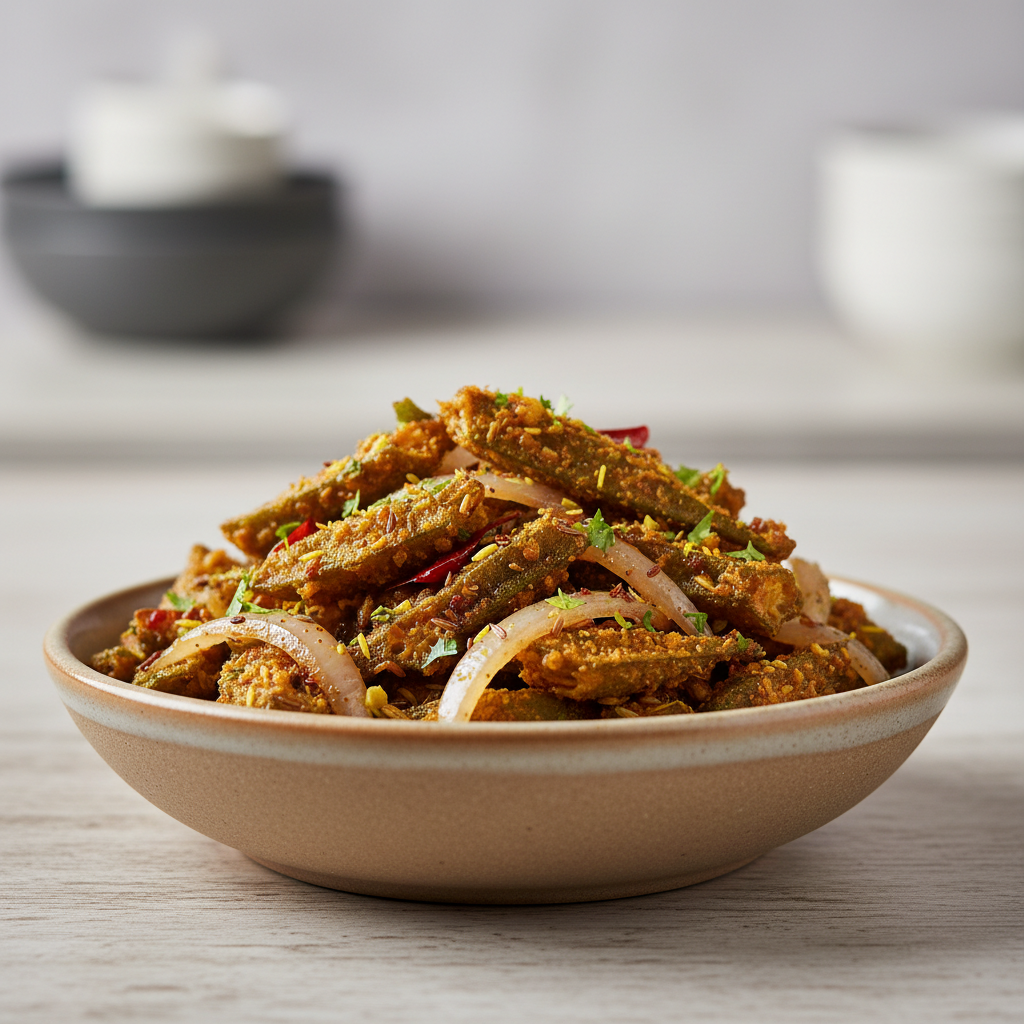
The best bhindi fry recipe okra crispy isn’t about a secret spice, it’s dry okra, a wide hot pan, and the patience to let it sear before you fuss with it. If you try one change tonight, do this, dry the okra longer than feels necessary, then cook in a single layer even if it takes two batches.
If you want a cleaner, more repeatable result, write down your pan size, heat setting, and cook time once you nail it, okra is sensitive, but it’s also very learnable.