
Sweet potato fries can be crispy in the oven, but only if you treat them like a moisture-management project, not just “fries, but healthier.”
If your batch keeps coming out soft or soggy, it’s usually not your oven “being weird,” it’s a mix of cut size, surface starch, crowded pans, and baking temperature. The good news is you can fix all of that without deep-frying.
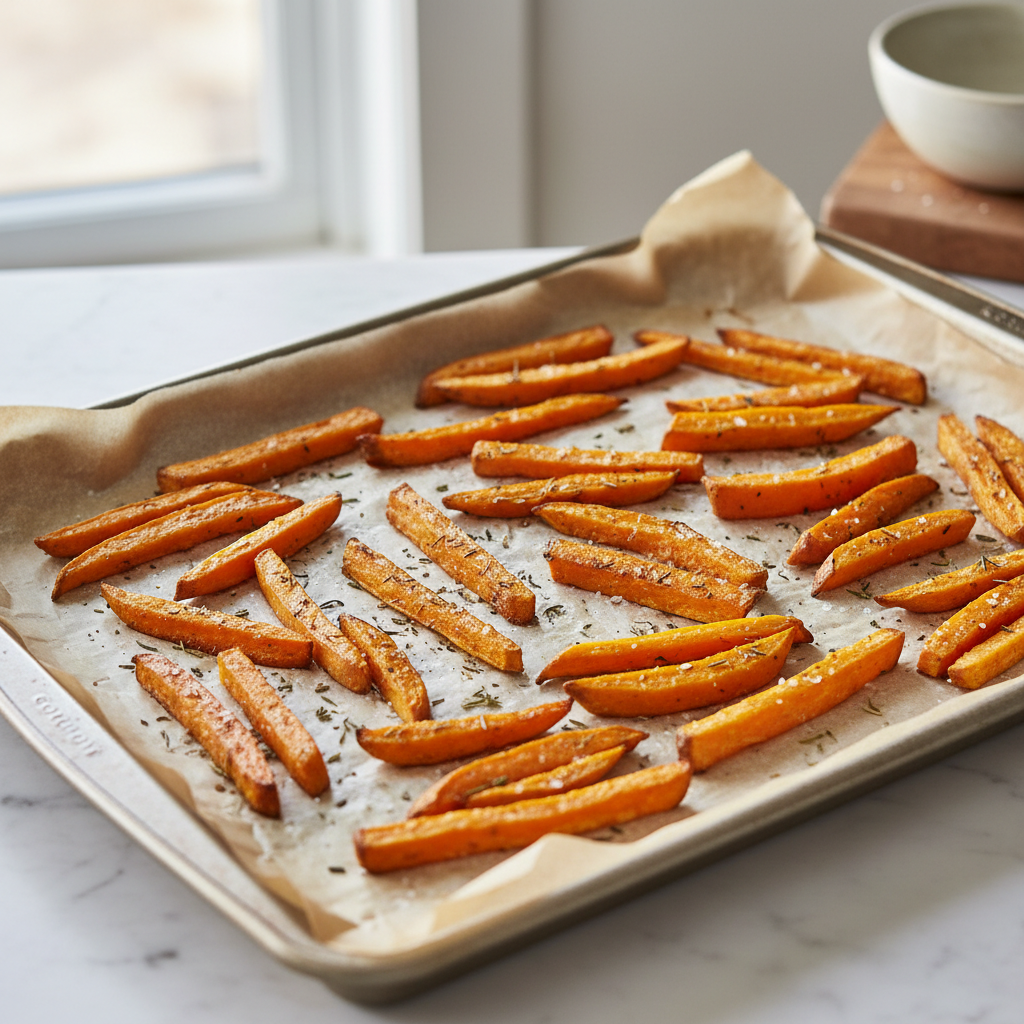
This guide walks through the real levers that change texture, with a quick self-check, a few reliable methods, and the common “healthy swaps” that quietly sabotage crispiness.
Why baked sweet potato fries go limp (and what actually matters)
Sweet potatoes carry more sugar and moisture than russet potatoes, and that changes how they brown and how quickly they soften. So when you bake sweet potato fries, your main job is helping water escape fast enough for the outside to dry and crisp.
- Too much steam: overcrowded pans trap moisture, and steam softens the surface instead of drying it.
- Wrong cut: thin pieces burn before crisping, thick pieces stay tender and bendy.
- Not enough surface drying: wet surfaces and excess starch paste create a soft coating.
- Low or unstable heat: a lukewarm oven bakes them, it doesn’t “flash” the outside dry.
- Too much oil or sauce early: excess oil can “shallow fry” in patches, but it also encourages sogginess when water can’t evaporate.
According to USDA Food Safety and Inspection Service (FSIS), ovens and cook times vary, so using a thermometer and visual cues matters more than a single fixed minute mark.
Quick self-check: which problem do you have?
If you want crispy baked fries, diagnose the weak link first. This small checklist saves a lot of trial-and-error.
- Your fries are pale and soft → oven too cool, pan crowded, or pieces too wet.
- Edges burn but centers stay soft → cut too thin, or sugar browning too fast at high heat without enough drying time.
- They’re crisp at first, then turn limp → they sat in a pile, or got covered, trapping steam.
- Only the bottom gets “fried” → too much oil, pan too hot, or no flipping.
If more than one sounds like you, that’s normal. Most soggy batches are two issues stacking together, usually crowding plus moisture.
The cut, the soak, the dry: small prep choices that change everything
Before you touch seasoning, get the structure right. Crispy texture starts with consistent geometry and a dry surface.
Pick a cut that bakes crisp
- Target size: about 1/4 to 3/8 inch thick, 3 to 4 inches long.
- Keep it even: mixed sizes guarantee mixed doneness, and the “done” pieces steam the rest if you wait.
Soak or don’t soak?
For regular potatoes, soaking helps remove starch. With sweet potato fries, soaking can help a bit, but the bigger win is what happens after: drying thoroughly.
- Optional: soak in cold water 20–40 minutes if you have time.
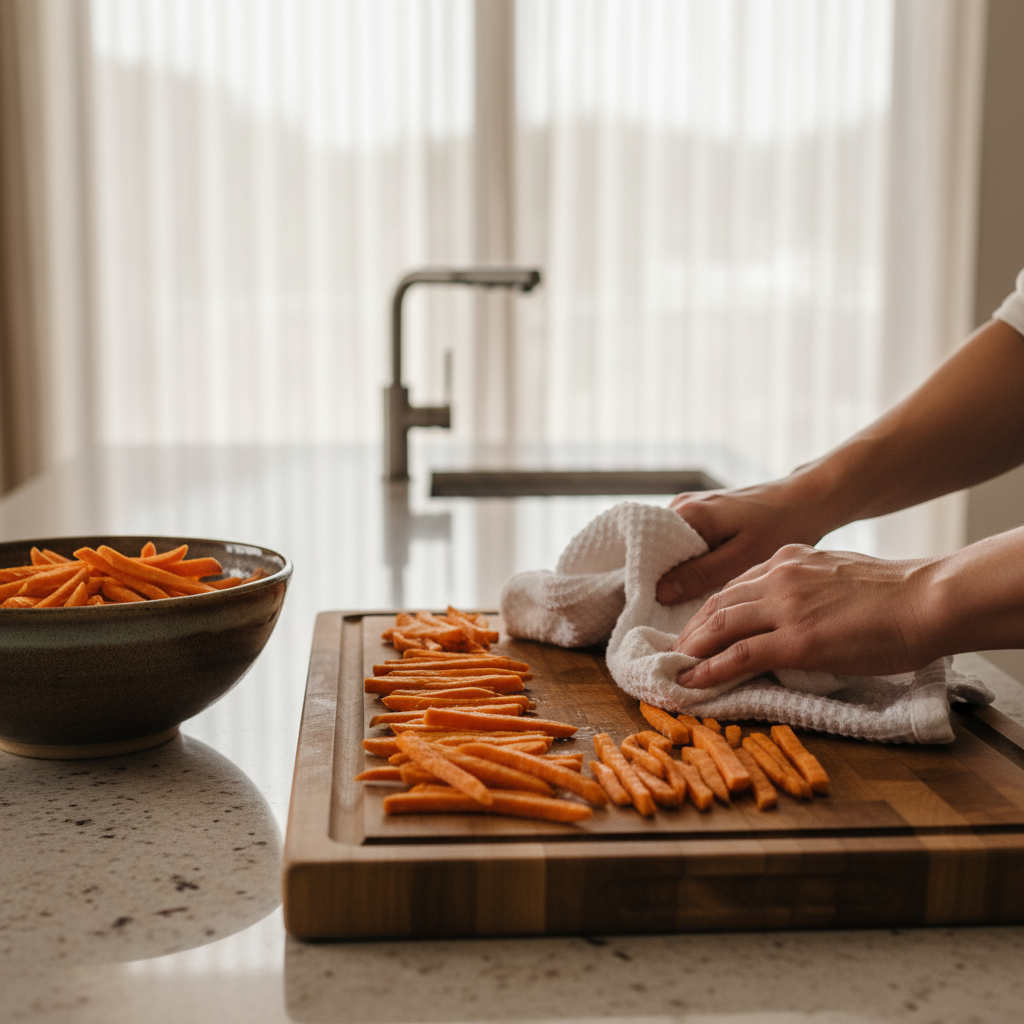
- Non-negotiable: drain, then dry aggressively with towels until the surface feels tacky-dry, not slick.
Use starch on purpose (but lightly)
A thin dusting of starch creates a drier outer layer that can crisp. Too much turns into a gummy shell. Cornstarch is common, arrowroot works too.
- For 1 large sweet potato: start with 1 to 2 teaspoons cornstarch, toss, then add oil.
- If you see white clumps, you used too much or didn’t dry enough.
Oven setup: temperature, pan choice, and spacing (the “steam control” section)
This is where most home batches fail. If fries touch, they steam. If the pan stays cool, they bake soft.
Best temperature range
- 425°F is a reliable default for many ovens.
- If your oven runs cool, consider 450°F, but watch browning because sweet potatoes darken quickly.
Pan choice and preheating
- Heavy sheet pan: holds heat and helps browning.
- Preheat the pan: put it in the oven while it heats, then carefully add fries. You should hear a gentle sizzle.
- Parchment: helps prevent sticking and makes flipping easier, though it can slightly reduce direct browning versus bare metal. If you use parchment, compensate with good preheat and spacing.
Spacing rule (simple, but brutal)
Spread fries in a single layer with visible gaps. If you need to “make them fit,” you need a second pan. That’s not being picky, it’s physics.
Step-by-step: crispy baked sweet potato fries (repeatable method)
This workflow is designed to be consistent on a weeknight, not precious.
- 1) Preheat: oven to 425°F, sheet pan inside to preheat.
- 2) Cut: uniform batons, 1/4–3/8 inch thick.
- 3) Optional soak: 20–40 minutes, then drain.
- 4) Dry: towels until surfaces look matte.
- 5) Toss: cornstarch first (1–2 tsp per large potato), then oil (1–1.5 tbsp), then salt and spices.
- 6) Bake: carefully spread on hot pan, single layer.
- 7) Flip: at 12–15 minutes, flip and rotate pan.
- 8) Finish: 10–15 minutes more until edges look browned and feel firm.
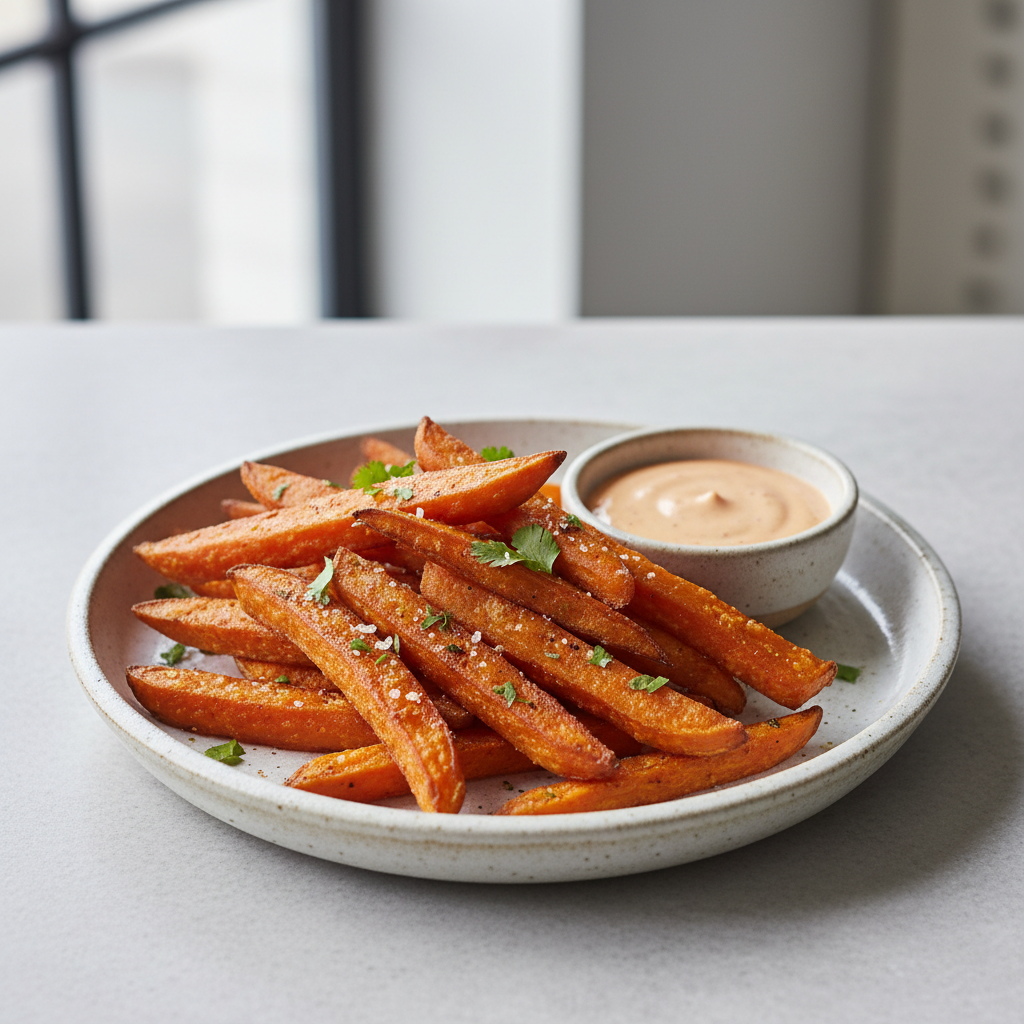
- 9) Rest: 2–3 minutes on the pan, then serve on a plate in a loose pile, not covered.
Key point: Salt draws moisture. If you love ultra-crisp texture, try salting lightly before baking, then add a final pinch right after they come out.
Timing guide and troubleshooting table
Use this as a practical reference. Ovens vary, sweet potatoes vary, and humidity can even change results a bit, so treat times as ranges.
| Problem | Likely cause | Fix that usually works |
|---|---|---|
| Soggy, soft fries | Pan crowded, not enough evaporation | Use two pans, leave gaps, preheat pan |
| Burnt tips, soft middle | Cut too thin or oven too hot | Cut thicker (1/4–3/8 in), bake at 425°F, flip earlier |
| Sticking to pan | Insufficient oil or no parchment | Light oil coating, parchment, flip with a thin spatula |
| Gummy coating | Too much starch or fries too wet | Dry more, reduce cornstarch, toss until no clumps |
| Crisp then limp | Steam after baking | Serve immediately, avoid covering, don’t stack in a bowl |
Flavor options that don’t kill crispiness
Wet coatings are the fastest path back to soggy. Keep seasonings dry before baking, and save sauces for dipping.
Dry seasoning blends (toss with oil)
- Smoky: smoked paprika + garlic powder + black pepper
- Herby: dried rosemary (crush it) + thyme + sea salt
- Spicy-sweet: chili powder + cumin + a tiny pinch of cinnamon
When to add parmesan or sugar
- Parmesan: add in the last 5 minutes so it doesn’t burn.
- Brown sugar or honey: usually not worth it for crispiness, they brown early and can soften the surface.
Safety and nutrition notes (keep it practical)
Sweet potatoes are generally a nutritious choice, but toppings and portion size shift the picture quickly. According to U.S. Food and Drug Administration (FDA), handling produce safely includes washing whole potatoes under running water and using clean cutting boards to reduce contamination risk.
If you have a medical condition that affects blood sugar or dietary needs, it’s sensible to check with a qualified professional about portions and add-ons.
Conclusion: the “crispy baked” formula you can repeat
Crispy oven fries come down to three habits: cut them evenly, dry them more than you think, and give them space on a hot pan. Once those pieces click, sweet potato fries stop being a coin flip and start being predictable.
Try it once with the two-pan rule and a light cornstarch dusting, then adjust only one variable next time, like temperature or thickness, so you can tell what actually helped.
FAQ
Why won’t my sweet potato fries get crispy even at 450°F?
High heat can brown the outside fast, but it can’t overcome trapped steam. If the pan is crowded or the fries went in wet, they’ll still soften. More spacing and better drying usually beat turning the oven hotter.
Should I boil sweet potatoes before baking fries?
Parboiling can work for some potato styles, but with fries it often makes them fragile and harder to crisp unless you’re very careful. Most home cooks get better results by focusing on drying, starch, and a hot pan.
Is cornstarch necessary for crispy baked fries?
No, but it helps. The difference is most noticeable when your sweet potatoes are very moist or your oven runs a bit cool. Use a small amount, and avoid clumps.
Can I use an air fryer instead of the oven?
Yes, many air fryers crisp well because they move hot air aggressively. You still want dry surfaces and you still can’t overcrowd the basket, so plan to cook in batches.
Why do my fries stick to parchment paper?
Usually the coating is wet, or you tried to flip too early. Give them a few more minutes so the surface sets, then flip with a thin spatula.
How do I keep fries crispy for serving?
Don’t cover them, and don’t pile them in a bowl. If you need a short hold, keep them spread on a rack or sheet pan in a warm oven (around 200°F) for a limited time, knowing they may slowly dry out.
Can I prep sweet potato fries ahead of time?
You can cut them and store submerged in water in the fridge for a day, then dry thoroughly before baking. Season and oil right before they go into the oven for better texture.
If you’re trying to get crispy fries consistently for meal prep or busy weeknights, it can help to write down your exact cut size, oven temp, and bake time once you hit a batch you love, then repeat it like a simple kitchen “playbook.”