
Pizza recipes usually fail for one boring reason: the crust doesn’t match your kitchen. Not your oven, not your pan, not your schedule. The good news is you don’t need a brick oven or a 3-day ferment to get a crust that turns out crisp on the bottom and chewy at the edge.
This guide keeps things practical. You’ll get one reliable easy crust recipe, a few smart variations, and the baking moves that matter more than extra toppings. If you’ve ever ended up with pale dough, dense centers, or a middle that goes limp after five minutes, you’re in the right place.
Key takeaways you can use today: use a hot baking surface, keep sauce light, and let dough rest long enough to relax. Everything else is optional flair.
Why “easy crust” often goes wrong (and how to avoid it)
Most home crust problems come from a few predictable misfires, not from your mixing skills.
- Oven not hot enough: home ovens lose heat fast when you open the door, and thin pans don’t store much heat, so the bottom stays blond.
- Too much flour during kneading: it feels tidy, but a dry dough bakes up tough and bready.
- Not enough rest: gluten needs time to relax; otherwise the dough fights you and bakes dense.
- Sauce and toppings too heavy: moisture is the silent crust killer, especially with fresh mozzarella and watery vegetables.
- Wrong surface: a cold sheet pan can’t deliver that quick “spring” you want when the dough hits heat.
According to USDA Food Safety and Inspection Service (FSIS) guidance on yeast breads, basic handling and appropriate temperatures matter for consistent results; for pizza, that shows up as proper proofing and strong oven heat.
The easy homemade pizza crust recipe (reliable, weeknight-friendly)
This is the kind of dough you can mix after work and bake the same night. It’s not fussy, but it still tastes like real pizza.
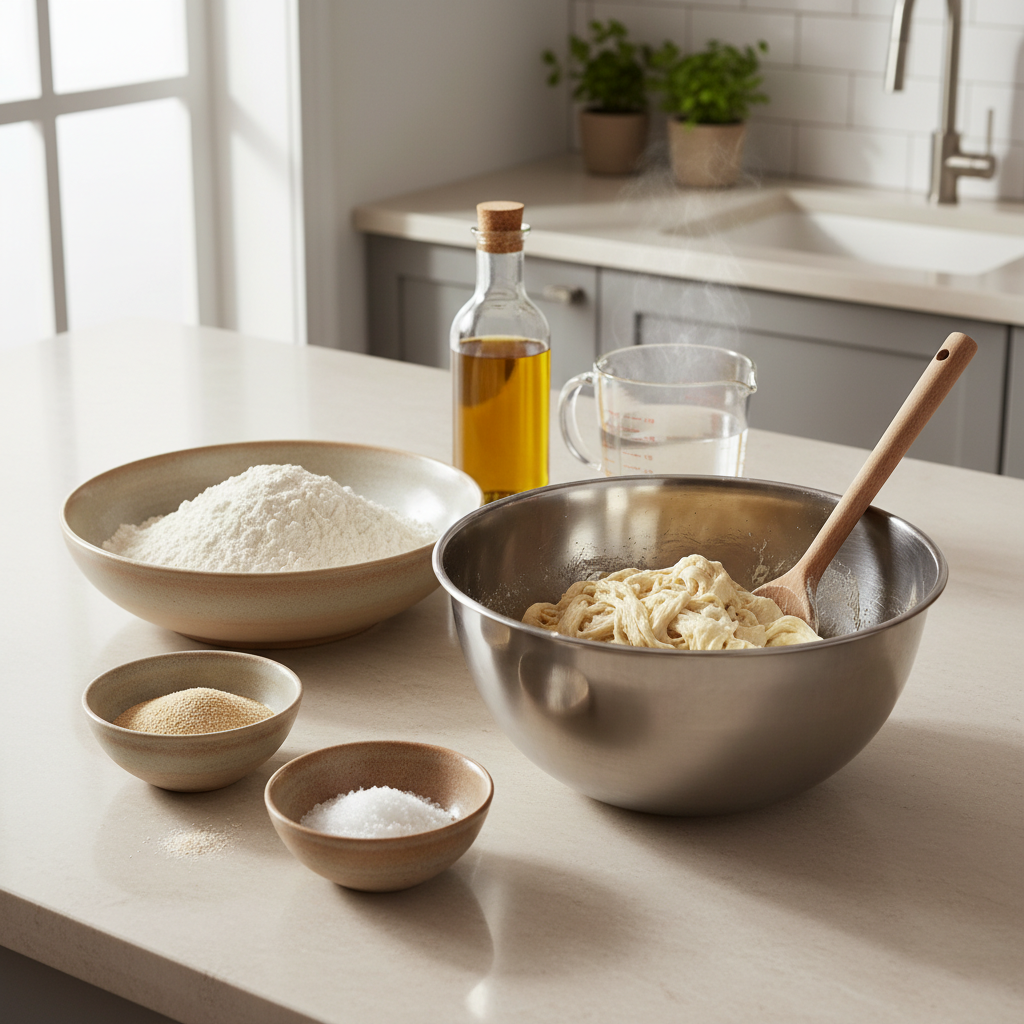
Ingredients (makes 2 thin or 1 thick 12–14 inch pizza)
- 3 1/2 cups (420g) all-purpose flour, plus a little for shaping
- 1 packet (2 1/4 tsp) instant yeast
- 1 1/2 tsp kosher salt
- 1 tbsp sugar or honey (optional, helps browning)
- 1 1/4 cups (295ml) warm water (about 100–110°F)
- 2 tbsp olive oil
Method
- Mix: Stir flour, yeast, salt, and sugar in a bowl. Add warm water and oil, then mix until a shaggy dough forms.
- Knead briefly: 5–7 minutes by hand (or 3–4 in a stand mixer) until smoother. If it’s sticky, give it a minute before adding extra flour.
- Rise: Cover and let rise 45–75 minutes, until puffy (not necessarily doubled).
- Rest before shaping: Divide if needed, then rest 10 minutes so it stretches without snapping back.
- Shape: Stretch on a lightly floured surface. Keep a thicker rim if you like a chewy edge.
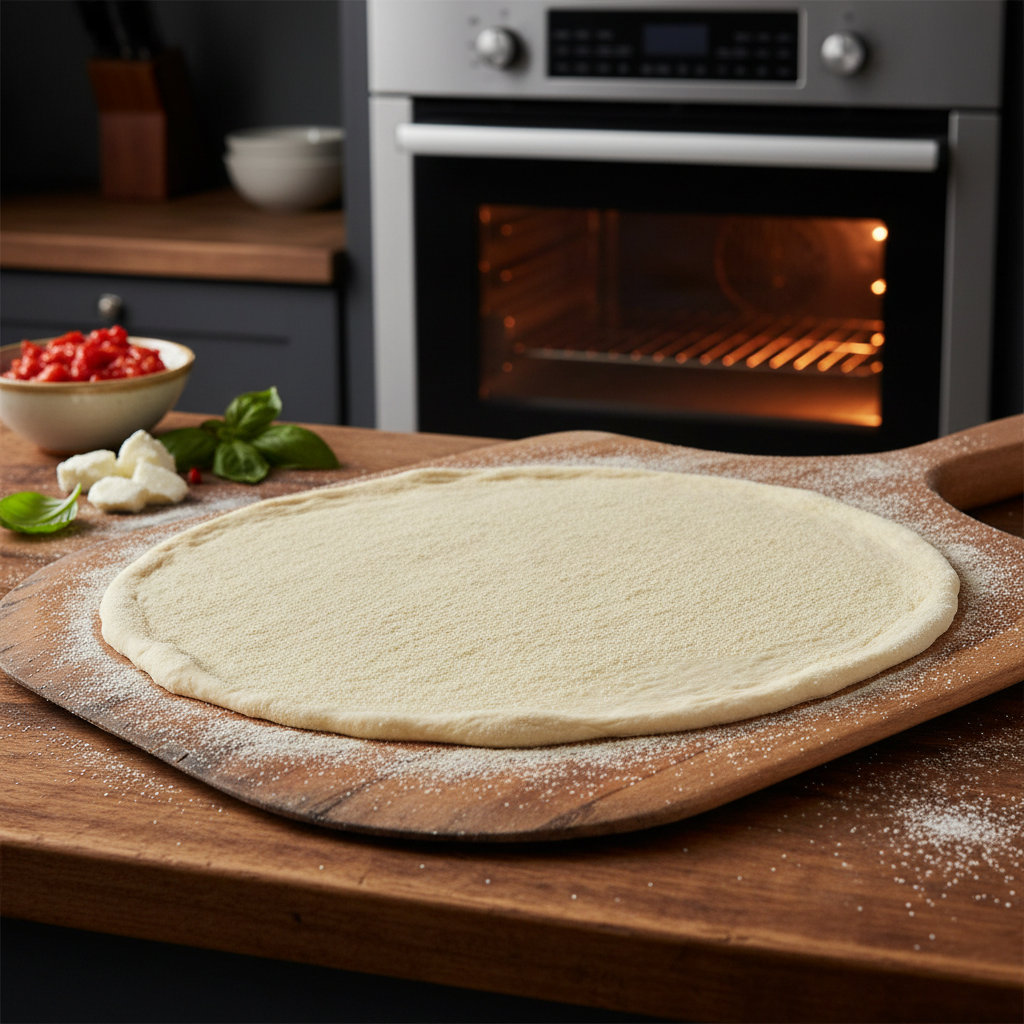
Small but important note: if your kitchen runs cold, your rise may take longer. Don’t rush it. A slightly longer proof usually beats extra yeast.
Quick self-check: what crust style fits your tools and time?
Before you chase complicated pizza recipes, match the method to what you actually have at home.
| What you want | Best baking setup | Dough tweak | Typical bake |
|---|---|---|---|
| Crisp, thin, fast | Steel/stone or upside-down sheet pan | Use 2 tbsp oil, stretch thin | 7–10 min at 500°F |
| Chewy “NY-ish” | Steel/stone, rack middle-high | Rest longer, go lighter on flour | 8–12 min at 500°F |
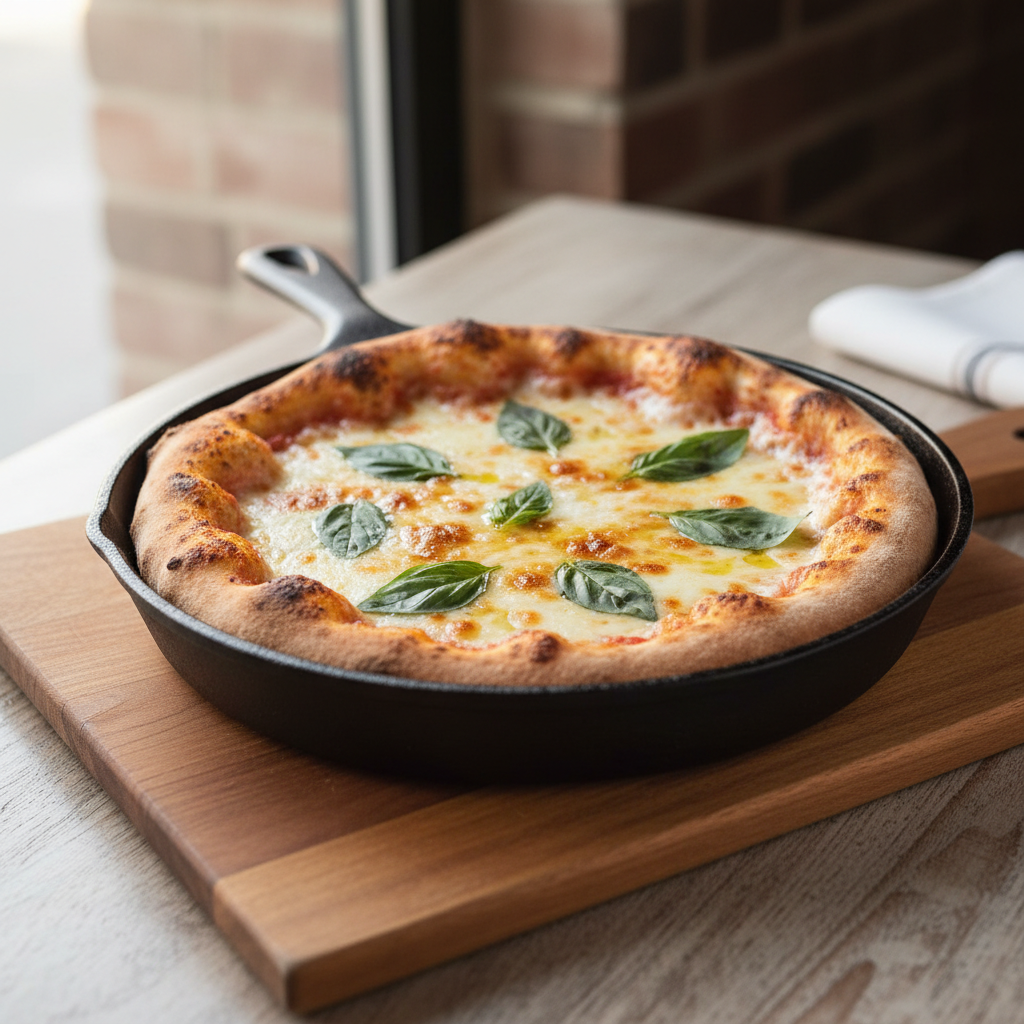
| Pan pizza, crunchy edges | Cast iron or dark metal pan | More oil in pan, slightly thicker dough | 12–18 min at 475°F |
| Soft, thicker slice | Regular sheet pan | Don’t over-stretch; keep thickness | 12–16 min at 450–475°F |
If you’re on a basic sheet pan and a 450°F max oven, don’t fight physics. Lean into pan pizza or a slightly thicker crust, you’ll get better color and texture.
Baking tactics that matter more than the recipe
Here’s the part many “easy” guides skip: technique carries the crust. Your ingredient list can be simple, but your heat plan can’t be an afterthought.
1) Preheat longer than you think
Heat your oven as high as it safely goes, and keep it there for at least 30 minutes. If you use a stone or steel, it needs time to store heat. That stored heat is what crisps the bottom.
2) Use a hot surface
- Pizza steel (fastest, strongest bottom heat)
- Pizza stone (solid, slightly gentler)
- Upside-down sheet pan (surprisingly good if preheated)
3) Go lighter on sauce
A thin layer wins. If your sauce looks watery, simmer it 5–10 minutes to reduce, or blot crushed tomatoes with a spoon before spreading.
4) Watch moisture-heavy toppings
- Fresh mozzarella: pat dry, use less
- Mushrooms: sauté first if you like them abundant
- Spinach: quick wilt and squeeze
- Pineapple: drain well
Many home cooks blame the dough when the real issue is a wet topping plan. Fix the moisture and half your crust problems disappear.
3 easy crust variations (same dough, different vibe)
Once you have a base dough, you can bend it toward whatever you’re craving without learning new pizza recipes each time.
1) No-knead “lazy night” crust
- Mix ingredients until no dry flour remains.
- Cover and rest 8–18 hours at room temp (cool rooms may need more time).
- Fold a few times, rest 20 minutes, then shape.
This version trades effort for time and often tastes a little more developed.
2) Same-day chewy crust with a cold rest
- Let dough rise 30–45 minutes.
- Refrigerate 2–6 hours.
- Bring to room temp 30–60 minutes before shaping.
Cold time makes stretching easier and can improve browning.
3) Easy pan pizza crust
- Oil a cast iron skillet or dark metal pan generously.
- Press dough into the pan, cover, rest 20–40 minutes.
- Top lightly, bake until edges brown deeply.
Tip: If cheese browns before the bottom firms up, move the pan lower in the oven for the last third of baking.
Practical step-by-step: make pizza night smoother
This is the flow that keeps you from feeling behind while the oven preheats.
- Start the preheat early, then mix dough.
- While dough rises, prep toppings and dry anything watery.
- Set up a “landing zone” for the baked pizza: rack + cutting board, so steam doesn’t soften the crust.
- Stretch one crust at a time, top fast, bake fast.
If you’re using parchment, slide it onto the hot surface for the first few minutes, then carefully pull parchment out to let the bottom finish crisping.
Common mistakes (and quick fixes)
- Dense crust: dough likely under-proofed or over-floured. Give it more time, keep it slightly tacky.
- Pale top: move rack up, or switch to broil for 30–90 seconds at the end while watching closely.
- Soggy center: reduce sauce, pre-cook wet toppings, bake on a hotter surface.
- Tough chew: too much kneading plus too much flour. Next time knead less, rest more.
- Dough tears while stretching: gluten too tight. Cover and rest 10 minutes, then try again.
According to FDA basic food safety guidance, handling raw ingredients with clean hands and clean surfaces reduces risk. For pizza night, that means separate boards for raw meat toppings and a quick wipe-down before shaping dough.
Conclusion: pick one crust, master your heat
Good homemade pizza is less about collecting endless pizza recipes and more about repeating one crust method until it feels boring, then dialing in your oven setup. If you try one change this week, preheat your baking surface longer and keep toppings lighter than you think you should.
Make the easy crust once, take notes on how your oven behaves, and adjust from there. Your next pizza will taste closer to what you imagined, and you won’t feel like you need a special tool for every outcome.
FAQ
What’s the easiest crust for beginners if I don’t have a pizza stone?
A pan pizza or an upside-down preheated sheet pan usually feels the most forgiving. You’ll still get better bottom color than a cold pan, and shaping stress drops a lot.
Can I use bread flour instead of all-purpose for this dough?
Usually, yes. Bread flour can give more chew, but it may also need a touch more water. If the dough feels tight, let it rest longer rather than forcing extra flour in.
Why does my pizza crust stay soft even when it’s fully baked?
Moisture is the common culprit: heavy sauce, watery toppings, or slicing too soon. Let the pizza cool 2–3 minutes on a rack so steam escapes instead of soaking the bottom.
How do I get bubbles in the crust?
High heat and good fermentation help. Let the dough rise until puffy, avoid pressing all the gas out, and bake on a well-preheated surface.
Is it okay to refrigerate the dough overnight?
In many cases, yes, and it can improve flavor and handling. Keep it covered, and allow time to warm up before stretching so it doesn’t tear.
What temperature should I bake pizza at in a normal home oven?
Use the hottest setting your oven supports, commonly 475–550°F. If your oven tops out lower, choose a slightly thicker crust or a pan style so the bake stays balanced.
Can I freeze homemade pizza dough?
Often, yes. Freeze after the first rise, lightly oiled and well wrapped. Thaw in the fridge overnight, then bring closer to room temp before shaping.
If you’re trying to build a small rotation of weeknight pizza recipes without trial-and-error every time, start by locking in one dough, one baking setup, and two topping combos you love, then tweak one variable per bake. It’s the quickest path to “reliably good” instead of “occasionally great.”