
best banana smoothie recipe healthy searches usually come from one very real problem, you want something fast that still feels like a “real” breakfast, not a sugary drink that leaves you hungry an hour later.
This guide keeps it practical: one dependable base recipe, clear options for protein and fiber, and simple fixes for the most common smoothie failures like watery texture, chalky protein, or bananas that overpower everything.
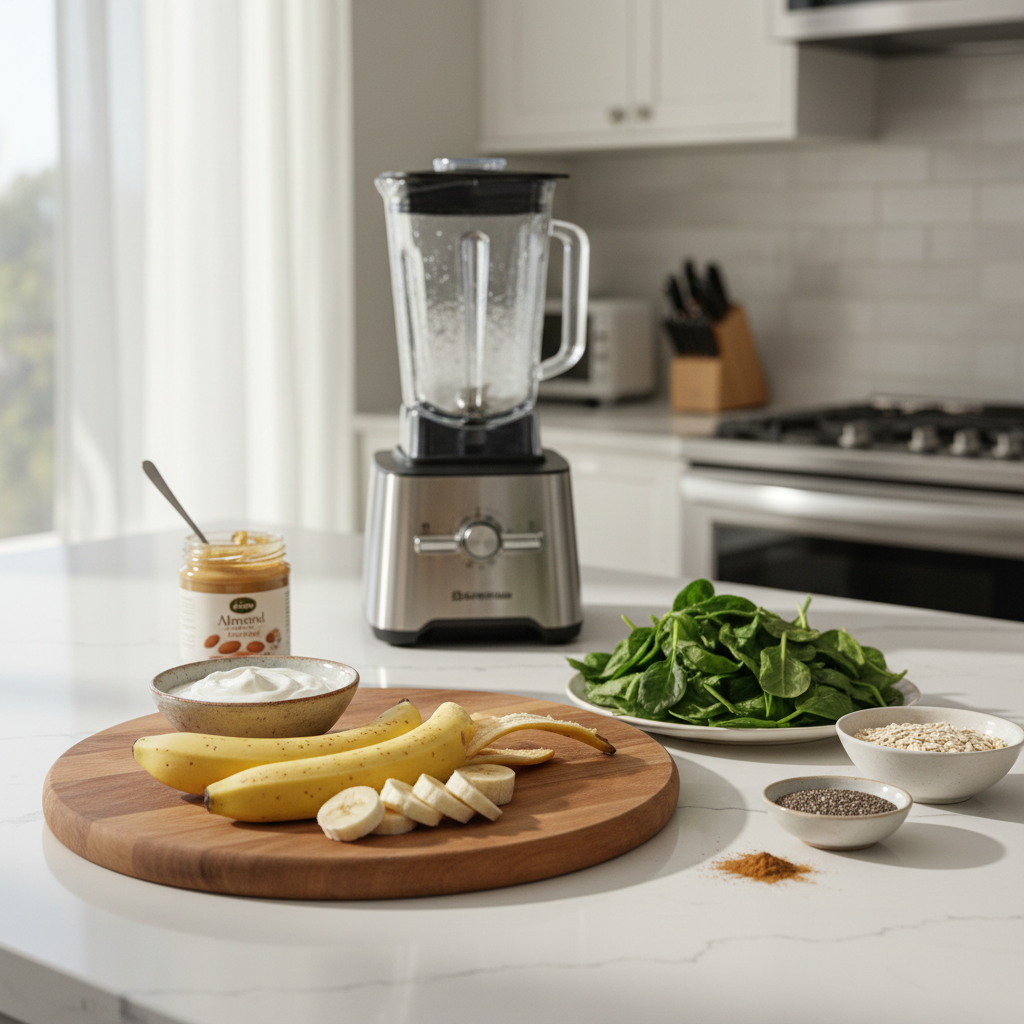
One quick note before we blend: “healthy” depends on your goal. Some people want weight management, some want muscle recovery, some need a gentler option for digestion. The recipe below starts balanced, then you can steer it.
What “healthy” means for a banana smoothie (in real life)
A banana smoothie gets labeled unhealthy when it behaves like dessert in a cup: high sugar, low protein, low fiber. The banana is not the villain, the balance usually is.
- Satiety (staying power): protein + fiber + a bit of fat tends to keep you full longer.
- Blood sugar steadiness: pairing fruit with protein/fiber often helps avoid the crash some people feel.
- Digestive comfort: too much raw veg, too much sugar alcohol, or very high fat can bother some stomachs.
- Calories that match your day: a “healthy” smoothie can still be calorie-dense if you pour in multiple tablespoons of nut butter and add honey.
According to the USDA Dietary Guidelines for Americans, many healthy eating patterns emphasize nutrient-dense foods like fruits, vegetables, whole grains, and low-fat or fat-free dairy, which is exactly why a well-built banana smoothie can fit nicely for a lot of people.
The best healthy banana smoothie recipe (2026 base)
This is the base I’d start with for most adults who want a breakfast or post-workout option that tastes good and does not feel flimsy.
Base ingredients (1 large smoothie)
- 1 medium ripe banana (fresh or frozen)
- 3/4 cup unsweetened milk of choice (dairy milk, soy, or unsweetened almond milk)
- 1/2 cup plain Greek yogurt (or a dairy-free high-protein yogurt)
- 1/4 cup rolled oats
- 1 tablespoon chia seeds (or ground flax)
- 1/2 teaspoon cinnamon
- Optional: 1 handful spinach (you won’t taste much if the banana is ripe)
- Ice as needed (usually 4–6 cubes if your banana is not frozen)
How to blend (texture matters)
- Add liquid first, then yogurt, then oats and seeds, then banana and ice.
- Blend 30–45 seconds, pause, then blend again until fully smooth.
- If it looks too thick to move, add a splash more liquid and blend again.
Flavor target: naturally sweet, lightly spiced, creamy, not pudding-thick unless you want a spoonable smoothie bowl.
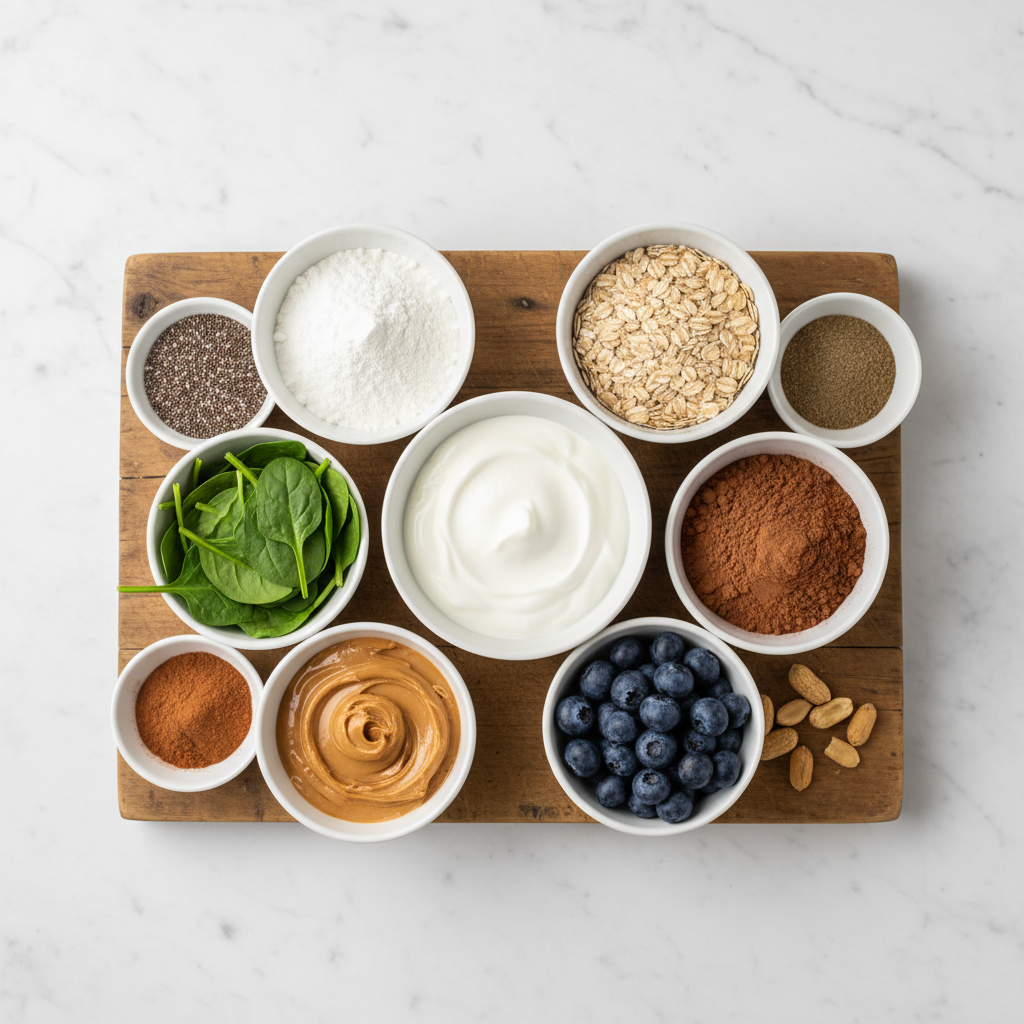
Quick customization table (protein, fiber, flavor)
Use this like a menu. Pick one goal, then choose one or two add-ins, not six. Many “healthy smoothie” attempts go sideways from stacking too much.
| Goal | Add this | Why it helps | Watch-out |
|---|---|---|---|
| More protein | 1 scoop whey or plant protein | Supports fullness and recovery | Can taste chalky, blend longer, add cinnamon or cocoa |
| More fiber | 1–2 tbsp ground flax or extra oats | Often improves staying power | Too much can make it gummy, increase gradually |
| Lower added sugar | Skip honey, use vanilla + cinnamon | Keeps sweetness mostly from fruit | Overripe bananas already taste very sweet |
| More “green” nutrients | Spinach or riced cauliflower | Adds micronutrients with mild flavor | Start small if you’re sensitive to texture |
| Higher calories (hard gainers) | 1–2 tbsp peanut/almond butter | Easy energy and creaminess | Calories add up fast, measure once |
Self-check: which smoothie situation are you in?
Before you “fix” your smoothie, figure out what’s actually wrong. Different problems need different tweaks.
- You’re hungry again quickly: protein is low, fiber is low, or the smoothie is mostly fruit + juice.
- It tastes too sweet: banana is very ripe, you added sweetened yogurt, or you used juice as the liquid.
- Texture is watery: banana not frozen, too much liquid, not enough thickener like yogurt or oats.
- Texture is gritty: seeds not hydrated, oats not blended enough, or a protein powder that clumps.
- It upsets your stomach: lactose sensitivity, very high fiber too fast, or sugar alcohols in “diet” add-ins.
If you’re building a best banana smoothie recipe healthy routine for weekdays, this self-check saves time because you stop changing random ingredients and start changing the right one.
Step-by-step solutions for common problems
If you want it more filling (without turning it into a calorie bomb)
- Add one protein lever: Greek yogurt, cottage cheese, or a scoop of protein powder.
- Add one fiber lever: chia, flax, or oats.
- Keep sweeteners optional, taste after blending.
According to the Academy of Nutrition and Dietetics, protein at meals and snacks can support satiety for many people, which is why the “protein + fiber” combo is a good default, even if you adjust amounts for your own needs.
If you want it lower sugar but still enjoyable
- Use slightly less ripe banana, still yellow but not heavily spotted.
- Use unsweetened milk and plain yogurt, avoid flavored yogurt if you’re sugar-sensitive.
- Add vanilla extract, cinnamon, or cocoa powder for “dessert” vibes without more sweetness.
If you keep getting watery smoothies
- Freeze bananas in slices, it’s the easiest texture upgrade.
- Start with 1/2 cup liquid, then add more only if needed.
- Blend longer than you think, especially with oats and seeds.
If protein powder ruins the taste
- Try unflavored or a different brand, some formulas are simply harder to mask.
- Use cocoa + cinnamon, or a spoon of nut butter, both cover “whey” notes.
- Blend in two stages: liquid + powder first, then add everything else.
Practical prep tips for busy mornings
This is where people either keep the habit or drop it. Smoothies feel “easy” until you’re rinsing a blender at 7:42 AM.
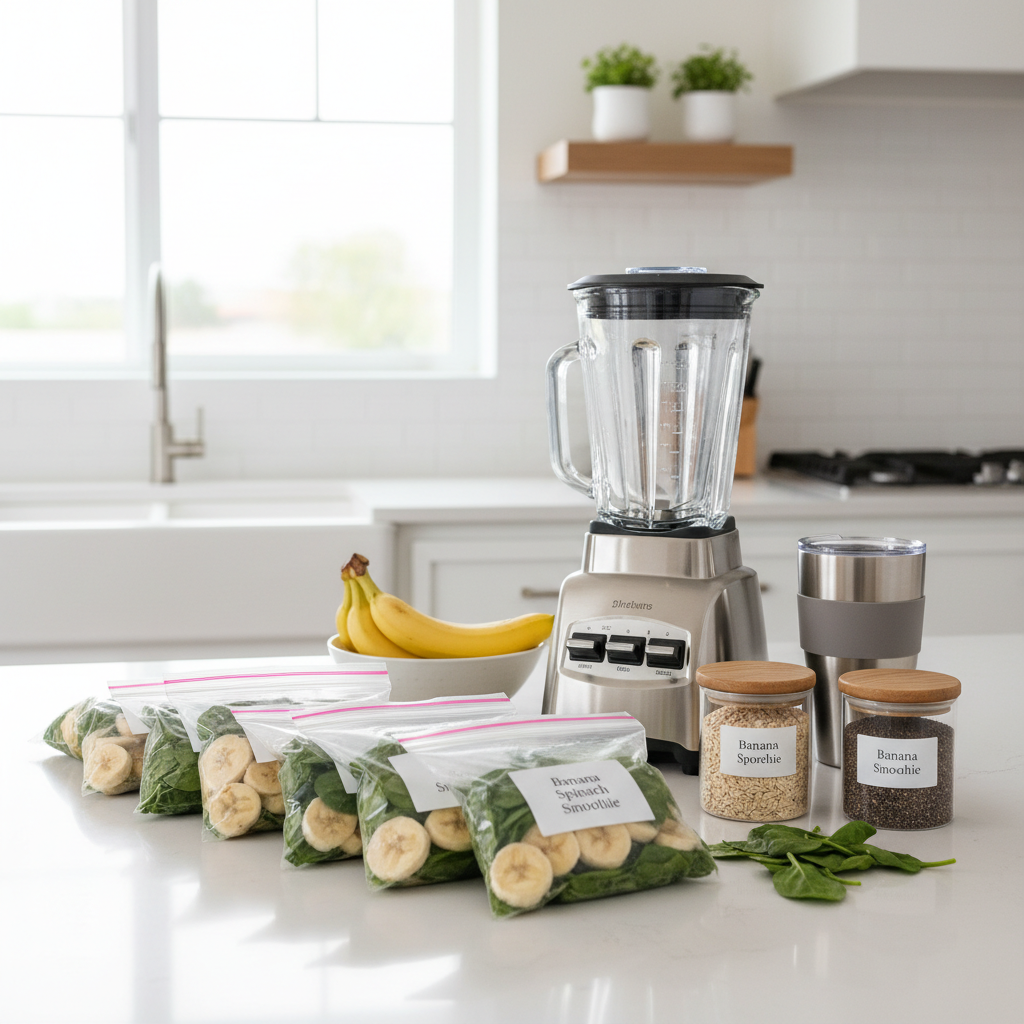
- Freeze banana packs: banana slices + spinach in a bag, squeeze out air, freeze flat.
- Pre-portion dry mix: oats + chia + cinnamon in small jars, then dump and blend.
- Use the rinse trick: right after pouring, fill blender halfway with warm water + a drop of dish soap, blend 10 seconds, rinse.
- Plan for your commute: choose a tight lid cup, and keep thickness slightly looser so it sips well.
Common mistakes that quietly sabotage “healthy” smoothies
- Using fruit juice as the liquid: it’s easy to overdo sugar without feeling it.
- Stacking multiple fats: nut butter + coconut oil + seeds can get heavy fast.
- Assuming “plant-based” equals low-calorie: it might be, but not automatically.
- Going from low fiber to very high fiber overnight: some people feel bloated, increase slowly.
- Skipping taste checks: blend, taste, then decide if it needs more cinnamon, salt, or ice.
If your goal is consistency, a boring truth helps: one repeatable best banana smoothie recipe healthy base beats a complicated “perfect” smoothie you only make once.
When to adjust for health conditions (and when to ask for help)
Most healthy adults can enjoy banana smoothies, but individual needs vary. If you manage a medical condition, it’s worth being a little more careful.
- Diabetes or blood sugar concerns: you may want more protein and fiber, and less total fruit, discuss targets with a clinician.
- Kidney disease: potassium and protein needs can differ, bananas are potassium-rich, ask your healthcare team.
- GI issues (IBS, reflux): large smoothies, high fat, or certain fibers can trigger symptoms, simplify ingredients and test small changes.
- Food allergies: watch for cross-contamination in nut butters and protein powders, label reading matters.
When symptoms are persistent, or you’re trying to hit specific macros for performance, a registered dietitian can help you tailor portions and ingredients without guesswork.
Key takeaways (save this)
- Balance is the difference between a snacky smoothie and a meal-like one: protein + fiber is the usual fix.
- Frozen banana improves texture more than almost any “hack.”
- Limit sweetened yogurt and juice if you want a steadier energy curve.
- Change one variable at a time so you know what worked.
Conclusion: your next smoothie can be better in 5 minutes
If you keep the base recipe simple, then customize with one or two targeted add-ins, you’ll get a smoothie that tastes good and fits your day without a lot of nutrition anxiety. Pick your goal for tomorrow morning, prep one freezer pack tonight, and you’ll be much closer to your own version of the best banana smoothie recipe healthy routine.
If you want, save this page and treat it like a build sheet: start with the base, then make small, intentional tweaks until it lands.