
Zucchini noodles recipes are a practical way to keep dinner light without feeling like you’re eating “diet food”, but they can turn watery, bland, or mushy fast if you treat them like pasta.
The good news, most of the pain points come from a few fixable details, how you spiralize, how you salt, and when you add sauce. Nail those, and zoodles become a weeknight staple, not a one-time experiment.
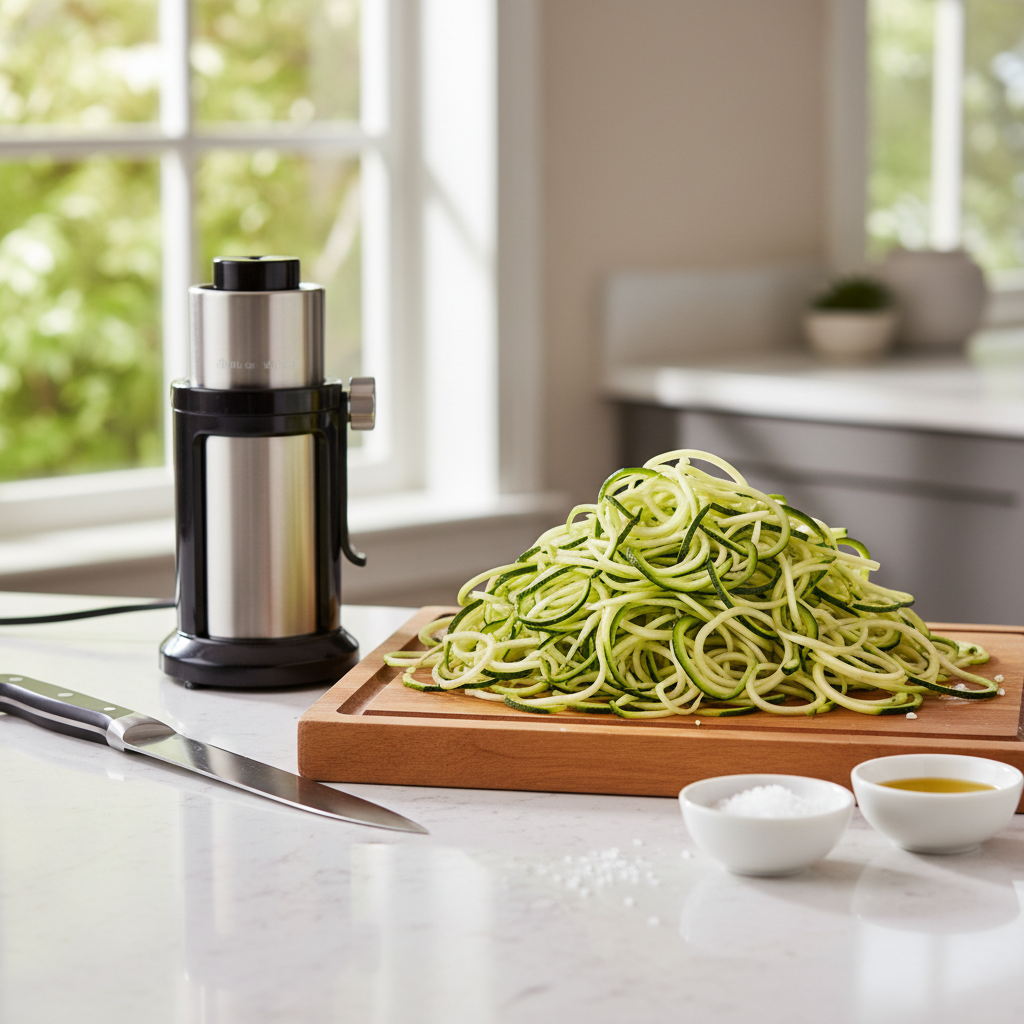
This guide gives you a quick zoodle “baseline method”, then several healthy recipe directions you can rotate, plus a small troubleshooting section for the common mess-ups people don’t realize they’re making.
Why zucchini noodles sometimes disappoint (and how to avoid it)
Zoodles behave more like a high-water vegetable than a grain, so the usual pasta rules don’t apply. Here’s what typically goes wrong in real kitchens.
- Watery bowls: zucchini releases moisture once cut, salted, or heated, and sauce turns into soup if you don’t manage that water.
- Mushy texture: overcooking happens quickly, especially if you simmer zoodles in sauce like spaghetti.
- Flavor feels thin: zucchini is mild, which is nice, but it needs seasoning, acid, and a savory element to feel “complete.”
- Cold center, hot sauce: microwaving or dumping raw zoodles under hot sauce can leave uneven temperature and texture.
According to the USDA (FoodData Central), zucchini is mostly water and relatively low in calories, which is great for volume eating, but it also explains why moisture control matters more than anything.
A quick self-check: which zoodle situation are you in?
If you identify your “scenario” first, the fix becomes obvious and you stop overcorrecting.
- You want a true pasta vibe: use thinner noodles, quick high-heat sauté, and a thicker sauce.
- You want a big salad-like bowl: keep zoodles mostly raw, add warm protein and a punchy dressing.
- You meal-prep for 3–4 days: store noodles and sauce separately, and plan to reheat gently.
- You’re low-carb or gluten-free: focus on fats, protein, and fiber add-ins so the meal stays satisfying.
One more honest check, if you dislike zucchini in general, no spiralizer trick will “convert” it. In that case, blending half zoodles with half whole-wheat spaghetti or hearts-of-palm noodles often feels like a better compromise.
The baseline method: zucchini noodles that don’t turn watery
This is the repeatable method behind most good zucchini noodles recipes, use it no matter what sauce you choose.
Step-by-step (10–15 minutes)
- Spiralize medium zucchini, then trim long strands into shorter “forkable” lengths.
- Optional de-water (best for saucy dishes): toss with a pinch of salt, rest 10 minutes, then gently squeeze in a clean towel or paper towels.
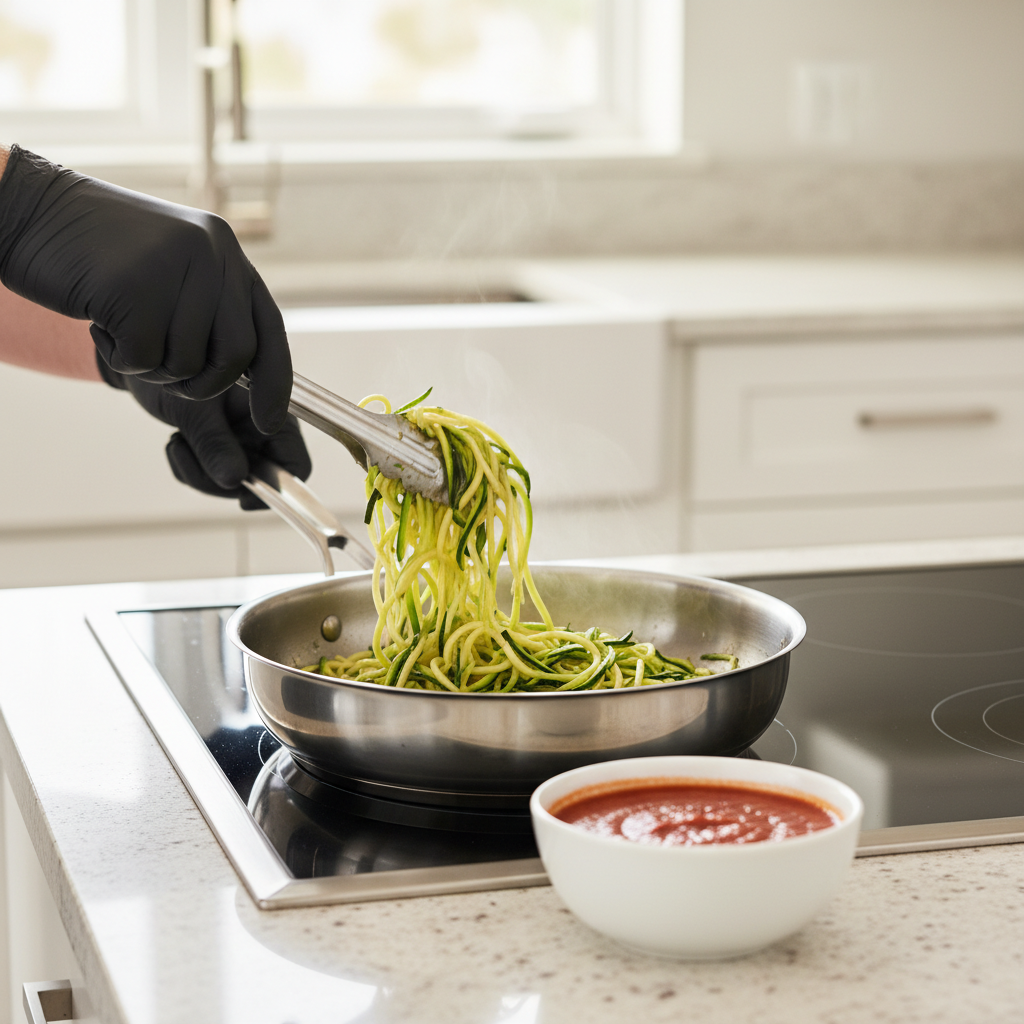
- Heat fast: sauté 1–2 minutes in a hot pan with a little olive oil, just until warm and slightly tender.
- Finish off-heat: add sauce after you turn the heat down or off, toss, and serve right away.
If you’re watching sodium, go light on the salt step and rely more on squeezing and quick cooking. If you have medical dietary restrictions, it’s smart to check with a qualified professional.
5 healthy zucchini noodle recipe ideas (mix-and-match)
Instead of locking you into rigid “recipes”, these are flexible builds. Pick one sauce direction, one protein, and one crunch or herb finish.
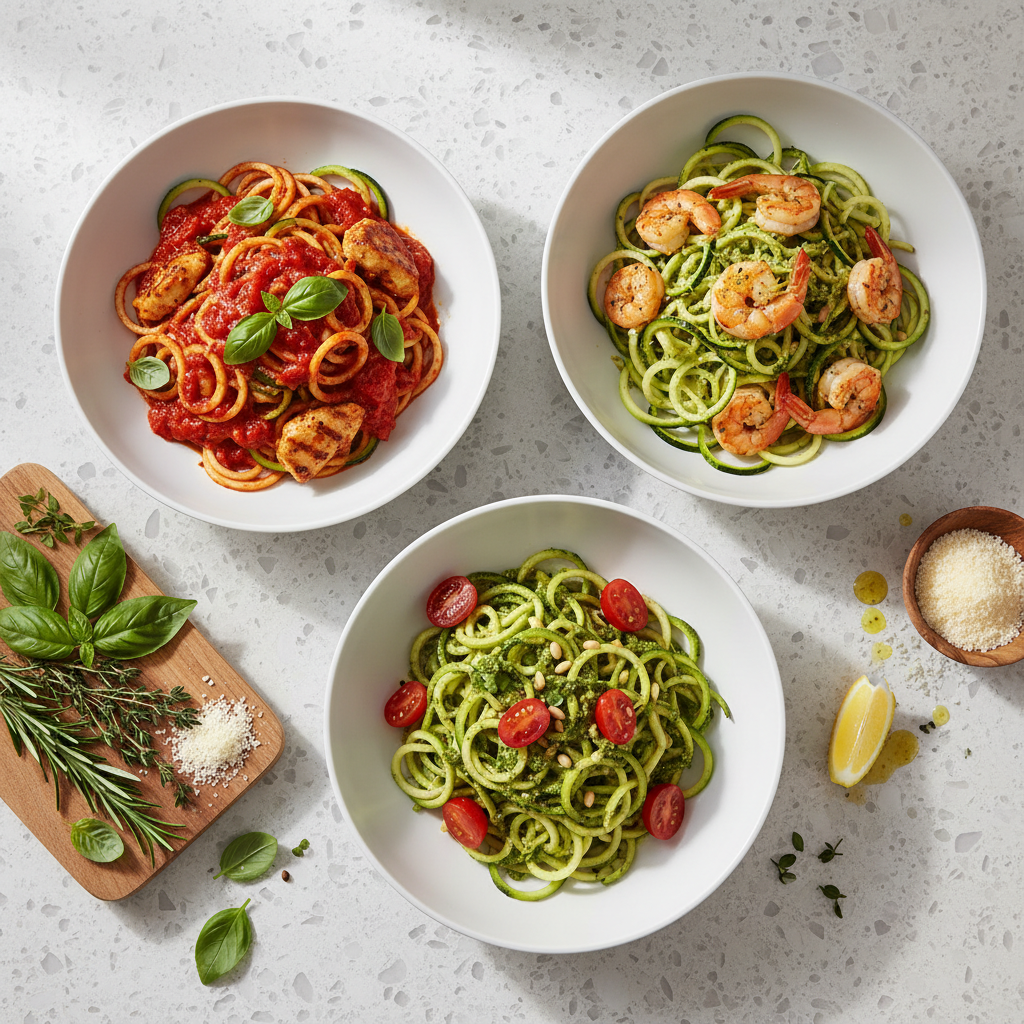
1) Tomato-basil “marinara” zoodles
- Sauce: thick marinara, or crushed tomatoes simmered briefly with garlic and basil.
- Protein: turkey meatballs, grilled chicken, or cannellini beans.
- Make it better: add a spoon of tomato paste to thicken, finish with fresh basil and a little parmesan.
Tip: if your sauce is thin, simmer it down before it touches the noodles, don’t try to “cook it down” after tossing.
2) Lemon-garlic shrimp zoodles
- Sauce: olive oil, garlic, lemon zest and juice, red pepper flakes.
- Protein: shrimp cooks fast, pull it off heat as soon as it turns opaque.
- Finish: chopped parsley, toasted breadcrumbs or chopped almonds for texture.
If you’re using frozen shrimp, thaw and pat dry first, extra water is the silent killer in this bowl.
3) Pesto chicken zucchini noodles
- Sauce: basil pesto, store-bought is fine, but choose one you actually like.
- Protein: shredded rotisserie chicken works well for weeknights.
- Add-ons: cherry tomatoes, arugula, sautéed mushrooms.
Pesto is oil-based and naturally thicker, which is why this is one of the most forgiving zucchini noodles recipes for beginners.
4) Creamy avocado “alfredo” (no heavy cream required)
- Sauce: blend ripe avocado, lemon, garlic, a splash of water, salt, pepper, and a little parmesan if you want.
- Protein: salmon, grilled tofu, or chickpeas.
- Heat rule: warm the noodles first, then toss with sauce off-heat so it stays bright and creamy.
If you need dairy-free, skip the cheese and lean on more lemon plus a pinch of nutritional yeast, taste as you go.
5) Peanut-sesame zoodles (cold or warm)
- Sauce: peanut butter, soy sauce or tamari, rice vinegar, sesame oil, ginger, warm water to thin.
- Protein: shredded chicken, edamame, or seared tempeh.
- Crunch: cucumbers, scallions, cilantro, sesame seeds.
This is the “packable lunch” option, keep sauce separate until eating if you want the best texture.
A simple table: choose the right zoodle cook method
Not every dish needs the same technique, this quick chart saves trial and error.
| Goal | Best method | Why it works |
|---|---|---|
| Least watery | Salt 10 min + squeeze + quick sauté | Removes moisture before sauce hits |
| Fastest weeknight bowl | Hot pan sauté 1–2 min | Warms through without turning mushy |
| Best for cold “noodle salads” | Raw zoodles + salty/acidic dressing | Keeps crunch, dressing adds flavor |
| Meal prep | Store noodles dry, sauce separate | Prevents sogginess by day 2 |
Practical tips that make zoodles taste like a real meal
- Build umami: parmesan, mushrooms, tomato paste, anchovy paste, miso, or soy sauce in small amounts.
- Use acid on purpose: lemon, vinegar, or a tangy sauce keeps zucchini from tasting flat.
- Add a bite element: toasted nuts, roasted chickpeas, or crisp veggies keep each fork interesting.
- Portion expectations: zoodles are lighter than pasta, many people feel better with extra protein or a side salad.
According to the CDC, most Americans fall short on vegetable intake, and meals like this can help you add more produce without overthinking it, though personal nutrition needs vary.
Common mistakes (the ones that waste your time)
- Cooking too long: if you want “al dente”, stop early, zucchini keeps softening after heat.
- Pouring sauce in the pan too soon: sauce plus heat equals moisture release, then everything gets sloppy.
- Using giant zucchini: they tend to be more seedy and wetter; medium ones usually spiralize better.
- Over-salting during de-water: a little salt helps pull water, but too much can make the whole dish taste harsh.
- Expecting identical pasta texture: think “vegetable noodles”, if you want closer to pasta, blend with real noodles or try baked spaghetti squash.
When it’s worth getting professional guidance
Most zucchini noodle meals are straightforward, but if you manage a health condition, the “healthy” choice depends on your context. If you have kidney disease, diabetes, food allergies, or you’re on a medically directed diet, it’s sensible to ask a registered dietitian or your clinician about the right carb, sodium, and fat targets for you.
Also, if digestive issues flare with high-fiber meals or raw vegetables, you may tolerate lightly cooked zoodles better than raw versions, but personal tolerance varies.
Key takeaways (keep these in mind)
- Moisture control is the make-or-break factor for zucchini noodles recipes.
- High heat, short cook gives better texture than simmering in sauce.
- Thicker sauces and strong seasoning make zoodles feel satisfying.
- Meal prep works if you store noodles and sauce separately.
Conclusion: a simple next step for tonight
If your past zoodle attempts turned watery, don’t throw the idea out, change the method. Pick one sauce you already love, do a quick salt-and-squeeze, then toss off-heat and eat immediately.
If you want an easy “starter win”, go pesto with chicken or lemon-garlic shrimp, both are forgiving, fast, and they make zucchini taste like dinner, not a compromise.
FAQ
How do I keep zucchini noodles from getting soggy?
Use medium zucchini, keep cooking time short, and avoid simmering them in sauce. For saucy bowls, a light salt-and-squeeze step usually helps.
Do I need to salt zucchini noodles before cooking?
Not always. If you’re making a thicker, oil-based sauce like pesto, you can often skip it. If you’re using marinara or anything brothy, salting briefly can reduce watery results.
Are zucchini noodles recipes good for meal prep?
They can be, but store zoodles dry in a container and keep sauce separate. Reheat gently in a pan for a minute, or eat them cold with a dressing-style sauce.
Can I eat zucchini noodles raw?
Yes, many people like them raw in cold bowls with a bold dressing. If raw veggies bother your digestion, lightly sautéing may be easier, and it’s worth asking a professional if you have ongoing symptoms.
What’s the best sauce for zucchini noodles?
Thicker sauces tend to work better, pesto, reduced marinara, or creamy blended sauces. Thin sauces can work, but they require tighter moisture control.
How many zucchini should I use per person?
A common starting point is 1–2 medium zucchini per adult, depending on appetite and whether you add protein and sides. Zoodles shrink a bit once warmed.
Can I freeze zucchini noodles?
Freezing usually changes the texture because the water inside zucchini expands and breaks down the structure. If you want freezer-friendly, freeze the sauce and spiralize fresh zucchini later.
What proteins go best with zoodles for a balanced dinner?
Chicken, shrimp, turkey meatballs, tofu, tempeh, and beans all work. Choose based on the sauce style, and add a crunchy topping or salad for a more complete plate.
If you’re trying to make zucchini noodles recipes part of your routine, keep it simple for a week, repeat one method, rotate two sauces, and pay attention to moisture control, that’s usually what makes the habit stick.