
How to cook asparagus in oven comes down to two things people usually miss: picking the right thickness and matching it with the right heat and time, so you get tender-crisp spears instead of limp or stringy ones.
If your asparagus turns out watery, shriveled, or weirdly chewy, it’s rarely your “recipe.” It’s almost always moisture, overcrowding, or cooking the same way for pencil-thin and thick spears like they behave the same.
This guide keeps it practical: how to prep fast, a timing table you can trust, and a few flavor paths that work on weeknights. You’ll also see quick checks to know when it’s done, because that moment matters more than the exact minute mark.
Why oven-roasted asparagus sometimes disappoints
Most “bad asparagus” stories trace back to a handful of common mistakes, and the fix is usually small.
- Overcrowding the pan: packed spears steam each other, so you lose browning and end up soft.
- Wrong heat for the thickness: thin spears cook fast and dry out, thick spears need a touch more time.
- Too much oil or wet asparagus: excess moisture blocks roasting and leads to soggy tips.
- Skipping the trim: woody ends stay tough, even if everything else is perfect.
- Undersalting: asparagus is mild, it needs enough salt to taste like itself.
According to USDA Food Safety and Inspection Service (FSIS), keeping hot foods out of the “danger zone” matters for safety, so don’t leave cooked vegetables sitting at room temp for extended periods; serve soon or refrigerate promptly.
Quick prep that actually makes a difference
You don’t need fancy knife skills here, but you do need a couple of small habits.
1) Trim the ends (two easy options)
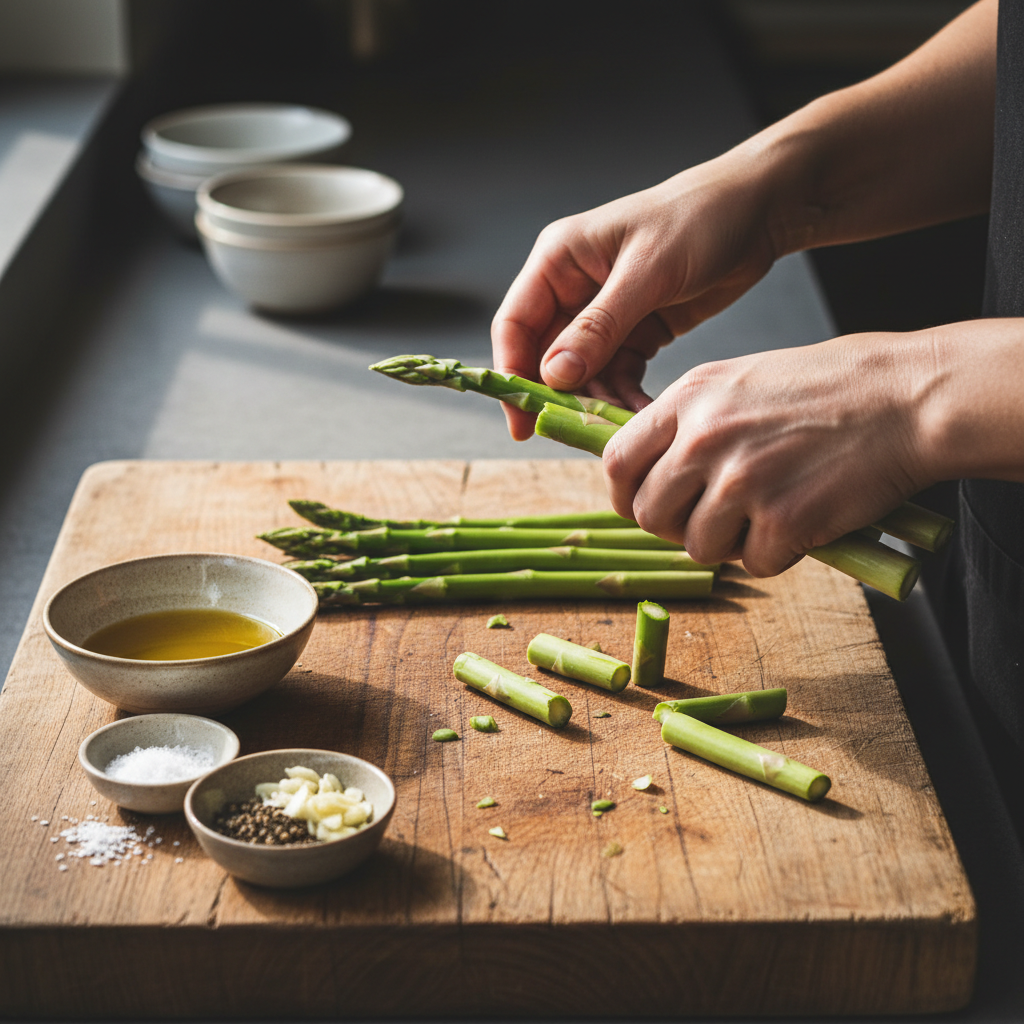
- Snap method: bend one spear near the bottom, it naturally breaks where the woody part starts. Use that spear as your guide.
- Knife method: line up spears and cut about 1 to 2 inches off the bottom, then adjust if the stalks feel very firm.
2) Dry the asparagus
If you rinsed it, pat it dry well. Water on the surface turns roasting into steaming, and the difference shows.
3) Use the right pan setup
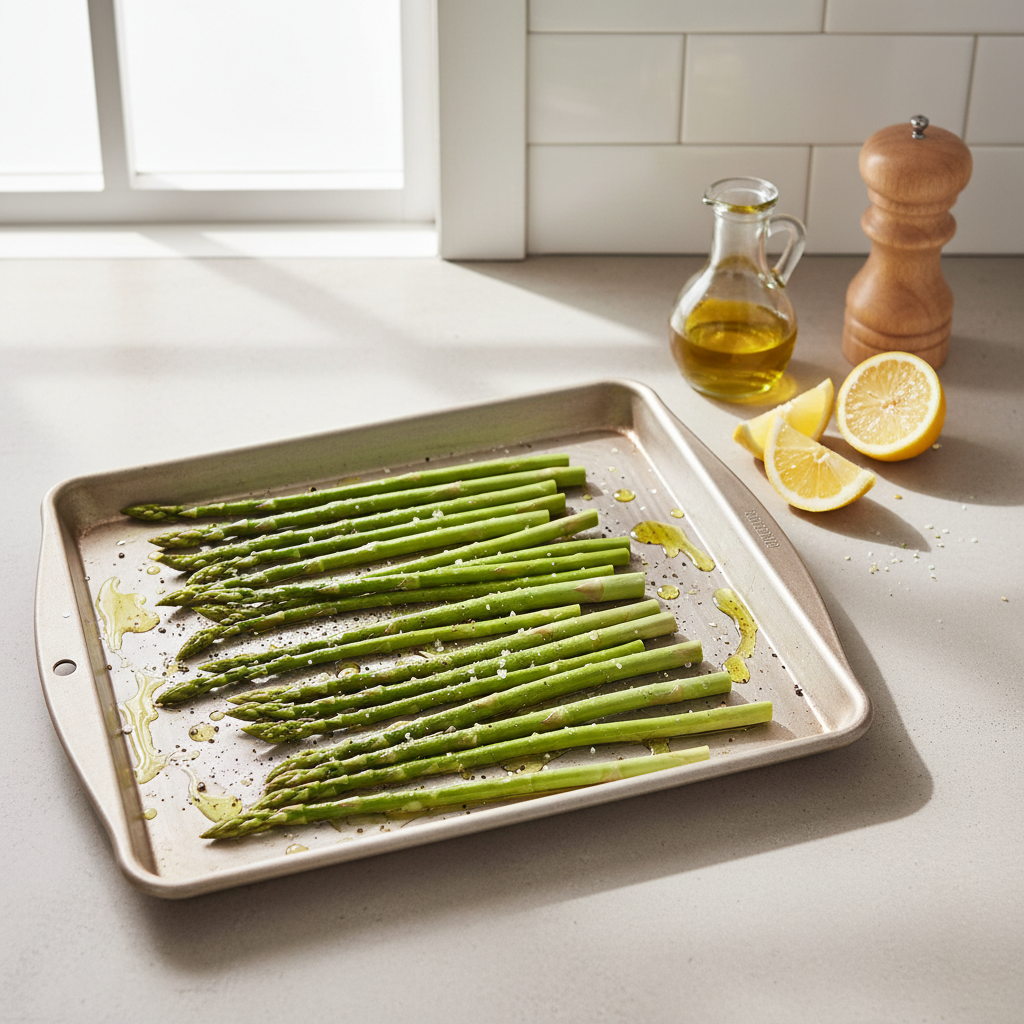
- Choose a rimmed sheet pan for airflow and easy flipping.
- Use parchment if you want easier cleanup, but bare metal browns slightly better in many kitchens.
- Spread into one layer, tips pointing different directions so they cook evenly.
Easy oven method: step-by-step (works most nights)
This is the reliable baseline when you want classic roasted flavor without overthinking it.
- Preheat: 425°F.
- Season: toss asparagus with 1 to 2 teaspoons olive oil per pound, plus kosher salt and black pepper.
- Arrange: single layer on a sheet pan, don’t crowd.
- Roast: 8 to 14 minutes depending on thickness, check early if spears are thin.
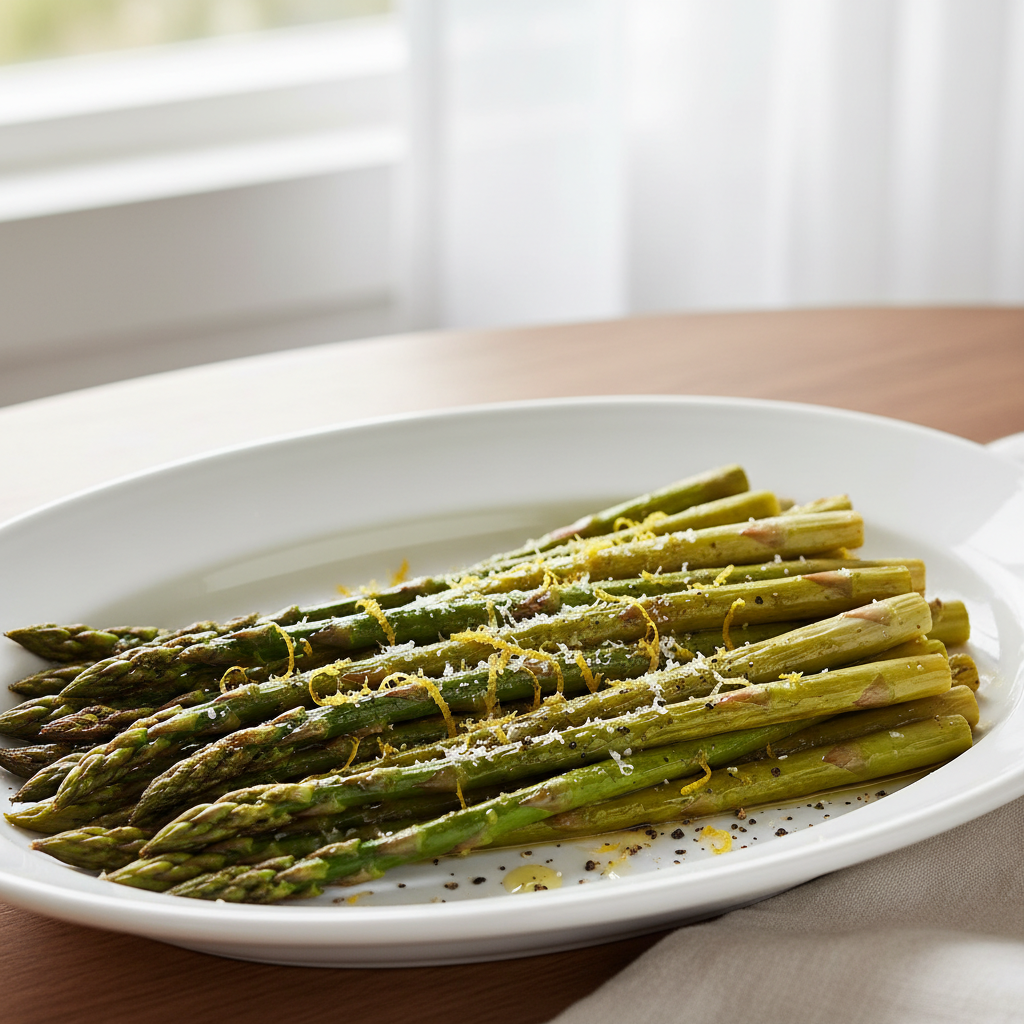
- Finish: optional squeeze of lemon, a dusting of Parmesan, or a drizzle of balsamic.
Key point: you’re looking for browned spots and bright green color, with tips not falling apart.
Oven time & temperature table (by thickness)
If you only take one thing from this article, take this: thickness drives timing. Use this table as a starting point, then adjust for your oven and pan.
| Asparagus thickness | Oven temp | Estimated roast time | What “done” looks like |
|---|---|---|---|
| Very thin (pencil) | 425°F | 6–9 min | Tender, lightly blistered, tips intact |
| Medium (most bunches) | 425°F | 9–12 min | Bright green, slight bend, browned spots |
| Thick | 425°F | 12–16 min | Knife slides in with some resistance |
| Extra thick | 400–425°F | 15–20 min | Center tender, outside roasted, not shriveled |
Different sheet pans and ovens vary, so start checking 2 minutes before the low end. That’s usually how you avoid the “one minute too far” problem.
How to tell when asparagus is done (without guessing)
Timers help, but this is how you know for sure.
- Fork test: a fork should slide into the thickest part with light resistance, not crunch, not mush.
- Visual cues: brighter green with a few browned blisters; tips look roasted, not wet.
- Bend test: pick up one spear with tongs, it should bend slightly, not flop in half.
What trips people up is carryover heat. Asparagus keeps softening on the hot pan for a minute or two, so pulling it when it’s just shy of perfect often lands you right where you want.
Flavor variations that stay “easy”
Once you nail how to cook asparagus in oven, changing the flavor is the fun part. Keep the roast method the same, change the finish.
Garlic-Parmesan
- Toss with olive oil, salt, pepper, and 1 small grated garlic clove (or garlic powder if you want milder).
- After roasting, add freshly grated Parmesan while hot.
Lemon zest + chili flakes
- Roast as usual.
- Finish with lemon zest, a squeeze of lemon, and a pinch of red pepper flakes.
Balsamic glaze + toasted nuts
- Roast, then drizzle lightly with balsamic glaze.
- Add toasted almonds or walnuts for crunch.
Practical tips for consistent results (sheet pan reality)
These are the little adjustments that make roasted asparagus feel “restaurant-y” at home.
- Preheat the pan for deeper browning: slide the empty sheet pan into the oven while it preheats, then carefully add oiled asparagus.
- Use high heat, short time: 425°F works well for most bunches because it browns before it dries out.
- Don’t drown it in oil: asparagus needs coating, not pooling. Excess oil can make tips taste heavy.
- Salt after tasting: some Parmesan or cured meats add salt fast, so season in layers.
- Cook in two pans if needed: if spears overlap, you’re steaming.
Key takeaways (save this)
- Single layer is non-negotiable for browning.
- Thickness sets timing, not the recipe headline.
- Pull slightly early and let carryover finish the job.
Common mistakes (and what to do instead)
- Soggy asparagus: dry it well, reduce crowding, roast hotter.
- Stringy/tough stalks: trim more aggressively, choose medium spears if possible.
- Burnt tips but raw bottoms: try thicker spears, or place tips toward the pan center where heat is steadier.
- Bland flavor: add enough salt, finish with acid (lemon) or umami (Parmesan).
According to FDA, leftover cooked foods should be refrigerated within 2 hours in many situations; if your kitchen is very warm, be extra cautious and consider chilling sooner.
Conclusion: a simple routine you can repeat
When people ask how to cook asparagus in oven, they usually want a method that behaves the same on busy nights as it does on calm ones, so focus on the repeatable pieces: trim, dry, single layer, 425°F, then watch for those browned spots.
If you want a good next step, pick one flavor finish you love and make it your default, then adjust roast time based on spear thickness. Do that a couple times and asparagus stops being “hit or miss.”
Try it this week with whatever you already cook, chicken, salmon, or pasta, and keep the timing table handy for the next bunch.