
how to cook broccoli tender crispy comes down to two things you can control every time: high heat and short, deliberate cook time.
If your broccoli keeps turning mushy, bitter, or weirdly dry, it’s usually not your fault, it’s the method. Boiling too long, crowding a pan, or adding salt at the wrong moment can flatten the flavor and wreck the texture.
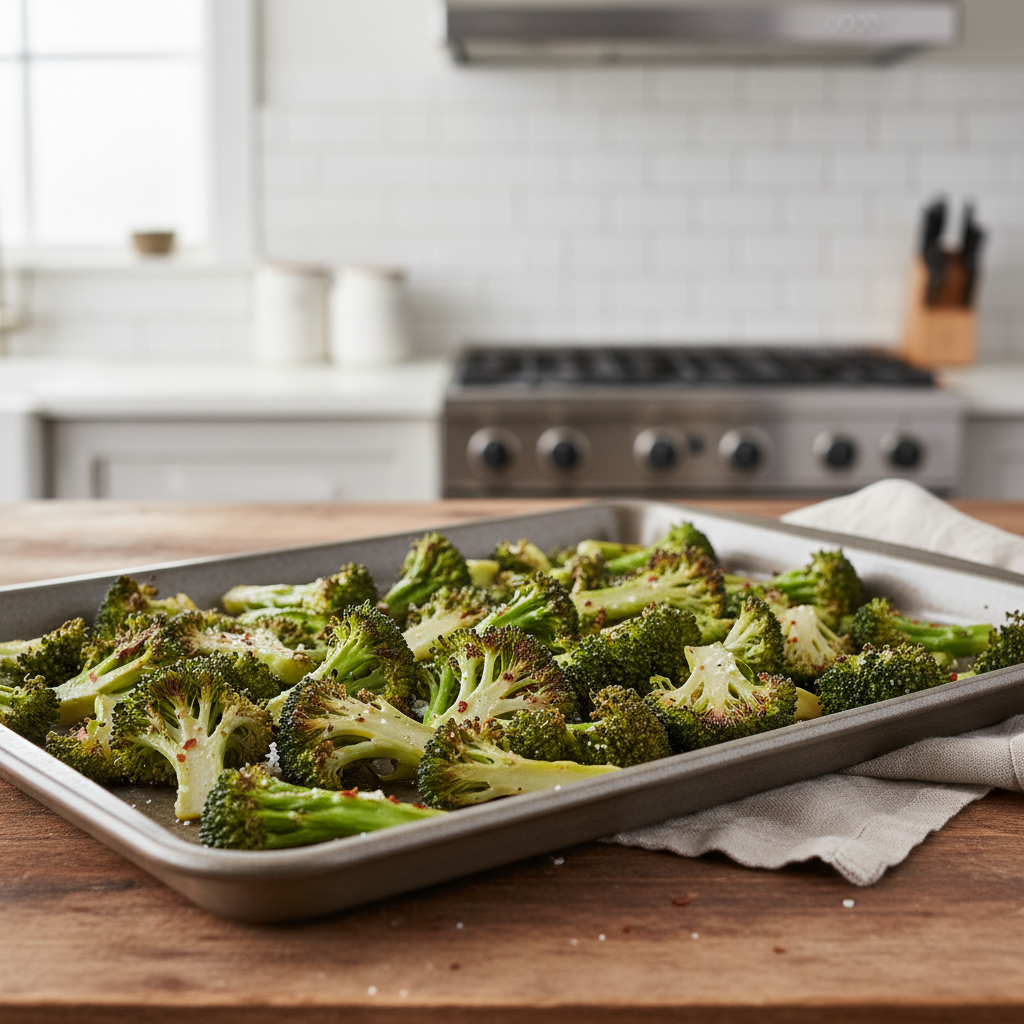
This guide gives you a few reliable paths, roasting, sautéing, steaming plus a quick finish, and air frying, so you can pick the one that fits your kitchen and your mood. You’ll also get a fast self-check, a timing table, and the small “chef moves” that make broccoli taste like something you’d actually order.
What “tender-crisp” broccoli really means
Tender-crisp is the sweet spot where the stems lose their raw bite, but the florets still have structure. When you bite, you get a little resistance, not squeak, not collapse.
In practice, that texture usually comes from:
- Hot cooking surface to brown the edges and drive off excess moisture
- Even sizing so stems and florets finish together
- Stop-cooking moment where you pull it just before it “seems done”
- Seasoning that sticks (oil first, salt after or during, depending on method)
According to USDA Food Safety and Inspection Service (FSIS), vegetables should be washed under running water to remove dirt and reduce surface contamination. For broccoli, that also helps you avoid that gritty “why is this sandy” moment.
Why broccoli turns soggy or tough (common culprits)
Most texture problems trace back to moisture management and timing. Broccoli carries water in the florets, and the florets also trap water on the surface, so you have to decide if you want that water to steam (soft) or evaporate (crisp).
- Overcooking: even 1–2 extra minutes can push florets from tender to mush
- Crowding the pan: trapped steam prevents browning, you end up “boiling” in your own moisture
- Wet broccoli: washing and tossing straight into a hot pan cools the surface and creates steam
- Too-low heat: broccoli slowly softens before it can brown
- Uneven cuts: thick stem chunks stay crunchy while florets overcook
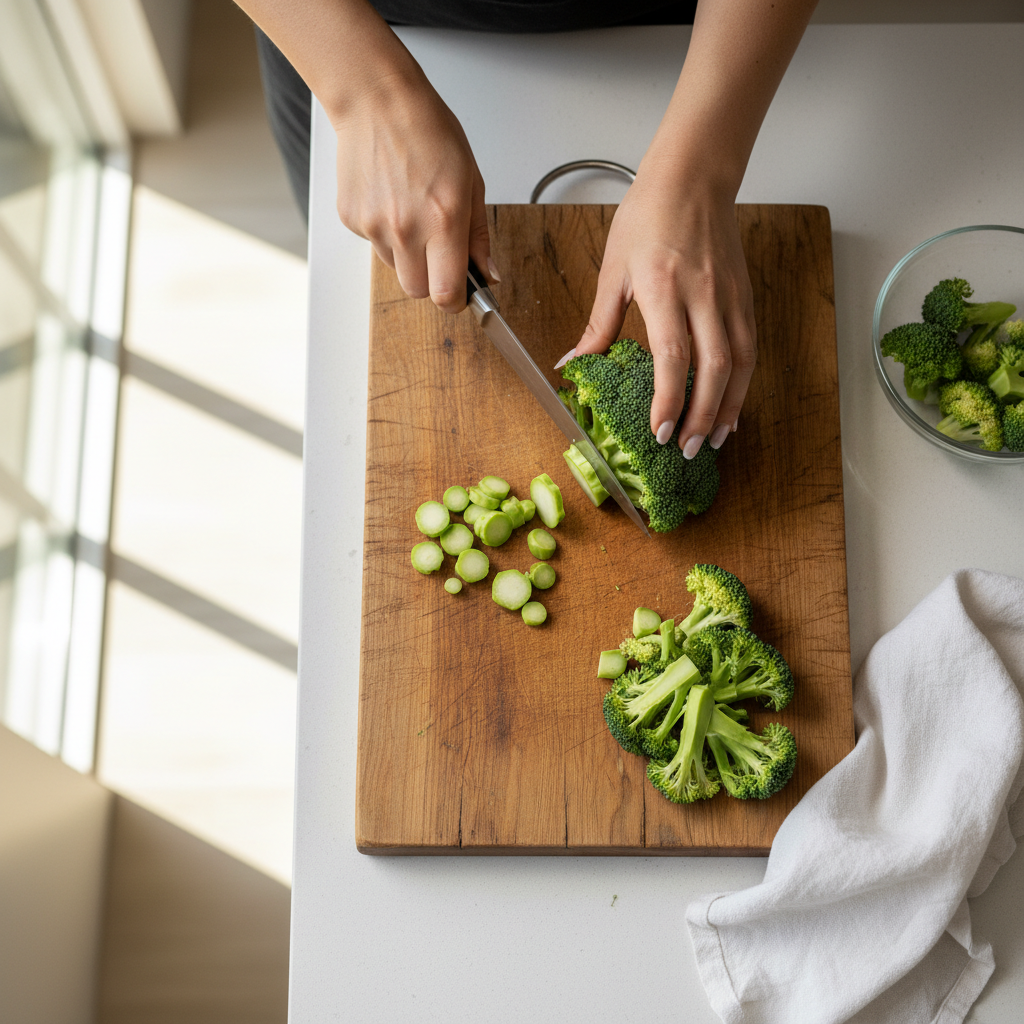
One more sneaky issue: if you only cook florets and throw away stems, you’re losing the part that stays pleasantly crisp. Peel the stem and slice it, it cooks fast and tastes sweet.
Quick self-check: which method should you use?
If you want the easiest way to decide, use this. It saves you from forcing a “roast” night when you really needed a fast skillet dinner.
- You want deeply browned edges → roast or air fry
- You want fastest weeknight broccoli → sauté with a quick steam finish
- You want bright green + clean flavor → steam, then finish in a hot pan
- You’re working with frozen broccoli → roast/air fry works, but manage moisture (see later)
- You need hands-off cooking → sheet pan roasting
Whichever you choose, the goal stays the same: control water, use enough heat, and pull it at tender-crisp.
Timing and temperature cheat sheet (table)
These ranges assume average supermarket broccoli, cut into medium florets. Your stove and pan matter, so treat this like a starting point, not a promise.
| Method | Heat / Temp | Typical Time | Texture Result | Best For |
|---|---|---|---|---|
| Roast (sheet pan) | 425°F | 14–20 min | Crispy edges, tender stems | Big batches, meal prep |
| Air fry | 375–400°F | 8–12 min | Very crisp tips | Small batches, quick sides |
| Sauté + steam finish | Med-high | 6–10 min | Tender-crisp, lightly browned | Weeknights, stir-fry vibes |
| Steam then sear | Steam + high | 4–6 + 2–3 min | Bright green, crisp finish | Clean flavor, sauces |
| Blanch + shock | Boiling | 1–3 min | Crunchy, vivid green | Salads, reheating later |
How to roast broccoli so it’s tender and crispy
Roasting is the most forgiving way to get that browned, almost nutty flavor. The catch: you must avoid steaming on the pan.
Step-by-step
- Dry it well: after washing, towel dry or air dry a few minutes
- Cut for even cooking: medium florets, stems sliced 1/4–1/2 inch thick
- Preheat hot: 425°F works for most ovens
- Oil first: toss with 1–2 tbsp oil per head of broccoli, enough to lightly coat
- Space it out: single layer, some breathing room, use two pans if needed
- Roast: 14–20 minutes, flip once around the halfway mark if you want even browning
Doneness cue: stems pierce easily with a fork, florets show browned tips, and the broccoli still looks lively, not dull olive green.
To finish, hit it with one of these while it’s hot: lemon juice + flaky salt, grated Parmesan, chili crisp, or toasted almonds.
Fast skillet method: sauté with a quick steam finish
If you’re cooking dinner and broccoli is the side, this is usually the winner. You get color from sautéing and tenderness from a short covered steam.
Step-by-step
- Heat a large pan on medium-high, add 1–2 tbsp oil
- Sear broccoli 2–3 minutes, let it sit so it actually browns
- Add a splash of water (2–3 tbsp), cover immediately
- Steam 2–4 minutes, then uncover
- Evaporate remaining water, toss 1–2 minutes until dry and glossy
- Season with salt, pepper, garlic, and a little acid (lemon or vinegar)
This method is one of the easiest ways to nail how to cook broccoli tender crispy without needing perfect oven timing, the pan tells you what’s happening.
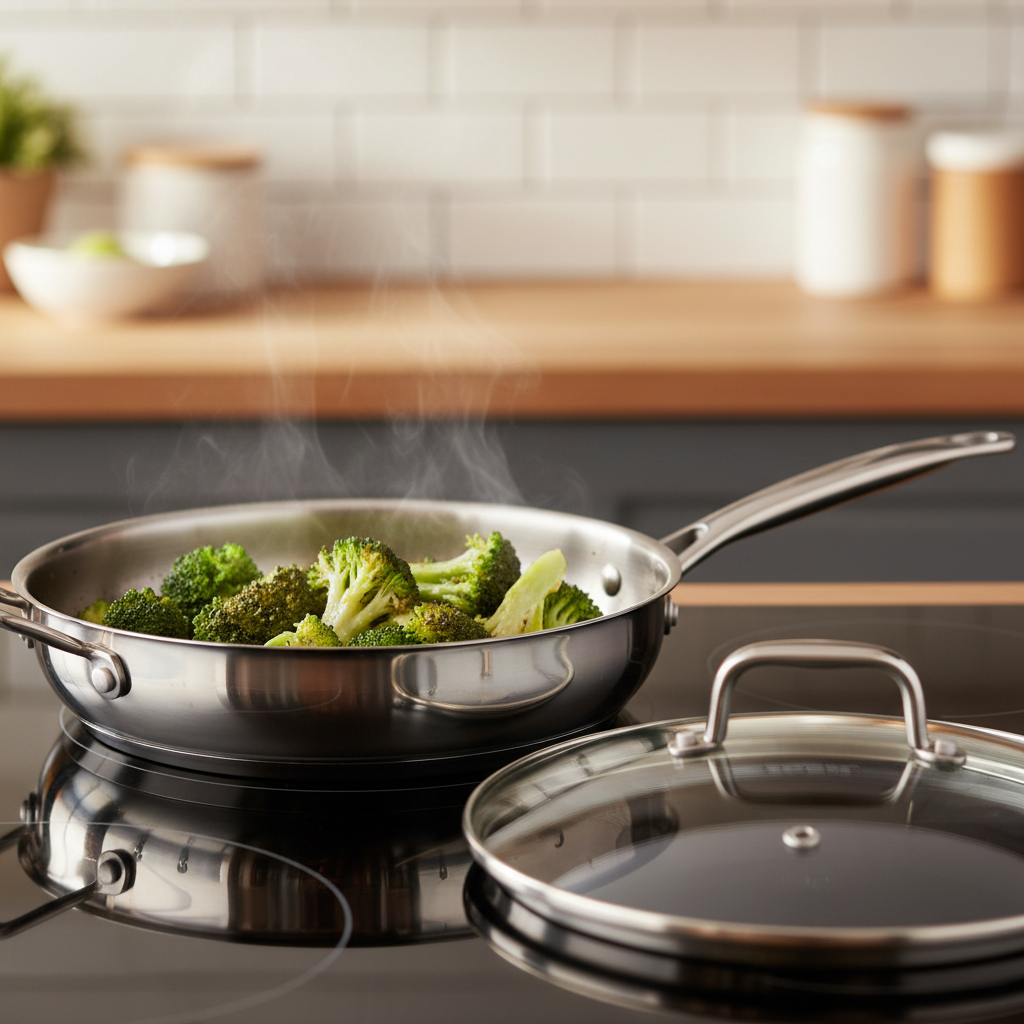
Pro move: add thin-sliced garlic at the end, not the beginning, so it doesn’t burn while the broccoli finishes.
Steam (or blanch) + hot finish: bright green with crisp edges
If you like broccoli that stays vibrant, steaming or blanching gets you there. The texture stays clean, then a quick hot-pan finish adds the crispness people miss with plain steaming.
Option A: Steam then sear
- Steam broccoli 4–6 minutes until just tender-crisp
- Drain well, let it sit 1 minute so surface moisture evaporates
- Sear in a hot pan with oil 2–3 minutes for browned spots
Option B: Blanch and shock (best for make-ahead)
- Salt boiling water, blanch 1–3 minutes depending on size
- Move to ice water to stop cooking, then drain and dry thoroughly
- Later, reheat in a hot pan or roast briefly to re-crisp
According to the Centers for Disease Control and Prevention (CDC), chilling cooked foods promptly and refrigerating within about 2 hours is a common food-safety guideline. If you blanch ahead for meal prep, cool fast and store in the fridge, and if you have specific health concerns, consider asking a qualified professional for personalized advice.
Practical tips that change the result (without fancy ingredients)
These are the little adjustments that usually separate “fine” broccoli from the batch you keep picking at off the pan.
- Peel stems: the outer layer can be fibrous, a quick peel makes stems cook evenly
- Don’t drown it in oil: too much oil can turn edges soft instead of crisp
- Salt with intention: for roasting, salt before is fine, but heavy salt too early can pull moisture on the surface
- Add acid at the end: lemon and vinegar brighten flavor, but early acid can keep broccoli firmer
- Use a hot pan: if the broccoli doesn’t sizzle, you’re steaming accidentally
- Finish with texture: nuts, breadcrumbs, Parmesan, sesame seeds
Key takeaway: crispness comes from dryness plus heat, tenderness comes from timing. Your job is balancing those, not chasing a single “perfect” recipe.
Common mistakes (and quick fixes)
- Mistake: roasting on parchment and crowding
Fix: use two pans, keep space, and consider direct pan contact for better browning - Mistake: cooking frozen broccoli like fresh
Fix: roast/air fry at high heat, don’t thaw fully, and expect a slightly softer center - Mistake: covering too long in the skillet
Fix: steam just until fork-tender, then uncover and dry the pan - Mistake: cutting huge florets
Fix: split large crowns, slice stems, aim for similar thickness - Mistake: waiting to season until it’s cold
Fix: salt and add finishing flavors while it’s hot so they cling
If you’re repeating the same problem, change only one variable next time, heat, spacing, or time, so you can tell what actually fixed it.
Conclusion: a simple plan you can repeat
If you want how to cook broccoli tender crispy without overthinking, pick one default method and get consistent with it. For most people, that’s either 425°F roasting for hands-off cooking or sauté + short steam for weeknights.
Action to take tonight: dry the broccoli more than you think you need, then cook it hot and stop a minute earlier than your instinct. You can always cook longer, but you can’t un-mush broccoli.
FAQ
How do I keep broccoli from getting soggy in the oven?
Use high heat (often 425°F), spread florets in a single layer with space, and dry them well after washing. Sogginess usually comes from steam trapped by crowding or excess water.
Should I boil broccoli before roasting for tender-crisp results?
Sometimes, but it depends on the size of the pieces and how soft you like stems. A quick steam or blanch helps thicker stems turn tender faster, but you must dry well before roasting or you’ll lose crisp edges.
What’s the best way to cook broccoli tender-crisp on the stovetop?
A sauté with a brief covered steam is hard to beat: sear first for browning, then add a splash of water and cover for a couple minutes, then uncover to evaporate moisture.
How long should I steam broccoli to keep it bright green?
Many batches land in the 4–6 minute range for medium florets, but timing varies by size and steamer setup. Pull it when a fork slides into the stem with slight resistance, not when it fully collapses.
Can I get crispy broccoli in an air fryer?
Yes, air fryers do well at crisping tips quickly. Don’t overload the basket, shake once, and expect 8–12 minutes depending on temperature and floret size.
Why does my broccoli taste bitter after roasting?
Broccoli can taste bitter if it’s overcooked, heavily charred, or just naturally stronger in flavor. Try slightly shorter roasting, add lemon at the end, or balance with a little Parmesan or toasted nuts.
How should I store and reheat leftover broccoli so it stays crisp?
Cool it, store airtight in the fridge, then reheat in a hot skillet or air fryer to drive off moisture. Microwaving works for convenience, but it usually softens texture.
If you’re trying to streamline weeknight cooking, it can help to pick one method you repeat and build a few finishing flavors around it, lemon-garlic, Parmesan, sesame-soy, chili-lime, so tender-crisp broccoli stops feeling like a chore and starts feeling like an easy win.