
How to make mashed potatoes creamy comes down to three things most people rush: choosing the right potato, controlling moisture, and adding warm fat in the right order.
If your mash swings between watery and gluey, you’re not alone, it’s usually not the recipe, it’s the technique. Small choices like how long you drain, whether your dairy is cold, and how aggressively you mix can change the texture fast.
This guide breaks the process into simple checkpoints, so you can diagnose what went wrong and fix it the same day, whether you’re cooking for Thanksgiving, meal prep, or a random Tuesday dinner.
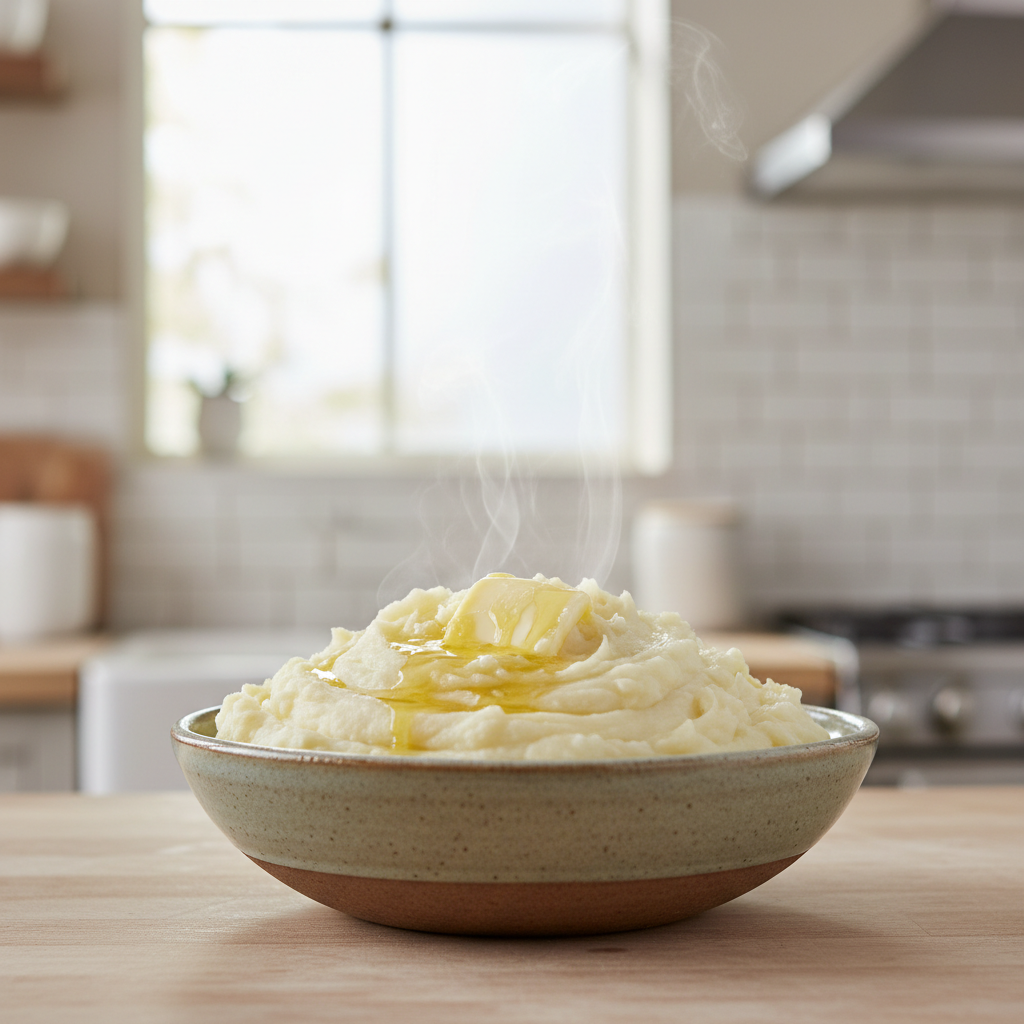
What “creamy” mashed potatoes really means
“Creamy” isn’t just “lots of butter.” In practice, creamy mashed potatoes feel smooth on the tongue, hold soft peaks, and taste rich without feeling greasy. The texture comes from hydrated starch plus fat, with enough structure to hold together.
There’s also a useful distinction: creamy vs. fluffy. Creamy leans silky and cohesive, fluffy leans airy and a bit drier. You can land in the middle, but you’ll make better decisions if you know which direction you want.
- Creamy: Yukon Gold or a mix, butter-forward, usually passed through a ricer or gentle mash.
- Fluffy: Russet-heavy, slightly less liquid, minimal mixing.
Pick the right potatoes (and why it matters)
Potato choice is the quiet make-or-break step. Starch and moisture vary by variety, and that decides how easily the mash turns smooth or turns gluey.
In many US kitchens, these are the realistic options:
- Yukon Gold: naturally buttery, medium starch, often the easiest path to creamy texture.
- Russet: high starch, can be very fluffy, but can go pasty if overmixed.
- Red potatoes: waxier, hold shape, better for chunkier mash unless you work harder for smoothness.
If you want an almost “restaurant” mouthfeel, a common approach is 50/50 Yukon Gold + Russet, Gold brings richness, Russet lightens the body.
Quick sizing rule: cut potatoes to similar chunks so they finish at the same time, uneven cooking leads to lumps you’ll be tempted to overmix away.
The cooking method that prevents watery or gluey mash
Most creamy mash problems start in the pot. You’re trying to cook potato through while managing water absorption and surface moisture.
Start in cold water, salt it well
Put potatoes in the pot, cover with cold water, then bring up to a gentle boil. Starting cold helps chunks cook evenly, which reduces the urge to whip them later.
Salt matters here because it seasons the potato itself. According to USDA, sodium guidance varies by individual health needs, so if you’re watching sodium intake you may want to adjust and rely more on butter, herbs, or roasted garlic for flavor.
Don’t overboil
Boil just until a knife slides in with light resistance. If they’re falling apart in the water, the potatoes can get waterlogged, then you keep adding fat to “fix” it, and it still tastes flat.
Dry them out after draining (the underrated move)
Drain, then return potatoes to the hot pot for 1–2 minutes over low heat, stirring gently. This drives off steam, concentrates flavor, and sets you up for a creamy finish without needing excessive dairy.
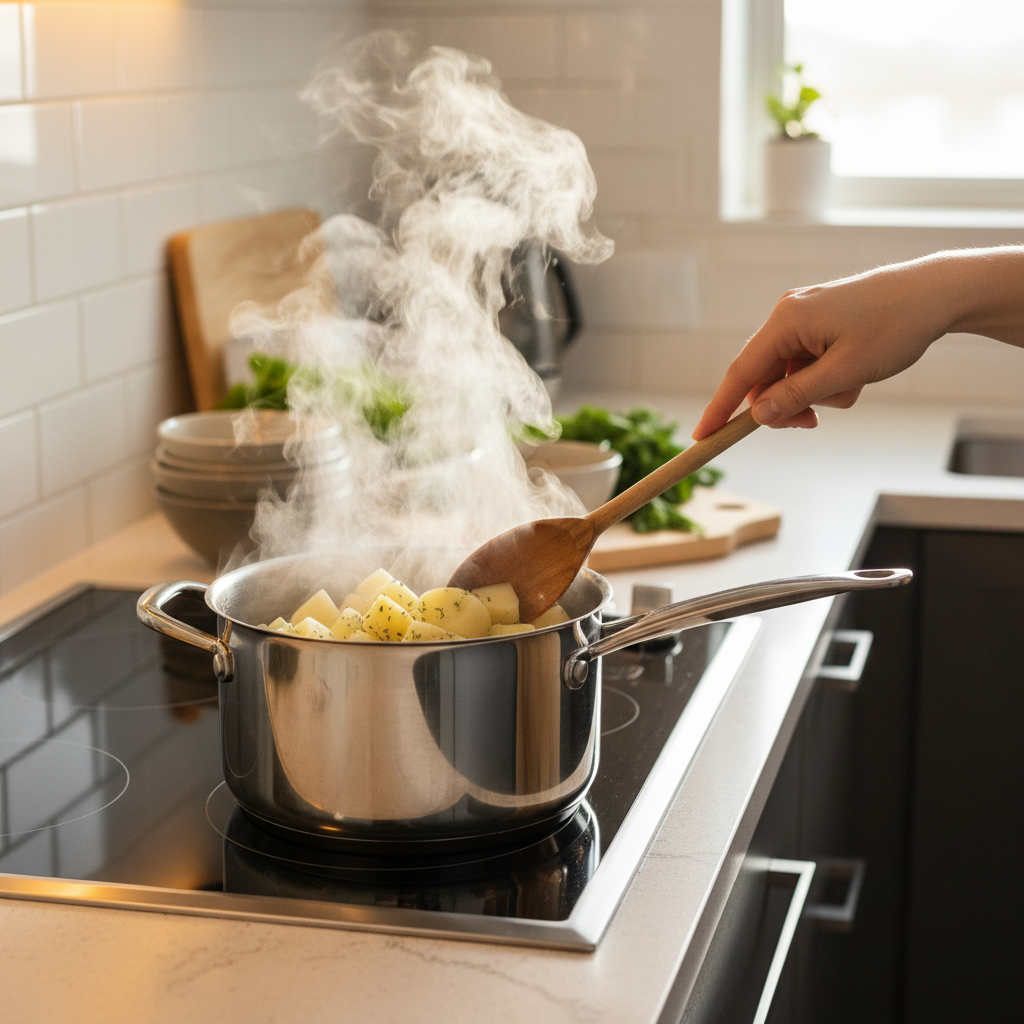
Warm fat first: the simplest way to boost creaminess
If you take one technical tip, take this: add warm butter first, then add warm dairy gradually. Cold milk cools the potatoes and tightens the starch, and that’s where “stiff then overmixed” often begins.
A practical baseline for about 2 pounds of potatoes (adjust by taste and potato variety):
- Butter: 4–6 tablespoons (more for richer mash)
- Warm milk or half-and-half: 1/2 to 3/4 cup, added slowly
- Salt: add in small pinches, taste as you go
Warm your dairy in a small saucepan or microwave until hot but not boiling. Then add butter to the hot, dried potatoes, let it melt, mash gently, and only then add dairy in splashes.
Want next-level flavor without complicated steps? Steep garlic, thyme, or a bay leaf in the warming milk, then strain.
Choose the right tool (and what to avoid)
When people ask how to make mashed potatoes creamy, they often focus on ingredients, but the tool decides how much starch gets smashed and released.
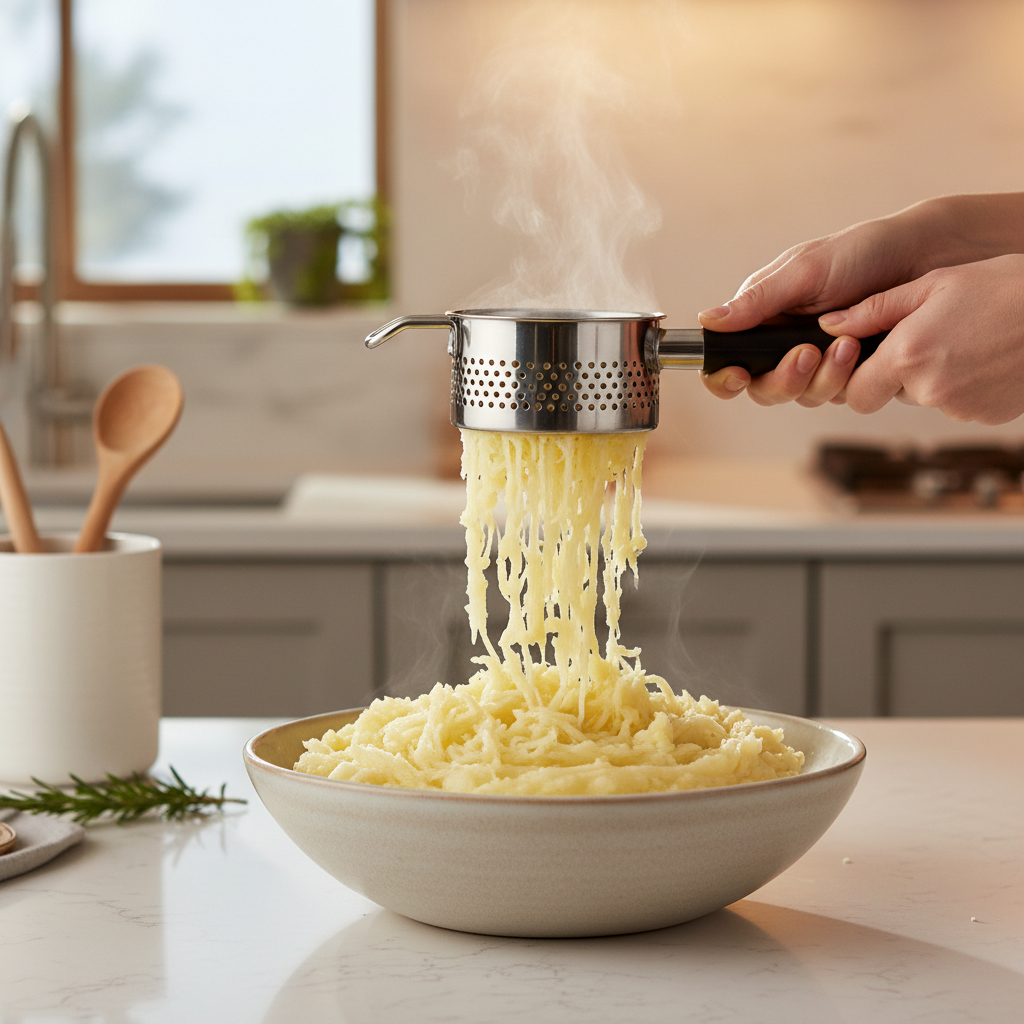
- Potato ricer: smooth and consistent, very hard to overwork, great for creamy results.
- Food mill: similarly smooth, a bit more “chef-y,” excellent if you have it.
- Hand masher: fine for most homes, aim for gentle pressing, not aggressive beating.
- Stand mixer/hand mixer: high risk of gluey texture, use only if you’re very careful and stop early.
- Food processor: usually a no for classic mash, it can turn potatoes gummy quickly.
Rule of thumb: the more you shear the potato, the more starch releases, and the more likely you get that sticky, elastic mash that no amount of butter can truly “undo.”
Fixes and swaps: a quick reference table
Here’s a reality check table for the most common texture problems, plus what tends to help in a normal home kitchen.
| Problem | What’s happening | What to do now | How to prevent it next time |
|---|---|---|---|
| Gluey / gummy | Overmixed, too much starch released | Stop mixing, fold in warm butter/cream gently, serve as-is | Use ricer, mix less, avoid mixers |
| Watery | Potatoes absorbed water or didn’t steam-dry | Return to pot on low heat, stir to evaporate, add butter after | Steam-dry 1–2 minutes, don’t overboil |
| Lumpy | Uneven cooking or undercooked pieces | Press through ricer/mill if possible | Cut evenly, start in cold water |
| Flat flavor | Undersalted potatoes, cold dairy, weak fat | Add salt gradually, more butter, warm infused milk | Salt the water, warm dairy, taste earlier |
| Too thick | Not enough liquid, cooled down | Add warm milk in small splashes | Hold warm, add liquid slowly |
Step-by-step: creamy mashed potatoes you can repeat
This is the repeatable workflow that tends to produce consistently creamy mash without drama.
Ingredients (flexible)
- 2 lb Yukon Gold potatoes (or mix with Russet)
- 4–6 tbsp unsalted butter, plus more to finish
- 1/2–3/4 cup milk or half-and-half, warmed
- Salt and black pepper
- Optional: sour cream, cream cheese, chives, roasted garlic
Method
- Peel (or leave skins on for rustic), cut into even chunks.
- Cover with cold water, salt the water, bring to a gentle boil.
- Cook until tender, drain well.
- Return to pot on low heat 1–2 minutes to steam-dry.
- Rice or mash gently, then add warm butter first.
- Add warmed dairy gradually until it looks glossy and spoonable.
- Season, taste, then stop mixing once it’s smooth.
Key point: When it’s creamy, quit while you’re ahead. Extra stirring rarely makes it better.
Key takeaways (so you don’t have to memorize everything)
- Use Yukon Gold (or a Gold/Russet mix) for easier creamy texture.
- Steam-dry after draining so you control moisture with dairy, not with luck.
- Warm butter and warm milk, cold dairy fights you.
- Ricer or gentle mash, avoid aggressive mixing that makes potatoes gummy.
- Add liquid slowly, it’s easy to add more, hard to take it out.
Conclusion: make it creamy on purpose, not by accident
Once you treat potatoes like a texture project, how to make mashed potatoes creamy becomes pretty predictable: pick a forgiving variety, cook evenly, dry the pot, then build richness with warm fat and a light hand.
If you want one action step for your next batch, commit to steam-drying and warming the dairy. Those two changes solve a surprising number of “why is this weird?” mashed potato moments.
Try it once, take mental notes on the texture you like, then adjust butter and liquid by small amounts until it feels like your version of perfect.