
how to cook kale crispy tasty chips comes down to two boring-but-true moves: remove moisture and control heat, because kale turns from crunchy to chewy fast when it steams instead of bakes.
If your kale chips keep coming out bitter, uneven, or oily, you’re not alone, most failures trace back to wet leaves, crowded pans, or a heavy hand with oil. The good news is you don’t need fancy tools, just a few repeatable checks.
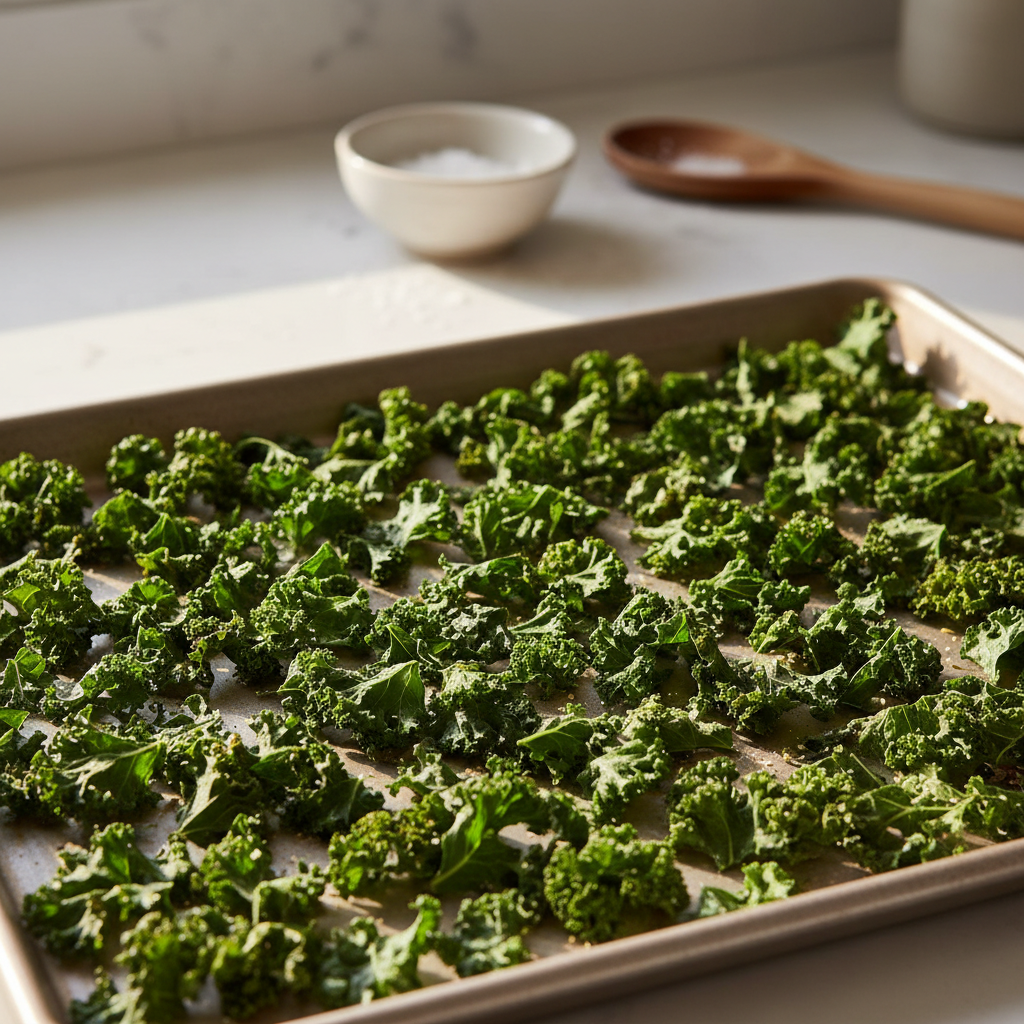
This guide walks you through the why, a quick self-check to diagnose what’s going wrong, and a few seasoning paths that keep the chips crispy instead of damp. You’ll also get a small timing table so you can stop guessing.
Why kale chips go soggy (and how to prevent it)
Kale chips fail in predictable ways, and once you can name the problem, the fix gets simple.
- Wet kale = steam. Water trapped in curls and ribs turns into steam, steam softens chips even if the oven is hot.
- Too much oil blocks evaporation. A thick oil coat can “fry” spots and trap moisture elsewhere, giving you limp edges.
- Overcrowding lowers effective heat. When pieces touch, moisture can’t escape, so you get leathery patches.
- Large ribs stay tough. The center rib needs extra time, which can burn the leaf before the rib dries out.
According to USDA Food Safety and Inspection Service, keeping ovens clean and avoiding cross-contamination matters even for simple snacks, especially if you prep kale near raw meats or eggs. Basic kitchen hygiene keeps “quick recipes” from becoming a surprise problem.
Quick self-check: what your last batch is telling you
Before you change the recipe, match the symptom to the likely cause, this saves a lot of trial-and-error.
- Chewy, flexible chips: kale wasn’t fully dry, or the pan was crowded.
- Burnt tips, soft centers: heat too high, or pieces weren’t a similar size.
- Greasy mouthfeel: oil went on heavy, or it wasn’t distributed evenly.
- Bitter finish: seasoning imbalance (too much salt or smoked spices), or chips baked too long.
- Tough bites: big rib sections left in, or leaves not torn into chip-size pieces.
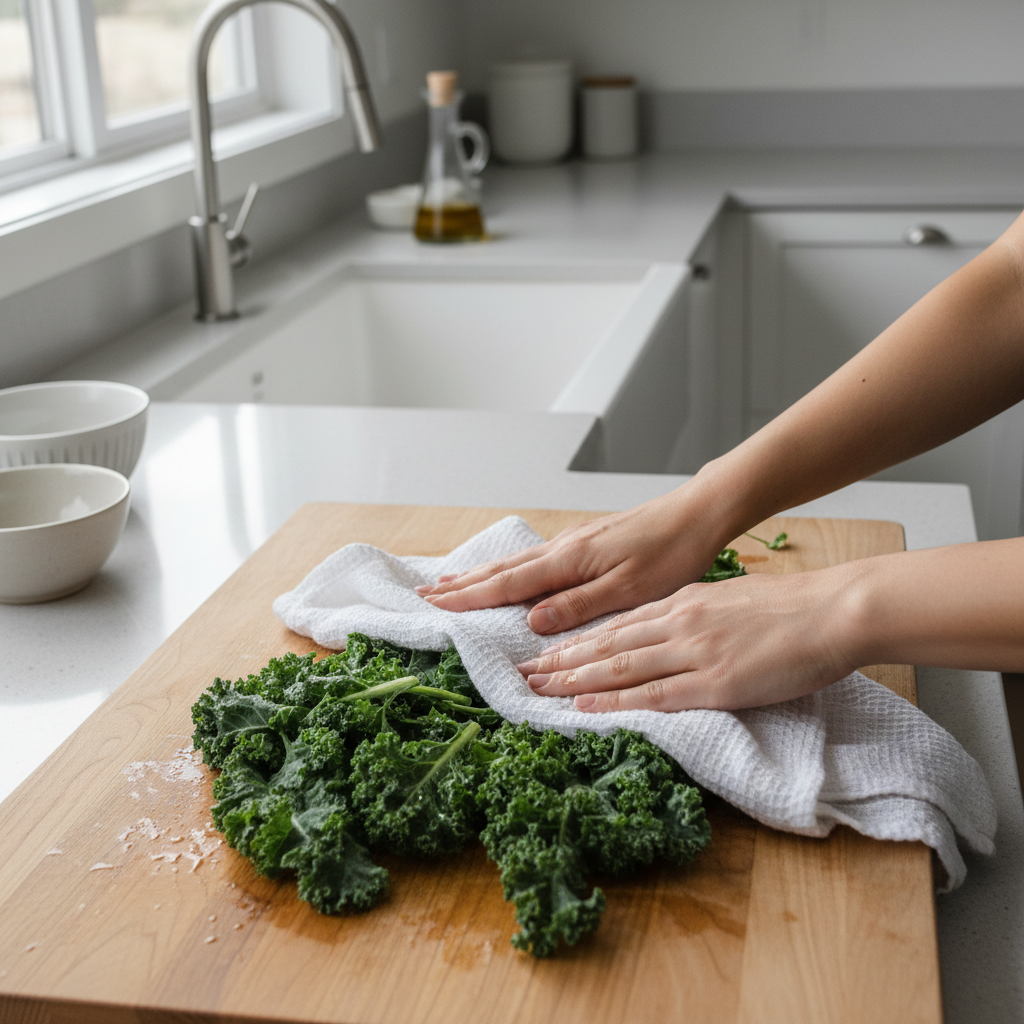
If you only fix one thing, fix dryness. Most people think they need more time in the oven, but in reality they need less water before baking.
Ingredients and tools that make this easier
You can keep this minimal, but a couple choices reduce inconsistency.
Basic ingredients
- 1 large bunch curly kale (or Tuscan kale, see notes below)
- 1 to 2 teaspoons olive oil or avocado oil
- Fine salt, start small (you can add after baking)
Helpful tools (optional, not precious)
- Salad spinner: faster drying, less towel work
- 2 rimmed baking sheets: space matters more than you think
- Cooling rack: helps chips stay crisp after baking
Curly kale crisps quickly and feels “chip-like.” Tuscan kale often bakes more evenly and tastes slightly sweeter, but it can go from perfect to too dark faster, so watch it closely.
Step-by-step: how to cook kale crispy tasty chips in the oven
This method aims for reliable crunch without turning the whole batch into bitter confetti.
1) Prep the kale (this is the real recipe)
- Wash kale, then dry aggressively. A spinner helps, then finish by patting with a towel until the leaves feel dry, not cool-wet.
- Remove thick center ribs, or at least trim the toughest parts.
- Tear into pieces a little bigger than a chip, they shrink.
2) Oil lightly, then distribute
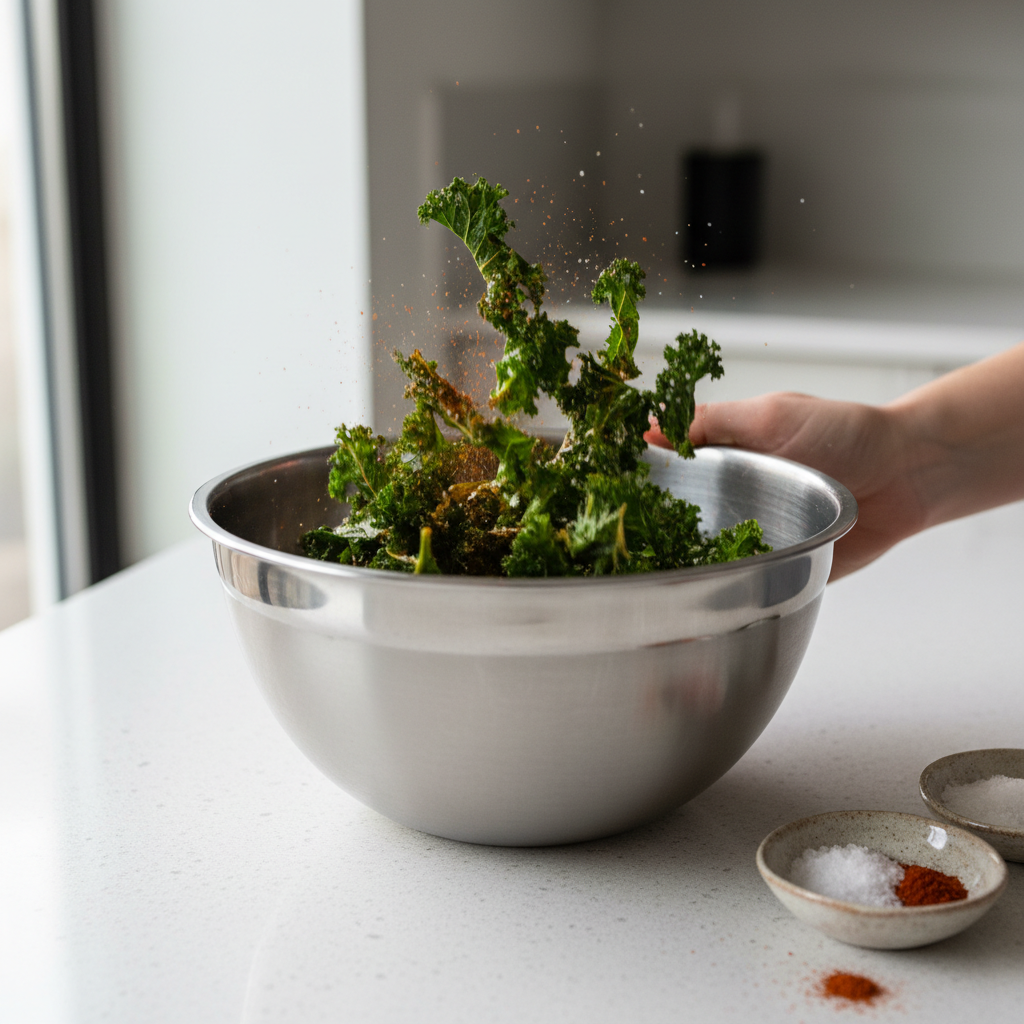
- Use 1 to 2 teaspoons oil per big bunch, then massage for 20 to 30 seconds to coat thinly.
- If leaves look shiny-wet, you’ve likely gone too far, add a handful of dry kale pieces to absorb excess or blot lightly.
3) Bake with space and airflow
- Heat oven to 300°F to 325°F. Lower heat takes longer but reduces bitter, scorched edges.
- Spread kale in a single layer with gaps. Use two pans if you need them.
- Bake, then rotate pans once for even drying.
4) Finish correctly (don’t trap steam)
- Pull the pan when chips look dry and slightly darker, but not brown all over.
- Cool on the sheet for 3 to 5 minutes, then move to a rack or a dry plate so steam doesn’t soften them.
- Salt and add dry seasonings after baking for the crispest texture.
Timing & temperature guide (use this to stop guessing)
Ovens vary, and kale varies, so treat this like a starting map, not a promise.
| Oven Temp | Typical Bake Time | Best For | Watch-Out |
|---|---|---|---|
| 300°F | 18–28 min | More even crisping, less bitterness | Easy to underbake if pans are crowded |
| 325°F | 12–20 min | Good balance of speed and crunch | Edges can darken fast near the end |
| 350°F | 8–15 min | Small batches, experienced timing | Higher chance of scorched tips |
Key point: for most home ovens, 325°F hits a sweet spot, but the last 3 minutes decide everything, stay close.
Seasoning ideas that stay crunchy (and taste like something)
Wet seasonings are where crispness goes to die. If you want bold flavor, lean on dry spices or add “wet” elements after baking in tiny amounts.
Dry seasoning blends
- Classic: fine salt + black pepper + a pinch of garlic powder
- Smoky: smoked paprika + cumin + salt (go light on paprika, it can read bitter if heavy)
- Cheesy vibe (no dairy): nutritional yeast + garlic powder + salt
- Spicy: chili powder + lime zest (zest adds aroma without moisture)
If you want lemon, soy sauce, or hot sauce
- Add after baking, sparingly, then serve right away.
- Or mix a few drops into the oil before massaging, but keep the oil amount low.
Many people chase “tasty” by adding more salt. A better move is adding aroma: garlic powder, onion powder, citrus zest, or a small pinch of sugar to round edges.
Common mistakes (the small ones that ruin a whole tray)
- Skipping the dry step: even a little surface water tends to show up as chewiness later.
- Using big glugs of oil: measure once, then adjust next batch.
- Salting before baking and overdoing it: salt pulls moisture out, which can slow crisping if heavy.
- Not tearing to similar sizes: tiny pieces burn while big ones stay soft.
- Storing while warm: trapped heat creates condensation, crunch disappears.
If you’re aiming for how to cook kale crispy tasty chips consistently, treat it like dehydrating more than roasting, airflow plus dryness matters more than “higher heat.”
Storage, reheating, and when to troubleshoot harder
Kale chips taste best the day you bake them. If you need to store them, let them cool fully, then use a container with a tight lid and add a small paper towel to buffer moisture.
- To re-crisp: 300°F for 3 to 6 minutes, then cool for 2 minutes before eating.
- If they keep turning chewy by next day: your environment may be humid, a silica food-safe pack can help, or just plan smaller batches.
For dietary concerns, sodium targets, or medical conditions, seasoning choices may need adjustment, checking with a nutrition professional often makes sense if you’re unsure.
Conclusion: a simple plan for crunchy kale chips every time
If your goal is how to cook kale crispy tasty chips without babysitting the oven for an hour, focus on three habits: dry the leaves until they feel truly dry, oil lightly and evenly, and bake with space at a moderate temperature. Do one test batch at 325°F, take notes on the last five minutes, then lock in your timing for your oven.
Tonight, pick one seasoning blend, bake a small tray, and cool it properly before you judge the crunch, that single step saves a lot of disappointment.