
How to Make Healthy Homemade Hummus
How to make hummus at home healthy usually comes down to three things: using simple whole ingredients, going lighter on added oil, and getting the texture right without “fixing” it with fillers.
If you’ve tried making hummus before, you might relate to the common outcomes, it tastes flat, it feels gritty, or it somehow ends up heavier than the store version. A few small technique changes make a bigger difference than people expect.
This guide gives you a dependable base recipe, plus healthy adjustments for different diets and practical troubleshooting, so you can make a batch that tastes good enough to repeat.
What “healthy hummus” really means (and what it doesn’t)
Healthy can mean different things depending on your goals, lower sodium, fewer calories, higher protein, or simply fewer ultra-processed ingredients. Homemade helps because you control the knobs.
One thing to keep in mind, hummus is still calorie-dense in many cases because tahini and olive oil are concentrated fats, they’re not “bad,” but portions matter.
- Good signs: short ingredient list, reasonable salt, enough tahini for flavor, minimal added oil, no added sugar.
- Not-so-helpful signs: lots of added oil to create smoothness, heavy salt to compensate for blandness, “flavored” add-ins that sneak in sugar.
According to the USDA Dietary Guidelines for Americans, patterns that emphasize nutrient-dense foods and limit saturated fat and sodium tend to support overall health, hummus can fit well when you keep those basics in view.
Ingredients that matter most (plus smart substitutions)
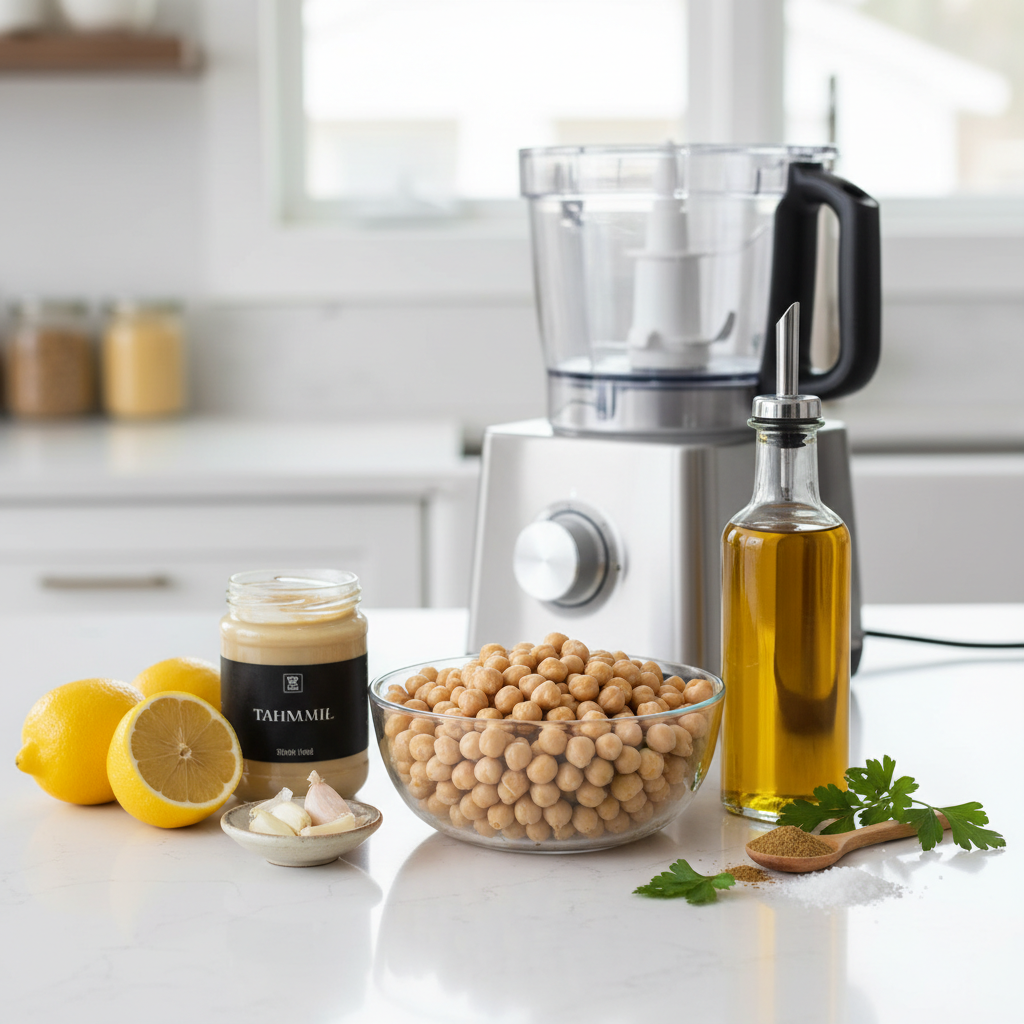
Your base is simple, chickpeas, tahini, lemon, garlic, salt, and a little cold water. The “healthy” part is mostly about balance and not overdoing the oil.
- Chickpeas: canned is fine, rinse well to reduce sodium; cooked-from-dry can taste a bit cleaner.
- Tahini: choose one that pours easily; thick, separated tahini often needs a good stir before measuring.
- Lemon juice: fresh usually tastes brighter than bottled.
- Garlic: one small clove is plenty for many batches; raw garlic gets stronger as it sits.
- Olive oil: optional in the blend; you can drizzle a small amount on top instead for flavor with less total.
If you need substitutions, these tend to work without wrecking texture:
- No tahini: use a small amount of unsweetened almond butter or sunflower seed butter, flavor shifts but still good.
- Lower sodium: reduce added salt and use more lemon, cumin, and roasted garlic for “lift.”
- Higher protein: blend in a few tablespoons of plain Greek yogurt, if dairy works for you, it makes it tangier and lighter.
The base recipe: smooth, healthy homemade hummus
This is the version I’d recommend starting with because it’s flexible and not overly oily. If you’re watching sodium or calories, it’s easier to adjust from here.
Base recipe (about 2 to 2.5 cups)
- 1 can (15 oz) chickpeas, rinsed and drained (or 1.5 cups cooked)
- 1/4 cup tahini
- 3 tbsp lemon juice (about 1 large lemon)
- 1 small garlic clove
- 1/2 tsp ground cumin (optional, but helpful)
- 1/2 tsp kosher salt, then adjust (start lower if needed)
- 3–6 tbsp cold water (for texture)
- 1–2 tsp extra-virgin olive oil (optional, or drizzle on top)
Method (the order matters)
How to make hummus at home healthy gets easier when you build an emulsified base, then add chickpeas, instead of dumping everything in at once.
- In a food processor, blend tahini + lemon juice for 30–60 seconds until lighter and creamy.
- Add garlic, cumin, salt, blend again, scrape down the bowl.
- Add chickpeas, blend 1–2 minutes, scrape down.
- With the machine running, stream in cold water 1 tbsp at a time until it turns smooth and airy.
- Taste, adjust lemon and salt, then blend another 20–30 seconds.
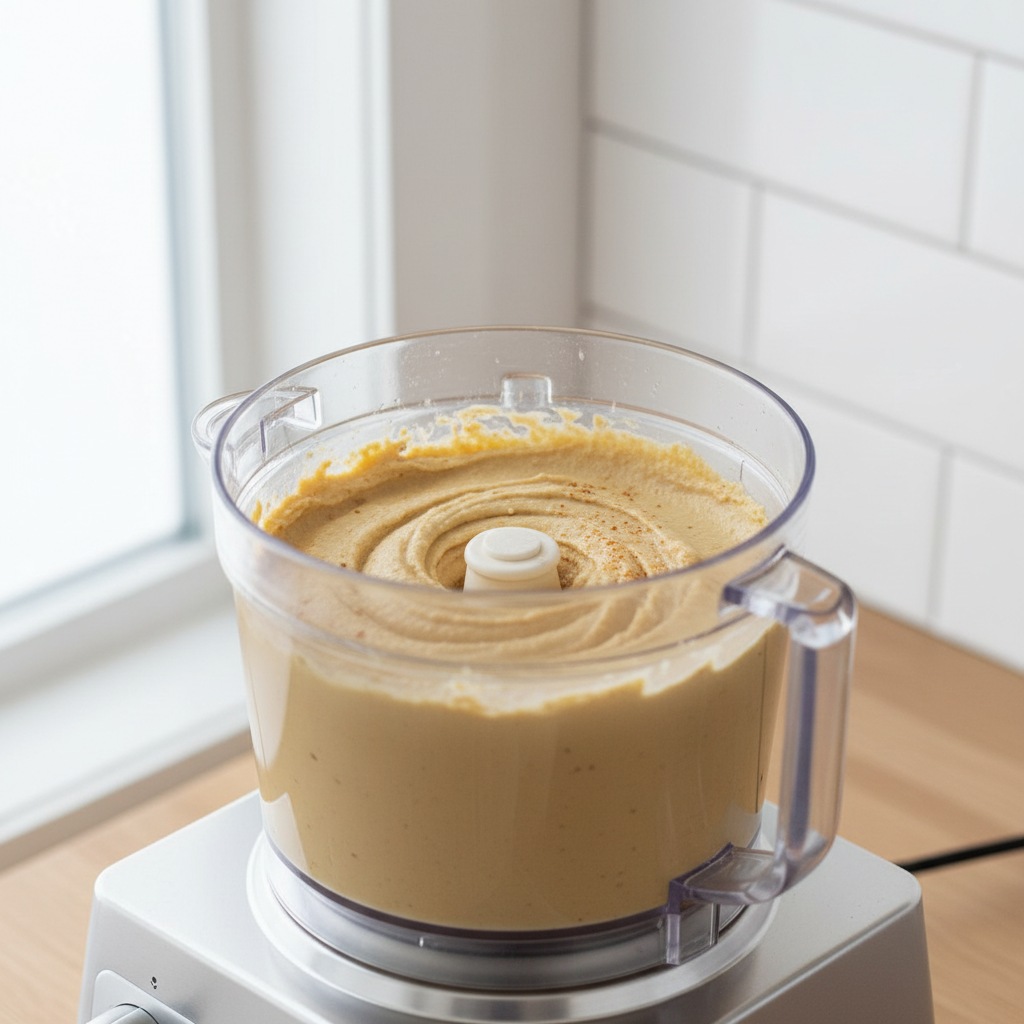
If it still tastes “beany,” give it 10 minutes in the fridge, then taste again, flavors often settle and improve.
Quick self-check: what kind of hummus are you trying to make?
This sounds basic, but it saves time, your goal changes the right tweak. Use this checklist before you start adjusting ingredients randomly.
- Texture goal: ultra-smooth, rustic, thick for wraps, or thinner for drizzling?
- Nutrition goal: lower oil, lower sodium, higher protein, or higher fiber?
- Flavor goal: classic lemon-garlic, smoky, spicy, or herby?
- Diet needs: dairy-free, sesame-free, low-FODMAP, gluten-free?
If your main goal is lower calories, the easiest win is using less oil in the blend and relying on cold water for creaminess, then portioning with intention.
Troubleshooting: gritty, bland, too thick, too runny
Most failed batches are fixable, you just need the right lever.
- Gritty texture: blend longer and add cold water slowly; if you have time, remove chickpea skins or use well-cooked chickpeas.
- Bland: add lemon in small splashes, then salt; a pinch of cumin or smoked paprika can make it feel “finished.”
- Too thick: add 1 tbsp cold water, blend 20 seconds, repeat.
- Too runny: add a few chickpeas or 1 tbsp tahini, blend, then chill 20–30 minutes.
- Too garlicky: blend in more chickpeas and lemon, then let it rest; the sharpness often mellows.
According to the FDA, refrigeration slows bacterial growth in perishable foods, so if you’re fixing texture by letting hummus rest, keep it chilled rather than leaving it on the counter.
Healthy variations you’ll actually use
Once the base tastes right, variations become “add flavor, not chaos.” Here are a few that keep the overall profile balanced.
Roasted red pepper (smoky, naturally sweet)
- Blend in 1/2 cup roasted red peppers (drained if jarred) + 1/2 tsp smoked paprika.
Extra-green herb (fresh and light)
- Add 1 cup packed parsley or cilantro + extra lemon to keep it bright.
Spicy chipotle (strong flavor, less salt needed)
- Add 1 chipotle in adobo + 1 tsp adobo sauce, then taste before adding more salt.
Higher-protein (if dairy works for you)
- Blend in 2–4 tbsp plain Greek yogurt and reduce water slightly.
If you’re experimenting for health reasons, change one variable per batch, it’s the fastest way to learn what your taste buds actually want.
Storage, food safety, and serving ideas
Homemade hummus typically keeps 3–5 days in the fridge in an airtight container, though smell and texture should guide you more than the calendar. If you see mold or notice an “off” odor, discard it.
- Prevent drying: press plastic wrap onto the surface, or drizzle a thin layer of olive oil on top.
- Freezing: possible, texture may change slightly; thaw in the fridge and re-blend with a little water.
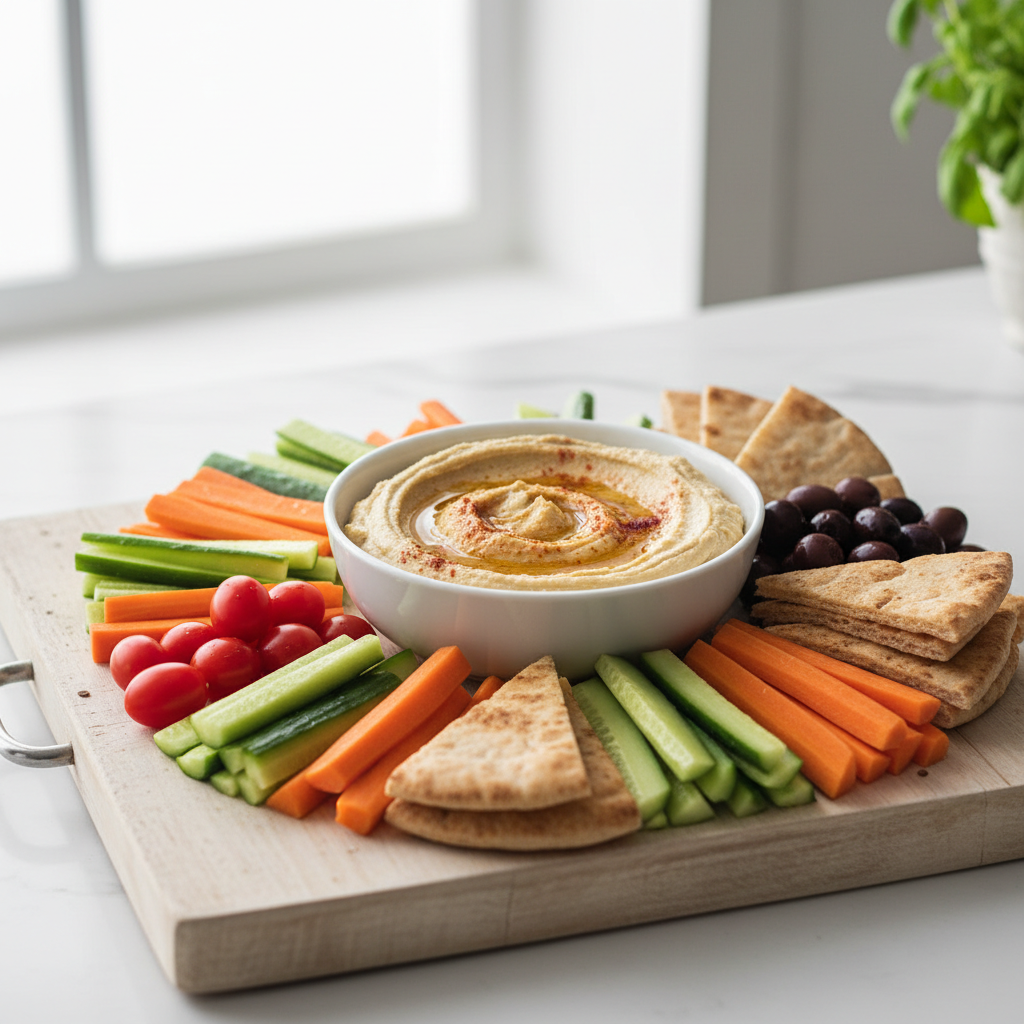
- Serving: pair with veggies, whole-grain pita, grain bowls, or spread on sandwiches instead of mayo.
According to the USDA, perishable foods should not sit at room temperature for more than about 2 hours, less if it’s hot, so for parties, serve smaller bowls and refill from the fridge.
Key takeaways + a simple nutrition tweak table
If you only remember a few things, make them these.
- Blend tahini and lemon first to build a creamy base without relying on extra oil.
- Use cold water to control texture, it’s the cleanest way to lighten a batch.
- Fix flavor with acid and spice before piling on salt.
- Chill and re-taste, hummus often improves after a short rest.
| Goal | What to change | Trade-off |
|---|---|---|
| Lower calories | Skip oil in the blend, drizzle 1 tsp on top; use cold water for texture | Slightly less “rich” mouthfeel |
| Lower sodium | Rinse chickpeas well; add more lemon, cumin, smoked paprika | May need a longer rest for flavors to pop |
| Higher protein | Add a few tablespoons plain Greek yogurt (if appropriate) | More tang, less classic sesame-forward taste |
| Smoother texture | Blend longer; consider skinning chickpeas; add water gradually | Takes a bit more time |
Conclusion: make it easy to repeat
How to make hummus at home healthy is less about chasing a “perfect” recipe and more about building a base you can adjust, creamy tahini-lemon foundation, cold water for texture, and seasoning that stays balanced.
Next time you make a batch, pick one goal, like lower sodium or extra-smooth, and tweak only that. You’ll end up with a hummus you actually want to keep in the fridge, not a one-time experiment.